Get a Free Quote for Your Business
Order a free quote by filling the form below
AsiaLocalize provides machine translation post-editing (MTPE) services: native-speaking linguists review and correct machine-translated content at the light, standard or full level you need, in 120+ languages, cutting cost and turnaround for large volumes while keeping translations accurate and consistent.

Order a free quote by filling the form below
Quick definition
Machine translation post-editing (MTPE) is the process of having a professional linguist review and correct text produced by a machine translation engine. The post-editor fixes errors in meaning, terminology, grammar and style to an agreed quality level, so you get usable translations faster and at lower cost than translating from scratch.
Published: · Last reviewed:
Machine translation is fast but often misses context, terminology and cultural fit. Our native-speaking post-editors, with subject-matter expertise, correct the output to the quality level your content needs, following the light and full post-editing levels defined in the ISO 18587 standard, plus a standard tier in between.
MTPE fits large volumes, repetitive content, tight deadlines and stable terminology. Choose human translation instead for creative and brand copy, highly regulated legal or clinical content, and very short texts.

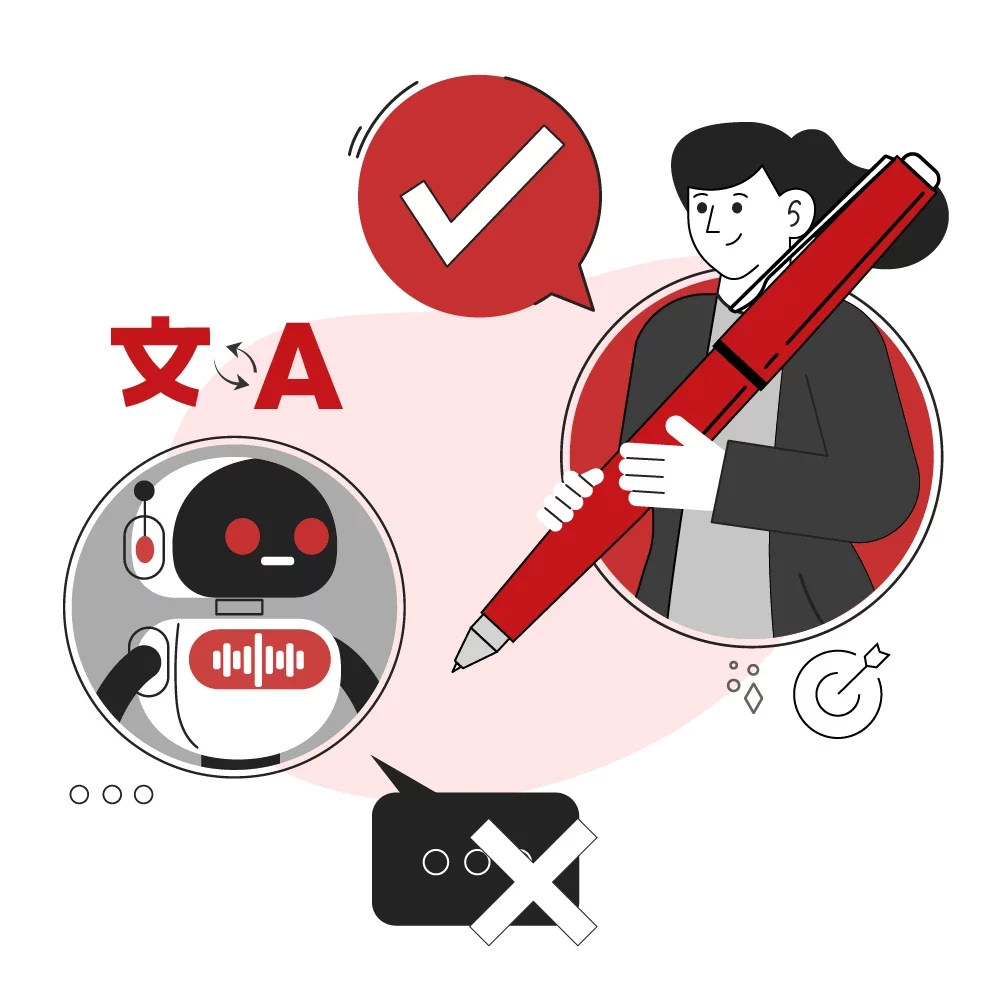
Our post-editors correct the typical errors machine translation makes, including:
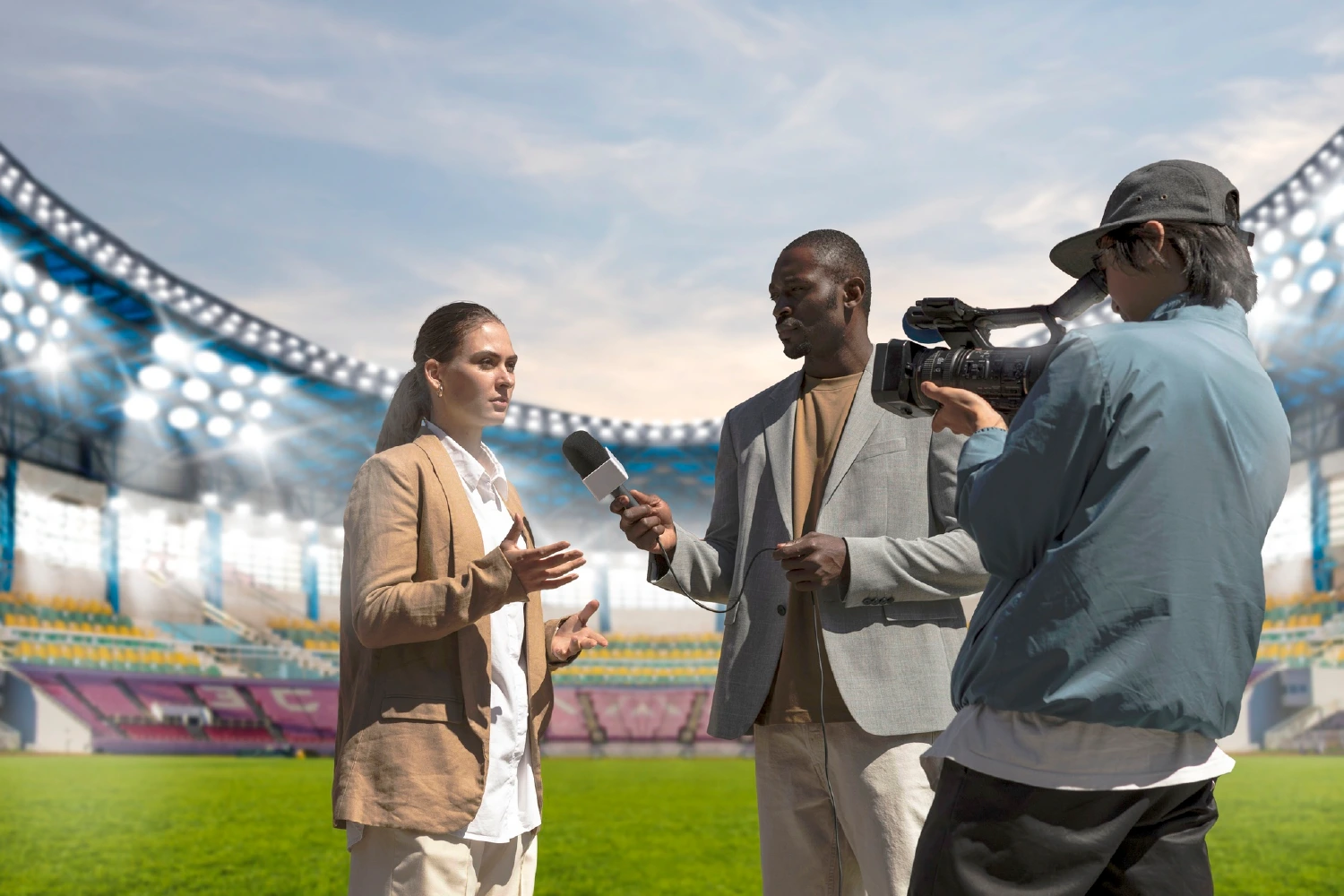
Light post-editing fixes only what affects meaning: mistranslations, omissions, additions, and spelling or grammar errors that could mislead. Style is left alone, which keeps it fast and economical. It suits:

Standard post-editing covers everything in light post-editing, plus terminology checked against your glossary and awkward machine phrasing rewritten, so the result reads as clear business language. We apply it to:
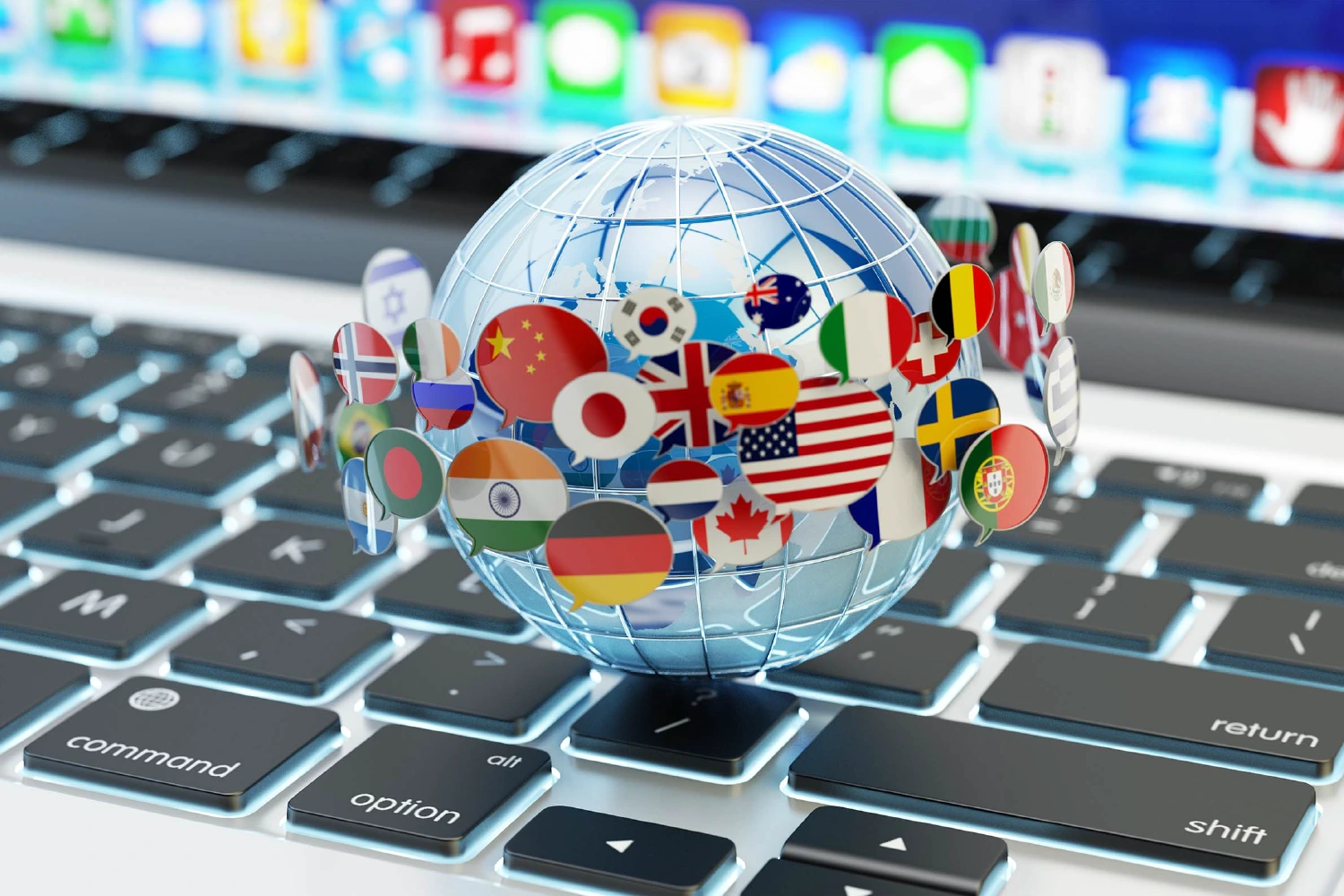
Full post-editing brings the text to publication standard: accuracy, terminology, register, tone, idiom and cultural fit, so it reads as if a human translator wrote it. Choose it for customer-facing and brand content, such as:
The post-editing level decides how much the machine output is changed. Pick the lightest level that meets your purpose to keep cost and turnaround low.
| Light post-editing | Standard post-editing | Full post-editing | |
|---|---|---|---|
| Goal | Understandable and accurate | Clear business language | Publication quality |
| What is fixed | Meaning errors, omissions, additions, misleading grammar | Light fixes plus glossary terminology and awkward machine phrasing | Everything, including tone, register, idiom and cultural fit |
| Style | Left as is | Improved where unclear | Fully polished |
| Speed and cost | Fastest and lowest | Medium | Slowest and highest, still below translation from scratch |
| Best for | Internal, real-time and high-volume content | Business documents, subtitles and announcements | Customer-facing, brand and published content |
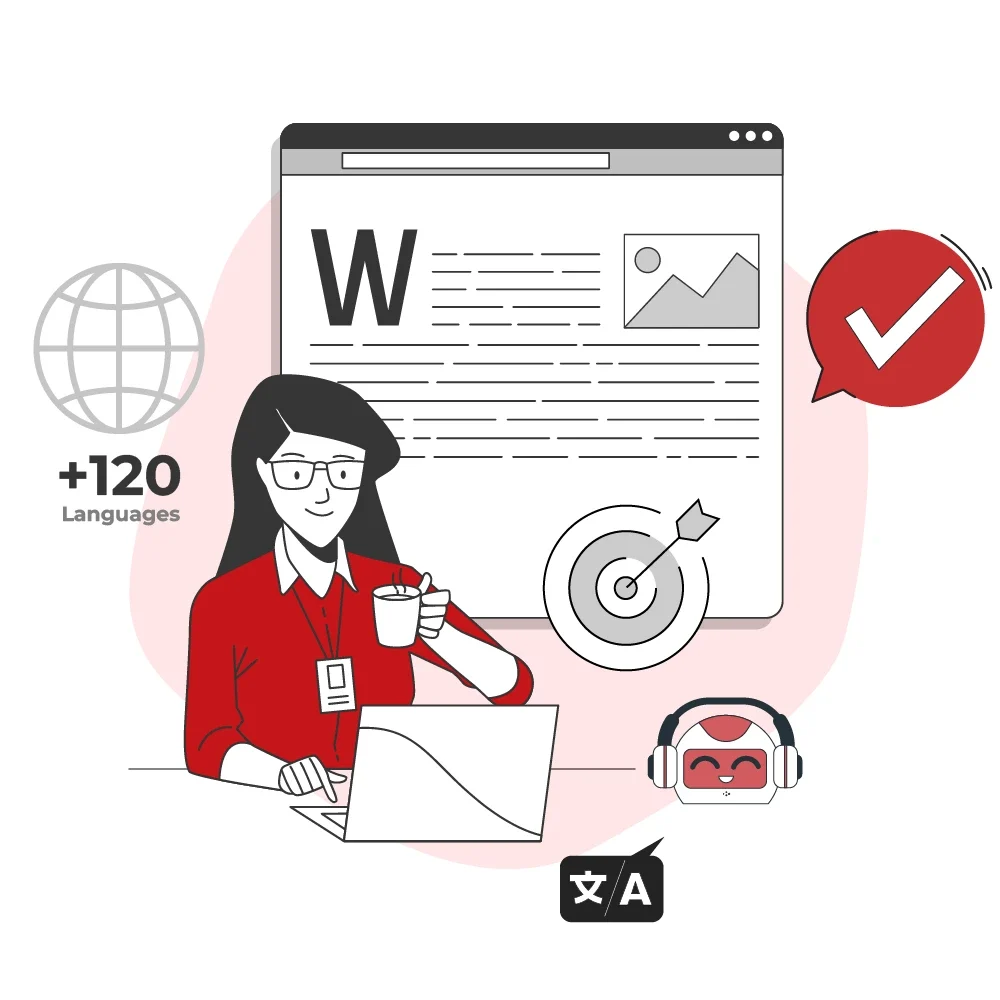
Send us your content and target languages, and we will recommend the right post-editing level for your quality, budget and deadline in 120+ languages.
MTPE is the process of having a professional linguist review and correct machine-translated text. The post-editor fixes meaning, terminology, grammar and style to an agreed quality level, so you get usable translations faster and at lower cost than translating from scratch.
MTPE works best for large volumes, repetitive or technical content, tight deadlines and stable terminology. For creative and brand copy, regulated legal or clinical content, or very short texts, human translation is usually the better choice.
We prepare your files and glossary, run the content through a suitable machine translation engine with your translation memory, and then a native-speaking post-editor corrects the output to the agreed level. A final quality check confirms terminology and formatting before delivery.
Light post-editing corrects only the errors that affect meaning and leaves style untouched, which keeps it fast and economical. Full post-editing brings the text to the standard of a human translation, including tone, idiom and cultural fit. Our standard tier sits between the two.
We work with the output of the major neural machine translation engines, and with your own engine if you already have one in place. Where you have no preference we select the engine that performs best on your language pair and content type, because engine quality varies significantly from one pair to another.
For suitable content, usually yes, because the linguist is editing rather than composing. How much you save depends on how good the raw machine output is for your language pair and subject matter, which is why we assess a sample before quoting rather than applying a flat discount.
We offer MTPE in 120+ languages, with a specialization in Asian languages such as Japanese, Korean, Chinese, Thai, Vietnamese, Indonesian and Malay. Engine quality varies by language pair, so we assess a sample before recommending MTPE.

Phone: +603-2169-6313
Email: info@asialocalize.com

