
Accurate Japanese Translation Services
Japanese Translation Services You Can Trust
AsiaLocalize provides professional Japanese translation services for companies reaching Japan and Japanese-speaking audiences worldwide. Native Japanese linguists translate legal, business, technical and marketing content between Japanese and English or other languages, in the right politeness level and layout, under an ISO 17100-certified translation and revision process.

Trusted by the world’s leading companies










Quick definition
What are Japanese translation services?
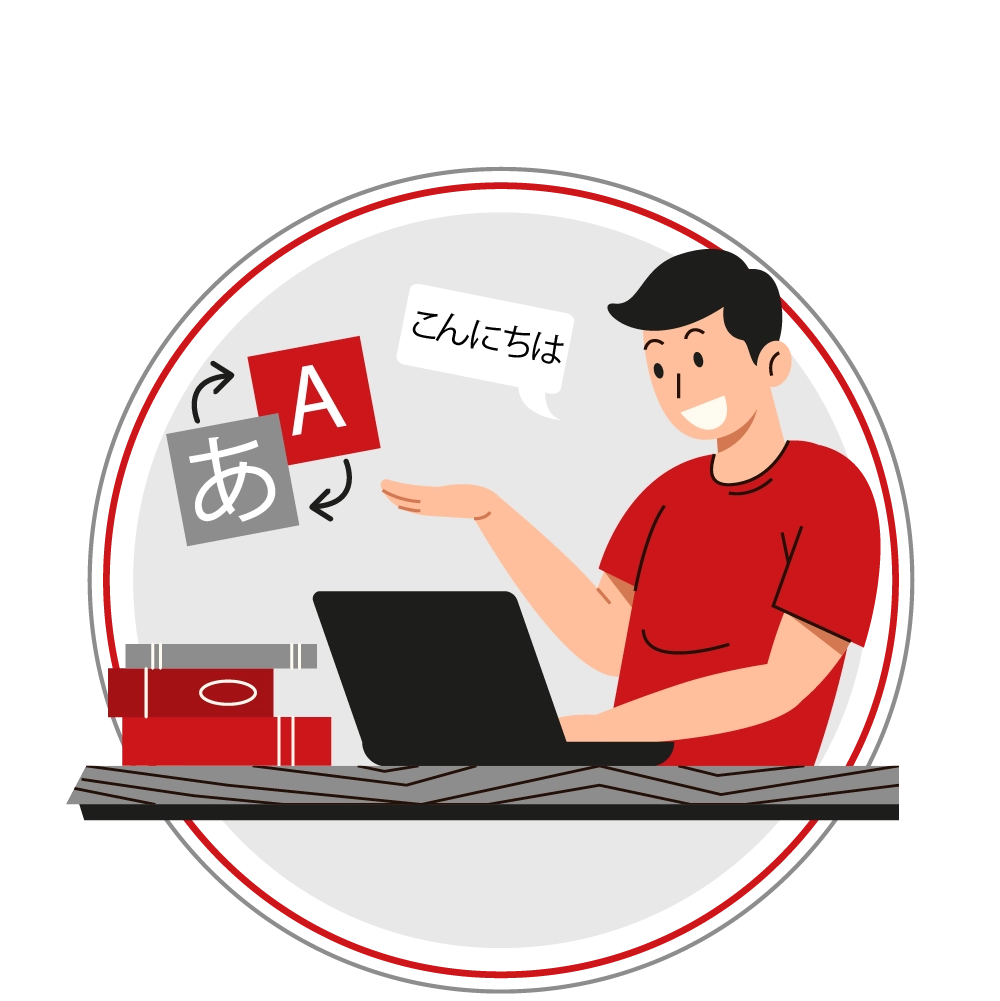
Japanese translation services convert content between Japanese and other languages for readers in Japan and Japanese-speaking audiences worldwide. Professional Japanese translation chooses the right politeness level, balances three writing systems and adapts layouts, dates and terminology so content reads as if it were written in Japan.
Japanese translation at a glance
- Official and national language of Japan
- Three writing systems used together: kanji, hiragana and katakana
- Grammatical politeness levels: plain, polite and honorific forms
- Can be written horizontally or vertically
- Official documents often use Japanese era years alongside the Gregorian calendar
See also: Korean translation · Chinese translation · desktop publishing · website localization
Published: · Last reviewed:
Language challenges
What makes Japanese translation difficult?
The US Foreign Service Institute places Japanese in Category IV, its hardest group for English speakers. In translation, the difficulties are specific:
- Three writing systems, where the choice of kanji, hiragana or katakana changes tone
- Politeness is grammatical: the wrong register reads as rude or oddly deferential
- Subjects are often omitted, so meaning must be recovered from context
- Vertical text and line-breaking rules unlike any European language
- Text expansion and contraction that breaks layouts built for English
- Japanese era years and local date, address and name formats
That is why we never hand Japanese to a general translator: every project goes to a native specialist in your field.
Which Japanese politeness level should your content use?
Politeness in Japanese is built into grammar. Agree the register before translation starts, based on your audience and channel.
| Typical form | Typical use | Our advice | |
|---|---|---|---|
| Plain form | Dictionary forms such as da and de aru | Reports, articles, technical writing, internal notes | Good for neutral, information-dense content |
| Polite form (teineigo) | Desu and masu endings | Websites, apps, customer emails, most marketing | Default for most customer-facing content |
| Honorific and humble forms (sonkeigo, kenjogo) | Special respectful and humble verbs | Formal letters, customer service, executive communication | Use when addressing customers or partners with deference |
Our linguists
Who translates your Japanese content?
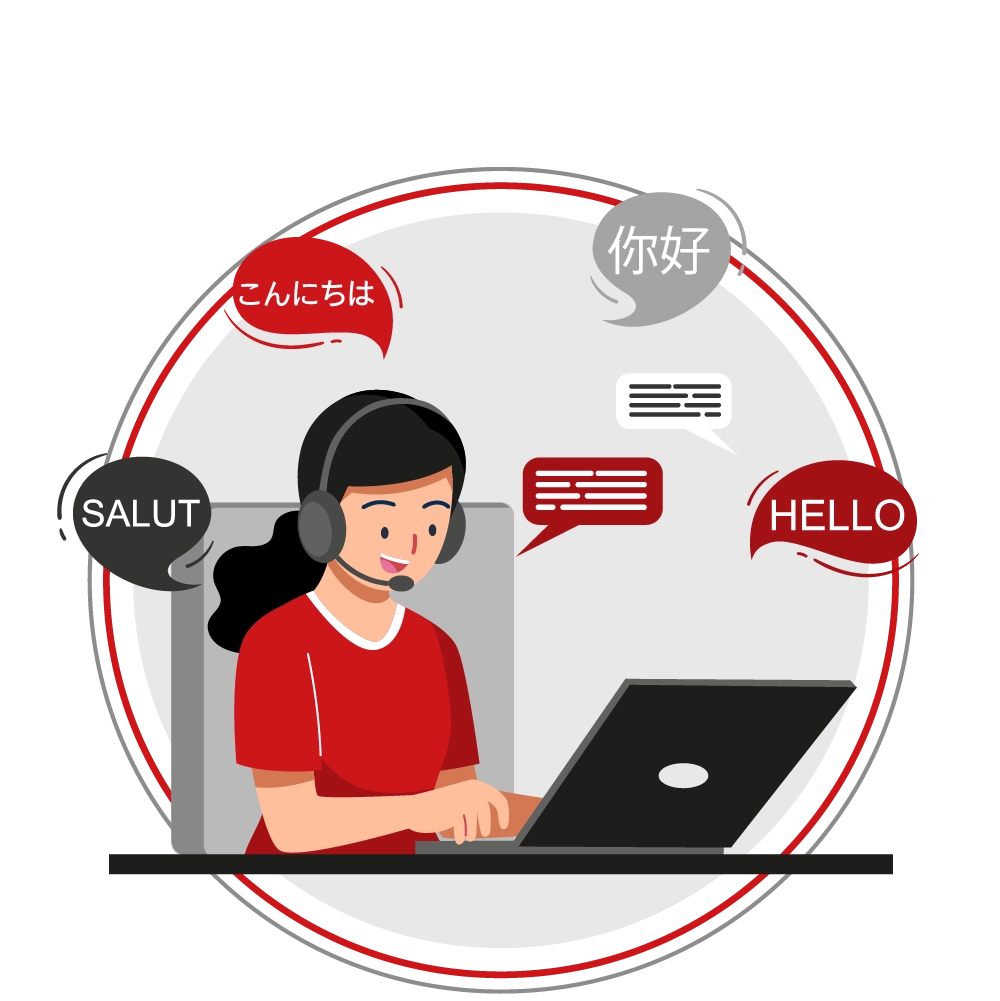
Your project goes to native Japanese translators with subject-matter expertise, from law and finance to medicine, technology and entertainment. They understand both industry terminology and Japanese business culture, so your message is clear, respectful and accurate.
- English to Japanese and Japanese to English
- Japanese paired with other Asian and European languages
- Linguists assigned by subject area, not at random
- Independent revision by a second linguist under ISO 17100
Document translation
Which Japanese documents do we translate?
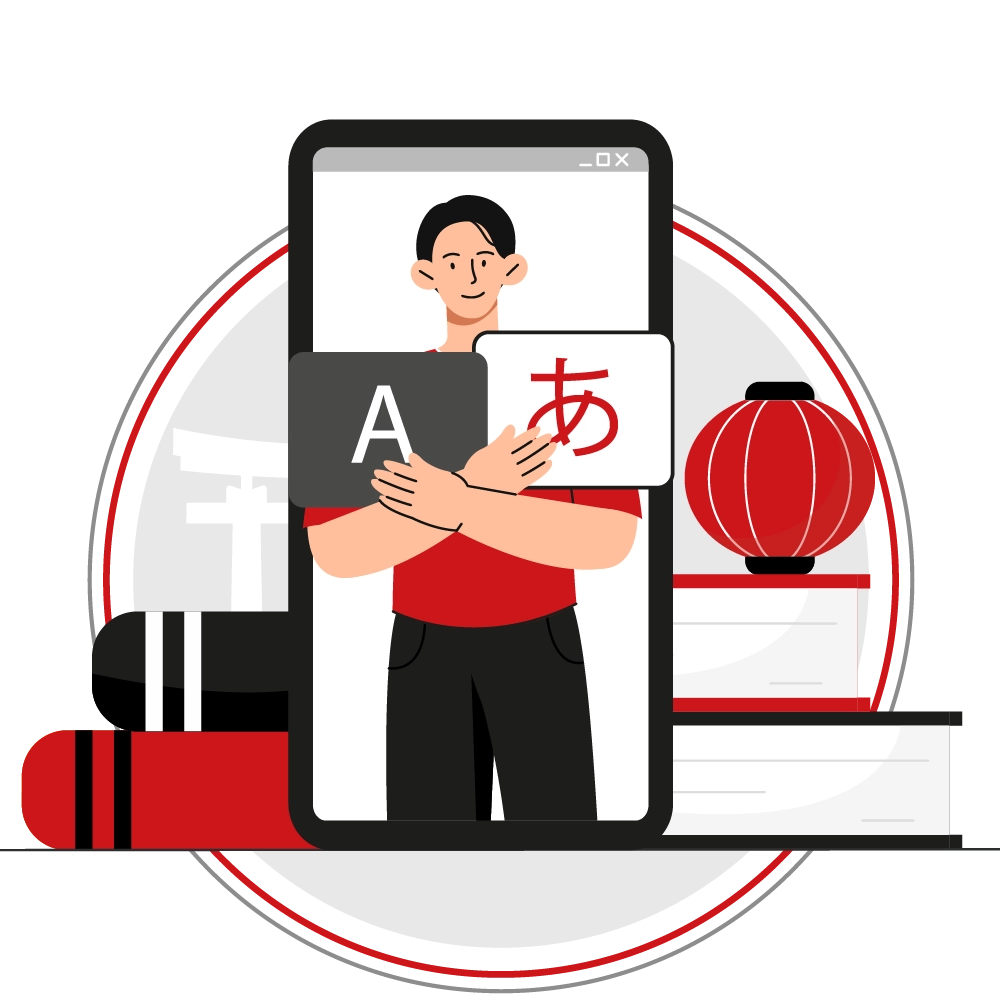
Specialist Japanese translators for legal, business and marketing content.

Japanese legal translation
Certified translations of legal filings, contracts, birth certificates, divorce decrees, transcripts, rulings and licenses.
Explore →

Business document translation
Financial reports, technical user manuals, corporate communications, emails and official agreements.
Explore →

Marketing and media localization
Websites and apps, flyers, brochures, advertisements, magazines and marketing collateral.
Explore →

Industry expertise
Why does industry expertise matter for Japanese translation?
Japanese readers expect the exact terms used in their industry. Our translators bring both language fluency and a working knowledge of sector terminology and standards, from legal and financial to medical, technical and entertainment content.
- Glossaries and style guides agreed before translation starts
- Translation memory so approved wording is reused in every update
- Register and terminology checked by a second native linguist
- Layout and in-context checks for websites, apps and print
Services
What other Japanese language services do we offer?
One native Japanese team for documents, digital products and media.
Website localization
Japanese websites with localized SEO, formats and natural copy.
Explore →
App localization
UI strings and app store listings in the right register.
Explore →
Game localization
In-game text, UI and store content for Japanese players.
Explore →
eLearning localization
Courses and training material for Japanese learners.
Explore →
Interpreting
Japanese interpreters by phone or video for meetings and appointments.
Explore →
Desktop publishing
Horizontal and vertical Japanese typesetting with suitable fonts.
Explore →
Industries
Which industries do our Japanese translators serve?
Native Japanese translators for regulated, technical and consumer content.
Life sciences Japanese translation
Clinical, regulatory and medical device content.
Explore →
Legal Japanese translation
Contracts, filings and certified documents.
Explore →
Financial Japanese translation
Reports, banking and investor communications.
Explore →
Automotive Japanese translation
Manuals, specifications and supplier documentation.
Explore →
Software Japanese localization
Interfaces, help centers and documentation.
Explore →
Gaming Japanese localization
In-game text and store pages.
Explore →
Manufacturing Japanese translation
SOPs, quality and technical documents.
Explore →
Ecommerce Japanese localization
Product listings and checkout flows.
Explore →
More languages
Which other Asian languages do we translate?
Expanding across Asia? We translate the main languages of East and Southeast Asia.
What clients say about our work

Legal Assistant
at Law Firm, USA
"AsiaLocalize came to my rescue when I needed translations from Afar and Somali, which are languages that were not easy to find translators for. When we needed a last-minute change in how the translations were certified to meet the court’s rules, the team at AsiaLocalize worked really hard to get us what we needed in a short time frame. I would definitely hire them again!"

Product Manager
at Software Development Co.
"AsiaLocalize was instrumental in helping us translate complex technical documents from English to Chinese. The accuracy and attention to detail they provided were exactly what we needed to ensure our product specifications were clearly communicated to our partners in China. Their team worked efficiently, even under tight deadlines, and delivered high-quality results. I would highly recommend AsiaLocalize for any translation needs!"
Senior Manager Practice
at Management Consulting Co.
We partnered with Asia Localize to translate a website into eight languages across ASEAN, and we’re thrilled with the results. Their team provided high-quality translations that maintained the intent of our work and resonated with local audiences. The process was smooth, and they delivered on time for every language. They were also flexible and accommodating to our requests for amendments and overall, a pleasure to work with

Need Japanese translation?
Tell us about your audience, content and deadline, and we will send a clear quote. Native Japanese linguists handle translation, revision and layout checks from start to finish.
Frequently Asked Questions About Japanese Translation
Do you translate both into and out of Japanese?
Yes. We handle English to Japanese and Japanese to English, as well as Japanese paired with other Asian and European languages. Translation is always performed by a native speaker of the target language who works in your subject area.
How much does Japanese translation cost?
Japanese translation is usually priced per source word. The rate depends on subject matter, file format, turnaround and any desktop publishing needed. Send us your files and we will provide a detailed quote.
How do you handle Japanese politeness levels in business content?
Politeness in Japanese is grammatical rather than optional, so register is agreed before translation begins. We confirm who the audience is and which channel the content appears in, then apply the plain, polite, or honorific form that fits. Using the wrong register reads as either rude or oddly deferential.
Can you handle vertical Japanese text and layout?
Yes. Our desktop publishing team rebuilds your document in the target language and handles the practical problems Japanese creates in a layout: vertical text, line-breaking rules unlike European languages, text expansion and contraction, and font substitution where the original typeface has no coverage for Japanese scripts.
What types of Japanese documents do you handle?
Legal documents including contracts and filings, business and financial documentation, technical manuals and specifications, marketing and media content, and websites, apps, and e-learning material. Linguists are assigned by subject area rather than at random.
How do you keep Japanese terminology consistent across projects?
We build a glossary and style guide for your account before translation starts and work inside a professional CAT environment with translation memory. Approved wording is reused automatically across every file and every future update, so terminology stays consistent instead of being re-decided each time.
How do I get a quote for Japanese translation?
Send the files or describe the scope, the target audience and your deadline. We assess the material and come back with a quote covering what the work involves.

