
Chinese SEO and social media localization adapt your website, search strategy and platform content for how people in mainland China discover, evaluate and discuss brands. Effective localization combines Chinese-language keyword research, Baidu-ready technical foundations, platform-specific creative, cultural review, local user experience and compliant measurement—not a direct translation of a global campaign.
Updated: October 5, 2026.
Why Does China Need a Dedicated Digital Strategy?
China is not simply another language version of an existing Google-and-Meta campaign. Search, social discovery, content formats, payment journeys, data rules and user expectations form a distinct digital ecosystem. A brand may have an accurate Chinese translation and still remain difficult to find, slow to load, culturally unconvincing or poorly matched to the platforms its audience actually uses.
The opportunity is substantial. The China Internet Network Information Center’s 57th report states that China had 1.125 billion internet users and an internet penetration rate above 80% by December 2025. Scale alone, however, does not guarantee demand for a particular product. Market entry should begin with audience, category, competitor and regulatory research.
Chinese SEO and Social Media Localization at a Glance
| Area | Chinese SEO | Social media localization |
|---|---|---|
| Primary goal | Earn relevant visibility in search and other searchable content surfaces | Build awareness, participation, trust and conversion on selected platforms |
| Research unit | Chinese search queries, intent, SERP features and competitor pages | Audience communities, formats, creators, conversations and platform behavior |
| Core assets | Website pages, titles, copy, internal links, structured content and technical signals | Official accounts, short video, posts, livestreams, community replies and mini-program journeys |
| Quality control | Indexation, relevance, authority, speed, mobile usability and conversion | Cultural fit, platform-native execution, moderation, response time and brand safety |
| Measurement | Indexed pages, qualified impressions, rankings, organic visits and leads | Reach, saves, shares, watch time, branded search, assisted conversions and retention |
What Is Chinese SEO?
Chinese SEO is the process of improving a Chinese-language website’s discoverability and usefulness for people searching in China. It covers technical access, crawling and indexation, native-language query research, page structure, useful content, authority signals and post-click experience. Baidu is an important search channel, but the plan should also consider search behavior inside social, video, commerce and super-app ecosystems.
Do not translate an English keyword list word for word. Chinese users may express the same need with different terminology, abbreviations, problem statements or category language. Simplified Chinese is normally used for mainland-China campaigns, while Traditional Chinese serves different markets and must not be treated as a cosmetic character conversion. See this comparison of Simplified and Traditional Chinese.
How is Baidu SEO different from Google SEO?
The fundamentals overlap: search engines need accessible pages, clear topics, trustworthy information and a good user experience. The execution differs because Baidu has its own crawling, indexation, webmaster tools, search-result features and quality guidelines. Google rankings or Search Console data cannot substitute for direct testing in Baidu.
| SEO task | China-market implication |
|---|---|
| Crawling and indexation | Verify the site in Baidu Search Resource Platform, monitor crawl issues and submit eligible resources through supported tools. |
| Page titles | Use unique, concise Chinese titles that accurately describe the page; avoid repetition and keyword stuffing. |
| Mobile experience | Make the primary content immediately readable, responsive and fast, without intrusive overlays or broken functions. |
| Content quality | Answer a real user need with clear structure, subject expertise, relevant visuals and visible publisher credibility. |
| Local accessibility | Test pages and third-party assets from within mainland China; global scripts, fonts, video embeds or analytics may behave differently. |
| Conversion journey | Localize forms, contact options, trust signals, support, payments and follow-up—not only the landing-page copy. |
Baidu’s official Search Resource Platform guidance covers site verification, robots controls, crawl diagnostics, indexation and search-display optimization. Its quality-content guidance emphasizes publisher authority, a usable presentation, professional depth and positive user response. These are more durable principles than chasing an unverified algorithm trick.
What Is Chinese Social Media Localization?
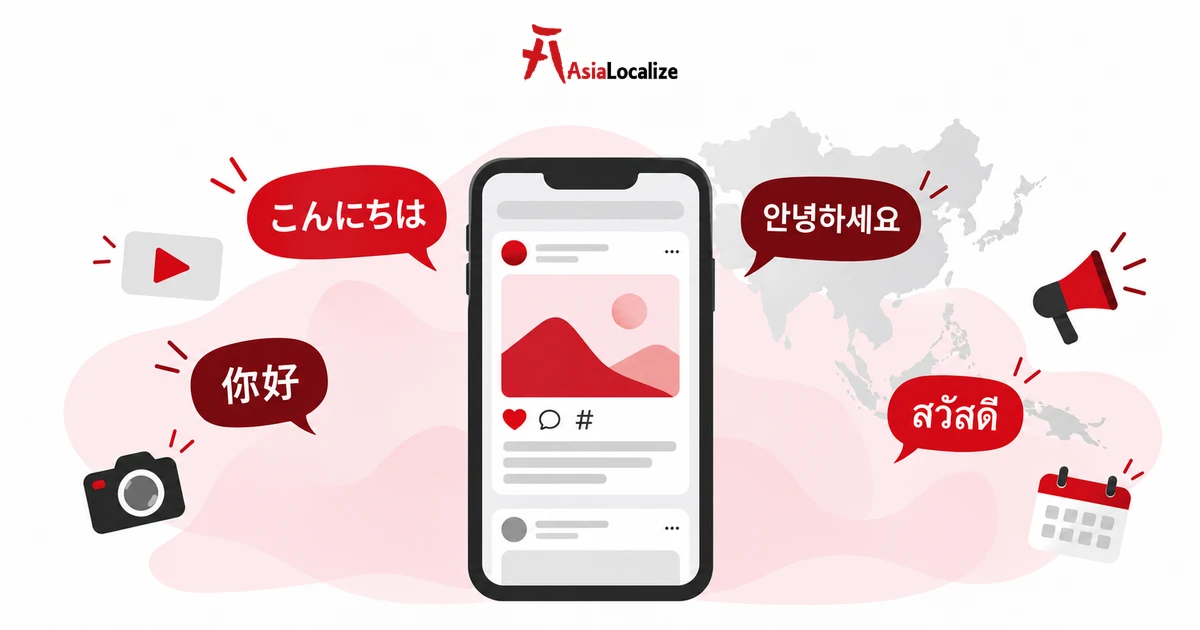
Chinese social media localization adapts channel selection, account setup, content formats, language, visual cues, publishing cadence, community management and conversion paths for a defined audience in China. It is not the practice of posting the same translated caption everywhere.
Platform choice should follow the audience and business objective. Weixin, Weibo, Douyin, Xiaohongshu, Bilibili, Zhihu and other platforms serve different combinations of messaging, discovery, short video, lifestyle research, long-form expertise, community and commerce. Their relevance also varies by category, age group, geography and whether the campaign is B2B or B2C.
| Platform or ecosystem | Common strengths | Questions to validate |
|---|---|---|
| Weixin | Official Accounts, Channels, Search, Mini Programs, messaging, payments and customer journeys | Which account type, content path and conversion function does the audience need? |
| Open conversation, trends, entertainment, news and campaign amplification | Does the category benefit from public discussion and real-time visibility? | |
| Douyin | Short video, creator content, livestreaming and commerce discovery | Can the brand sustain platform-native video and a measurable commerce path? |
| Xiaohongshu | Lifestyle research, recommendations, visual storytelling and purchase consideration | Do authentic experience-led posts fit the product and audience? |
| Bilibili | Longer video, enthusiast communities, education and entertainment | Is there enough depth or storytelling value to earn attention? |
| Zhihu | Question-led discovery, expert explanation and consideration-stage content | Can qualified contributors answer specific audience questions credibly? |
Tencent reports that the combined monthly active users of Weixin and WeChat exceeded 1.4 billion in the first quarter of 2026. Its ecosystem includes Official Accounts, Video Accounts, Mini Programs, Weixin Search and Weixin Pay. That breadth illustrates why a China social plan often connects content, search, service and conversion rather than treating social media as an isolated publishing calendar. The figure is global and combines Weixin with WeChat, so it should not be presented as a mainland-China audience count.
How to Build a Chinese SEO Strategy
1. Define the market, audience and conversion
Specify the mainland-China segments you want to reach, their needs, cities or regions, buying roles, category knowledge and preferred conversion. A distributor enquiry, ecommerce purchase, app install and enterprise demo require different keywords, proof points and landing pages.
2. Research queries in Chinese
Start with local-language seed topics, then examine Baidu suggestions, related searches, result pages, community discussions, competitor terminology, customer-service logs and internal site search. Classify queries by intent—informational, comparison, brand, transactional or support—and map each important intent to one primary page.
3. Localize the site architecture and page experience
Create a coherent Chinese information architecture rather than isolated translated pages. Localize navigation, breadcrumbs, product taxonomy, URLs where appropriate, metadata, body copy, images, units, dates, contact methods, forms, error messages and confirmation emails. AsiaLocalize’s website localization services combine language work with in-context and functional review.
4. Establish technical accessibility
- Confirm important URLs return correctly and are not blocked by robots directives or authentication.
- Provide crawlable HTML for essential content and navigation.
- Create accurate XML sitemaps and maintain canonical signals.
- Use responsive layouts and test real mobile devices and network conditions.
- Reduce dependency on third-party resources that fail or load slowly in China.
- Verify the site in Baidu Search Resource Platform and monitor index coverage.
- Evaluate hosting, CDN and ICP-related requirements with qualified technical and legal advisers for the chosen deployment model.
5. Publish useful, credible Chinese content
Answer the question early, use descriptive headings, provide evidence and keep each section understandable on its own. Show the publisher, author or reviewer where relevant. Update changing claims and remove stale market statistics. Product pages need complete information and a usable path to action; educational pages should resolve the query rather than merely repeat a keyword.
6. Build authority without link schemes
Earn relevant citations through partnerships, media relations, industry resources, original research and content that Chinese audiences genuinely use. Coordinate search with social and creator activity so useful content can generate branded demand and qualified references. Avoid paid-link or mass-submission tactics that create risk without audience value.
How to Localize Social Media for China
- Choose channels by evidence: validate where the exact audience researches, discusses and buys the category.
- Define a role for each channel: awareness, education, community, customer service, lead generation or commerce.
- Create native content: adapt the hook, length, visual language, subtitles, presenter style and call to action for the platform.
- Build a terminology and brand guide: document the Chinese brand name, product names, tone, prohibited claims and response rules.
- Plan community management: assign fluent reviewers, response times, escalation paths and crisis protocols.
- Localize the next step: connect posts to an accessible landing page, Mini Program, store, service account or other appropriate journey.
- Test and learn: compare creative themes, formats and calls to action while monitoring business outcomes, not vanity metrics alone.
How Should Search and Social Work Together?
Search captures explicit demand; social content can create discovery, trust and branded demand. Use customer questions and search queries to plan social explainers. Use comments, creator feedback and platform-search behavior to improve website content. Keep naming, claims and landing-page promises consistent across channels.
A practical campaign might publish an expert comparison page on the website, adapt its key points into short video and community posts, answer follow-up questions, and then update the page with clearer explanations. This creates a continuous localization loop rather than separate translation requests for every asset.
Compliance and Data Considerations
China-market websites and campaigns may involve advertising rules, platform policies, cybersecurity, personal information, cross-border data transfers, sector-specific restrictions and hosting or filing requirements. The Personal Information Protection Law applies in specified circumstances to organizations outside China that offer products or services to people in China or analyze their behavior. It includes duties concerning transparency, consent and personal-information processing.
Translate privacy notices and consent interfaces into clear Chinese, minimize collection, document where leads and analytics data travel, and involve qualified counsel before launch. Compliance requirements depend on the business model and data flow; this article is operational guidance, not legal advice.
Chinese Digital Localization Checklist
- Defined audience, business goal and conversion path
- Native Chinese keyword and competitor research
- Simplified or Traditional Chinese selected for the correct market
- Crawlable, mobile-friendly pages tested from mainland China
- Baidu verification, indexation monitoring and accurate sitemaps
- Localized navigation, forms, trust signals and post-conversion messages
- Platform selection based on audience evidence
- Channel-specific creative and community-management workflow
- Terminology, style and cultural-review guidance
- Privacy, advertising, sector and cross-border data review
- KPIs connecting visibility and engagement to qualified business outcomes
- A regular testing, reporting and content-refresh cycle
Frequently Asked Questions
Is Baidu SEO the same as Google SEO?
No. Both reward accessible, relevant and useful pages, but their crawling systems, webmaster tools, result features and published requirements differ. Research and validate directly in Baidu instead of copying a Google keyword list or assuming identical indexation.
Do I need a .cn domain or hosting in China?
Not every China-targeted website needs a .cn domain or mainland hosting. The right setup depends on performance, operations, audience, deployment and regulatory requirements. Test accessibility and speed from mainland China, then obtain qualified technical and legal advice before choosing hosting or filing arrangements.
Should Chinese keywords be translated from English?
No. Translation supplies useful seed ideas, but keyword research must examine how Chinese users describe the need, product and problem. Search intent, terminology and result-page competition may differ materially from the English market.
Which Chinese social media platform is best?
There is no universal best platform. Choose according to the audience, category, content capability and desired action. Many brands need a small, connected channel mix rather than accounts on every major platform.
Is Mandarin translation enough for market entry?
No. Language is essential, but market entry also requires product-market research, cultural adaptation, accessible technology, local platform strategy, compliant data handling, customer support and a usable conversion experience. Explore AsiaLocalize’s Chinese translation and localization services.
How do you measure Chinese SEO and social localization?
Track leading indicators such as indexation, qualified rankings, reach, watch time, saves and branded searches, then connect them to visits, enquiries, sales, repeat use and acquisition cost. Establish a baseline and separate platform reporting from website analytics so attribution assumptions remain visible.
Build a China-Ready Search and Social Presence
AsiaLocalize helps international organizations adapt Chinese-language websites, search content and campaign assets for their intended audiences. The work can include market-specific terminology, translation, transcreation, multilingual SEO support, in-context review and ongoing content operations. Contact AsiaLocalize with your target market, audience, channels and business goal to discuss an appropriate workflow.
Sources and Further Reading
- CNNIC — 57th Statistical Report on China’s Internet Development announcement
- Baidu Search Resource Platform — optimization and indexation guidance
- Baidu Search — quality-content guidance
- Tencent — Weixin and WeChat product and usage information
- Personal Information Protection Law of the People’s Republic of China
- International Trade Administration — China selling factors and digital advertising context