
Vietnam is home to 100,987,686 people, making Vietnamese one of Southeast Asia’s most important languages for business communication.
While Vietnamese is the official language in Vietnam, there are over 110 languages across the nation. Alongside Vietnamese, various ethnic groups contribute their unique languages, such as Tay, Hmong, Khmer, and Muong, among others.
What language is spoken in Vietnam?
Vietnamese (Tiếng Việt) is the official language of Vietnam, spoken as a first language by the overwhelming majority of the country’s ~101 million people. Ethnologue counts about 110 living languages across Vietnam’s 54 recognized ethnic groups — including Tày, Mường, Cham, Khmer, Hmong, and Nùng — but Vietnamese is the language of government, education, media, and business nationwide.
Vietnam language facts at a glance (2026)
| Stat | Figure | Source (verify before publish) |
|---|---|---|
| Population of Vietnam | ~101 million | GSO Vietnam / Worldometers |
| Living languages | ~110 | Ethnologue |
| Recognized ethnic groups | 54 | Government of Vietnam |
| Official language | Vietnamese (Tiếng Việt) | Constitution of Vietnam |
| Writing system | Latin-based Quốc Ngữ | — |
| Internet users | ~80 million (~79% penetration) | DataReportal 2026 (confirm) |
| English proficiency | Moderate band, EF EPI | EF EPI (confirm current rank) |
In this article, we will reflect on the many languages spoken in Vietnam, sharing all you need to enter the Vietnamese market.
Vietnamese: The Official and Dominant Language
Vietnamese is the national and official language of Vietnam, spoken by the majority of the Vietnamese population. As an Austroasiatic language, it belongs to a diverse family of languages that primarily span Southeast Asia and parts of India.
The Vietnamese language plays a crucial role in unifying the country’s diverse ethnic groups and facilitating communication across its rich cultural landscape.
Originally, Vietnamese was written using Chinese characters due to the historical influence of China on Vietnam. This system, known as Chữ Nôm, incorporated Chinese characters to represent Vietnamese words, capturing both the sounds and meanings of the language. While it allowed for literary expression, Chữ Nôm was complex and not widely accessible to the general population.
The significant change began in the 17th century with the arrival of European missionaries, particularly the Jesuit priest Alexandre de Rhodes. He recognized the need for a simpler, more accessible writing system and developed the Vietnamese alphabet, known as Quốc Ngữ. This system used the Latin alphabet, which provided a straightforward phonetic representation of Vietnamese sounds.
Today, the Latin-based Vietnamese alphabet is widely used and represents a significant aspect of Vietnam’s identity and cultural evolution.
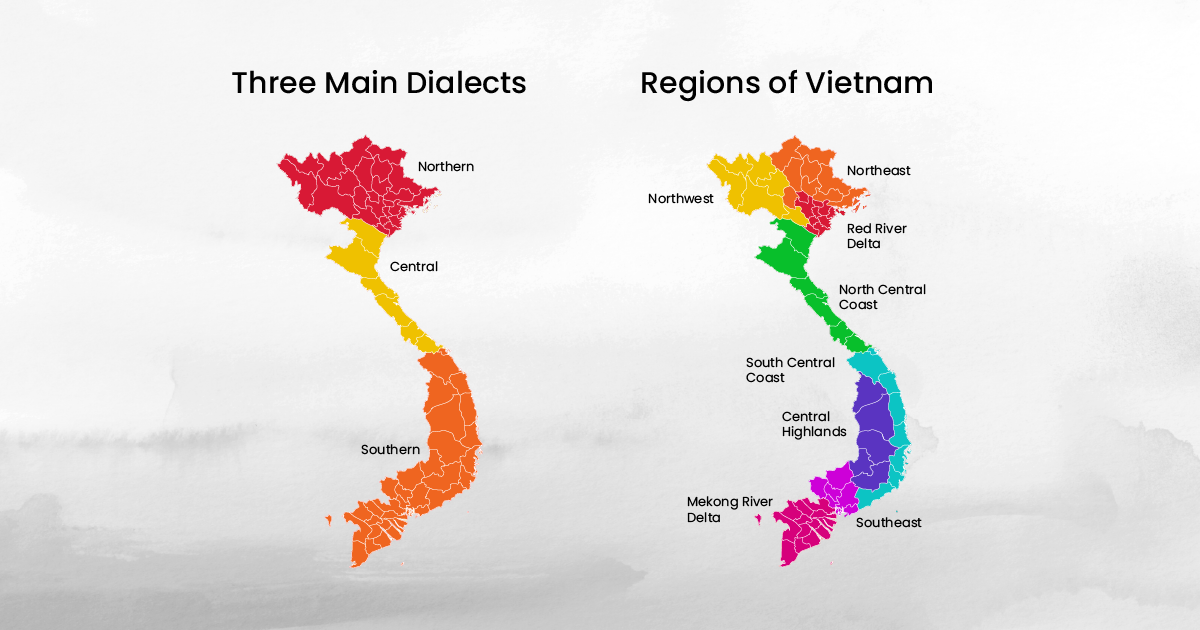
The three main regional dialects are Northern Vietnam, Central Vietnam, and Southern Vietnam.
Northern or Southern Vietnamese: Which One Does Your Business Need?
This is the question that actually matters for market entry — and the answer depends on content type, not preference.
The good news first: written Vietnamese is standardized nationwide. One written version serves Hanoi and Ho Chi Minh City alike, which means websites, apps, documentation, and legal content need a single Vietnamese localization — with a vocabulary review for your target region, since everyday terms can differ between north and south (a fruit is quả in the north and trái in the south; a father is bố in Hanoi and ba in Saigon).
The decision becomes real the moment your content is spoken:
- Websites, apps, UI, documents, legal: one standard written Vietnamese localization, region-aware vocabulary review. This is where app localization projects for Vietnam start.
- Voice-over, dubbing, e-learning audio: you must choose an accent. The Northern (Hanoi) accent is the broadcast and government standard and the safe national default; the Southern (Ho Chi Minh City) accent dominates entertainment and commercial media and often connects better with consumer audiences in Vietnam’s largest commercial hub.
- Marketing and campaigns: transcreation with regional vocabulary matched to your launch market — a campaign built for HCMC consumers should not sound like a Hanoi news broadcast, and vice versa.
- Customer support: agents and templates should mirror the register and vocabulary of your primary customer base.
Why Vietnamese Localization Demand Is Rising
Two forces are driving Vietnamese to the top of localization roadmaps. First, manufacturing: Vietnam has become a primary “China+1” destination for electronics and consumer goods production, which generates steady demand for technical documentation, HR and compliance content, safety training, and supplier communication in Vietnamese. Second, digital growth: with roughly 80 million internet users and one of Southeast Asia’s fastest-growing digital economies, Vietnam is now a launch market in its own right — not an afterthought — for apps, e-commerce, games, and SaaS products.
For most companies the practical sequence is: localize the website and product first, then marketing, then support — the same order in which Vietnamese users will meet your brand.
Importance of Vietnamese for Businesses
88.6% of people in Vietnam speak Vietnamese! Proficiency in Vietnamese allows businesses aiming to thrive in Vietnam’s dynamic market to win over most of the market and demonstrate respect and commitment to local partners, suppliers, and stakeholders.
Investing primarily in localization for marketing and multilingual customer service can make all the difference.
86% of the localized advertising campaigns outperformed the English campaigns in both click-throughs and conversions.
Being able to interact with customers in their native language ensures that inquiries, feedback, and concerns are addressed promptly and effectively.
Vietnamese Translation and Localization for Business Growth
For companies entering Vietnam, understanding the language landscape is only the first step. The next challenge is making business content sound clear, natural, and locally relevant to Vietnamese audiences.
Professional Vietnamese translation services help businesses adapt websites, product pages, marketing campaigns, legal documents, training content, and customer support materials with the right terminology and tone. This is especially important in sectors where clarity affects trust, user experience, and conversion.
If your company is preparing content for the Vietnamese market, website localization services can also help adapt page structure, calls to action, forms, visuals, and multilingual SEO elements so the experience feels built for local users rather than simply translated.
Minority Languages of Vietnam
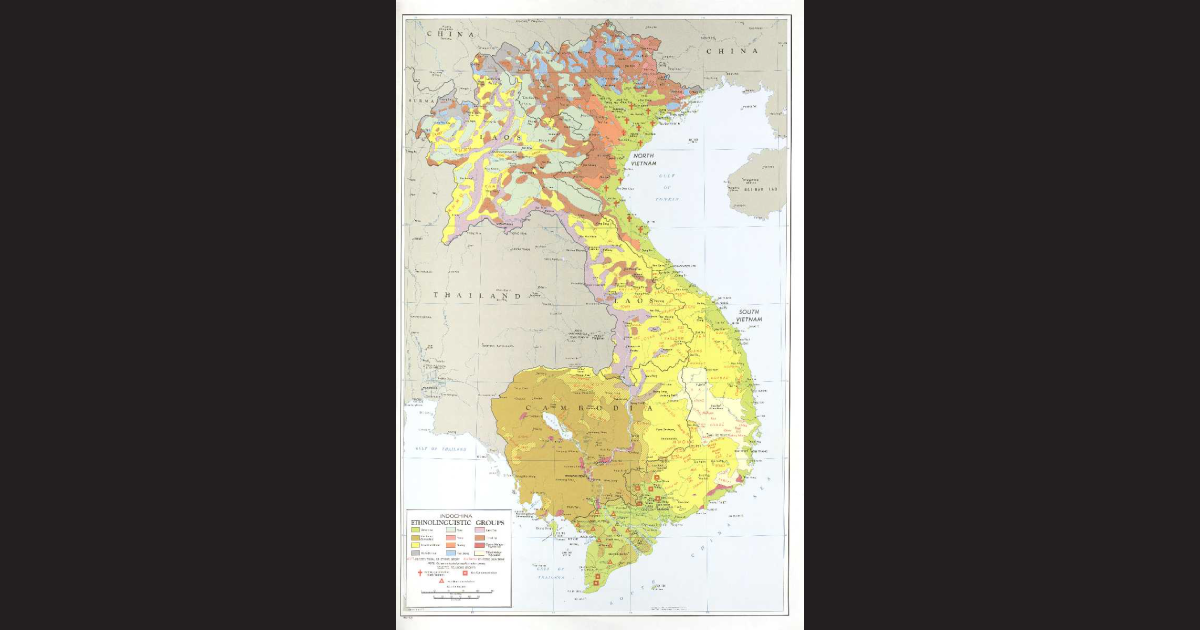
Minority languages are primarily spoken by various ethnic minority groups, each contributing to the cultural diversity that defines the nation.
Languages spoken by these groups include Tay, Hmong, Khmer, Muong, and many others, each with its own unique phonetics, grammar, and vocabulary.
Tày
- Predominantly spoken in the northeastern regions of Vietnam
- Spoken by 3 million people in Vietnam, the Tày language belongs to the Thai family.
Mường
- Mainly spoken in the mountainous regions of Northern Vietnam
- The Muong language is an Austroasiatic language that is very similar to Vietnamese.
- It’s spoken by one million people in the mountainous regions of Hoa Binh and Thanh Hoa.
Cham
- Spoken in southern and central Vietnam
- Cham is classified as a Malayo-Polynesian language, spoken by the Cham minority group primarily in southern and central Vietnam.
- The Cham language holds historical significance, tracing back to the ancient Champa civilization.
Khmer
- Spoken in southern Vietnam
- Spoken by more than a million people in Vietnam, Khmer is an Austroasiatic language, coming from the Khmer Empire of the 9th century AD.
Hmong
- Spoken in northern Vietnam
- The Hmong language, part of the Hmong-Mien language family, serves the Hmong people, a prominent minority group in the area.
Nùng
- Spoken in northern Vietnam by 969,00 people
- It is spoken primarily by the namesake ethnic group, the Nung language is a Tai-Kadai language.
Foreign Languages in Vietnam
French – A Colonial Legacy
The influence of French colonization in Vietnam, which lasted from the mid-19th century until the mid-20th century, has left a significant mark on the country’s linguistic landscape.
Despite Vietnam gaining independence, the legacy of French is still evident today, particularly as a foreign language spoken by some Vietnamese people, especially among the older generation.
English – The Rising Language of Business and Tourism
English has emerged as a crucial language in Vietnam, particularly in the realms of business, tourism, and education. As the country continues to integrate itself into the global economy, proficiency in English has become increasingly crucial for both individuals and organizations striving for success.
Tapping into the Vietnamese Market?
Effective Vietnamese translation services are the key to connecting with Vietnamese consumers and building trust in this vibrant market.
Did you know that 75% of consumers are more likely to buy products when the information is available in their native language?
At Asialocalize, we specialize in creating tailored localization strategies that align with your business goals and resonate with Vietnamese customer preferences. From planning to execution, we provide end-to-end solutions designed to ensure your success in this growing market.
Planning to enter the Vietnamese market?
AsiaLocalize helps businesses translate and localize content for Vietnamese-speaking audiences, from websites and marketing campaigns to technical, legal, and training materials.
Expanding into Vietnam?
AsiaLocalize localizes websites, apps, and campaigns into Vietnamese with native linguists on both sides of the north–south question.
Get a Vietnamese Localization Quote in 2 Hours →
FAQs About Languages and Localization in Vietnam
What is the official language of Vietnam?
Vietnamese is the official and dominant language of Vietnam. It is used in government, education, media, and most business communication across the country.
Are there minority languages in Vietnam?
Yes. Vietnam is home to many minority languages, including Tày, Mường, Cham, Khmer, Hmong, and roughly 1 million people.
Why does language localization matter for businesses entering Vietnam?
Localization helps businesses adapt their message, terminology, website content, and customer communication to local expectations, making content easier to understand and more relevant to Vietnamese audiences.
What is the difference between Northern and Southern Vietnamese?
Written Vietnamese is the same nationwide, but spoken Vietnamese differs by accent and some everyday vocabulary. The Northern (Hanoi) accent is the broadcast standard; the Southern (Ho Chi Minh City) accent dominates commercial media. Businesses only need one written localization, but voice content requires choosing an accent for the target audience.
Do businesses need to translate into Vietnam’s minority languages?
Rarely. Vietnamese reaches virtually the entire market, including minority communities, through education and media. Minority languages such as Tày, Hmong, or Khmer matter mainly for public-sector, NGO, and community-outreach content rather than commercial localization.