
Chinese consumers haven’t stopped spending; they’ve just become harder to impress. Consumer behaviour now feels more intentional, more measured, and deeply tied to shifting consumer confidence. The local market is still moving fast, but it’s no longer forgiving. And for global brands, that subtle shift is where things start to slip.
Quick Answer: What Do Chinese Consumers Want in 2025–2026?
Chinese consumers want value they can justify. That value may come from quality, safety, convenience, emotional reward, cultural relevance, social proof, or personal identity. Many consumers are more cautious because of economic uncertainty, but they continue to spend when a product feels useful, trustworthy, or personally meaningful. For global brands, the winning approach is precise segmentation, culturally adapted messaging, platform-specific content, and localized proof.
Chinese households still save one-third of their income, but that hasn’t translated into silence at the checkout. Spending is still there; it’s just more selective and often more emotionally driven.
And here’s where it gets interesting. Most global content entering the market still speaks in broad, generic tones as if nothing has changed. But Chinese consumers notice. They read between the lines. They feel when something is translated and when it truly belongs.
Who Are Chinese Consumers in 2025–2026?
Chinese consumers in 2025–2026 are not one unified audience. They include urban Gen Z shoppers discovering brands through social commerce, family-focused buyers comparing safety and reliability, affluent consumers seeking personal fulfillment, and value-conscious households making more deliberate purchase decisions.
The main shift is not that Chinese consumers have stopped spending. It is that spending has become more selective. McKinsey’s 2025 China consumer research found that the market has entered a “new reality” of single-digit consumption growth, cautious sentiment, and stronger demand for personal fulfillment. The same research also found that Chinese consumers are still spending in areas such as tourism, dining out, food and beverage, sportswear, outdoor activities, and consumer health.
That’s the gap this blog explores. Because in a market like this, success comes from saying it right, in a way that actually lands.
Build a Stronger Localization Strategy for Chinese Audiences
Reaching Chinese consumers requires more than direct translation. Explore AsiaLocalize services that support language accuracy, digital visibility, platform localization, and market-ready customer experiences.
From translation to market adaptation
Use these related services to connect content, SEO, marketing, websites, ecommerce, and apps into one stronger China localization journey.
Chinese Translation Services
For accurate Simplified Chinese, Traditional Chinese, Mandarin, Cantonese, and market-specific language support.
Explore serviceMarketing Localization Services
For campaign messages, slogans, creative assets, cultural references, and localized brand communication.
Explore serviceChinese SEO Services
For multilingual SEO, international keyword research, localized content structure, and regional search visibility.
Explore serviceSocial Media Localization
For adapting Chinese social content, platform expectations, audience behavior, and local engagement style.
Read guideWebsite Localization Services
For localizing page structure, CTAs, forms, visuals, product pages, and multilingual website experiences.
Explore serviceEcommerce Localization
For online stores, product descriptions, customer journeys, checkout flows, and localized shopping experiences.
Explore serviceApp Localization Services
For app UI, user journeys, in-app content, help text, store listings, and mobile product localization.
Explore serviceTranslation Services
For professional multilingual translation support across business, technical, legal, medical, and digital content.
Explore serviceWhy “Trading Down” Doesn’t Mean Thinking Small
What’s unfolding in China right now is a reset in how value is defined. “Trading down” might sound like a shift toward cheaper choices, but in reality, it reflects something far more considered. Consumers are refining where their money goes, cutting back in areas that feel replaceable and leaning in where the return—whether practical or emotional—feels genuinely worth it.
Where Spending Is Quietly Coming Back
You can see this shift clearly in where money is flowing again:
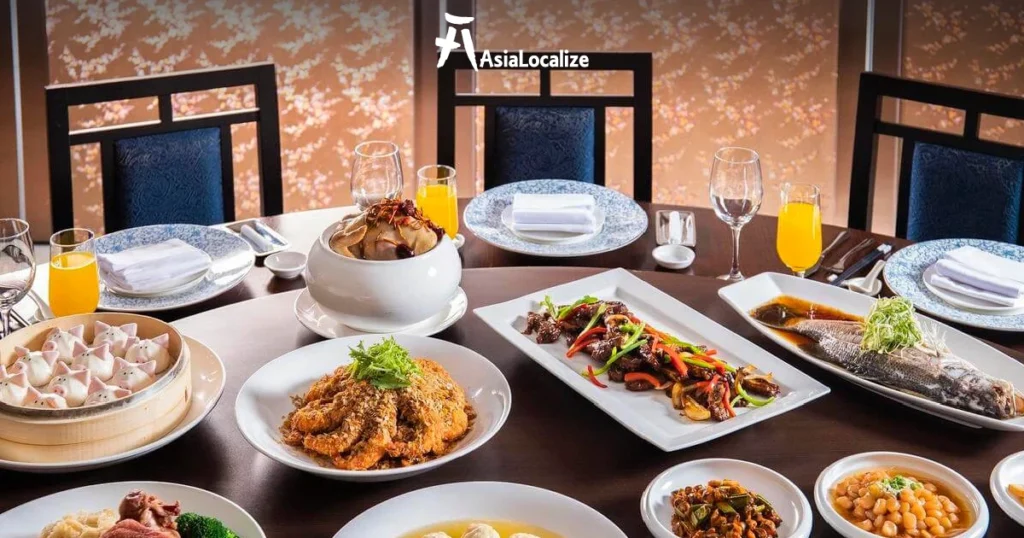
- Dining & food
Trusted quality, better ingredients, and social value matter more than ever. It’s less about frequency, more about intention. - Travel & lifestyle
Travel has become a reset button. Even with caution in the background, consumers are prioritizing experiences that offer a break, a shift in routine, or a sense of reward. - Experience-driven spending
Events, outings, small “treat” moments. These are winning because they feel personal. They create memories. And that emotional return is often what justifies the spend.
Explore how Marketing Localization helps brands align with real consumer expectations.
Why Chinese Consumers Are More Selective Now
The shift in Chinese consumer behavior is partly economic and partly cultural. Consumer confidence remains sensitive to job security, income expectations, real estate values, and future financial uncertainty. CaixaBank Research notes that China’s household savings rate is close to 35%, much higher than in advanced economies, and that households have become more cautious since the pandemic and housing crisis.
The Part Most Global Brands Miss
This is where things get real for brands entering the local market.
It’s no longer about asking: Can they afford this?
The better question is: Does this feel worth it to them—right now, in this context?
- Where will your audience still pay premium?
→ When the purchase signals quality, safety, convenience, or self-reward. - Where will they trade down without hesitation?
→ When options feel interchangeable, or the value isn’t immediately clear. - What actually makes a premium claim land?
→ Product quality they can trust, service they can rely on, details that show you understand their expectations.
And this is exactly where localization stops being a technical step and becomes a strategic one.
Look closely at how people are choosing brands today, and the shift goes deeper than budgets or categories. Beneath the surface, a few quieter forces are shaping decisions in a way that many global brands underestimate.
Authenticity → Specific beats polished
Consumers respond to what feels real. Clear claims, concrete details, and language that sounds like it belongs carry far more weight than overly refined brand talk. Precision builds credibility faster than perfection.
Mindful spending → Fewer choices, higher expectations
Spending decisions are more deliberate. People take their time, compare options, and look for purchases that hold up over time. The mindset leans toward “choose well” rather than “choose more,” which raises the bar for how value is communicated.
Cultural pride → Relevance over replication
Local culture holds more influence in shaping preferences. Messaging that borrows global slogans without adapting them often feels out of place. What connects is content that reflects local nuance, references, and tone in a way that feels natural rather than imported.
New family dynamics → One story no longer fits all
Households are evolving, and so are priorities. Younger consumers, smaller families, and shifting lifestyle choices are redefining what “family” looks like in practice. Assumptions that once worked in messaging now miss the mark unless they reflect these changes with care and accuracy.
How Chinese Consumers Discover and Evaluate Brands
Chinese consumers often discover products through a fragmented digital ecosystem rather than a simple Google-style search journey. Platforms such as Xiaohongshu, Douyin, WeChat, Tmall, and JD.com influence how people compare products, read reviews, follow creators, and validate brand claims.
Xiaohongshu is especially important for discovery because it blends lifestyle content, peer reviews, influencer recommendations, and social commerce. Bay Area Council’s 2025 analysis highlights Xiaohongshu as a trusted space where peers, friends, and influencers shape purchase decisions among younger Chinese consumers.
How to Find the Right Audience in China
Treating China as a single, unified market has quietly derailed more global expansions than most teams care to admit. The opportunity is massive, yes, but so is the variation. What resonates in Shanghai may fall flat in Chengdu. What feels premium to one audience can feel excessive to another. The difference rarely comes down to the product alone. It comes down to who you’re speaking to and how precisely you’ve defined them.
Explore how Chinese SEO and Social Media Localization help your brand get found and chosen.
Start With Segments
A strong strategy starts by mapping those layers at a high level:

- City tier
Tier 1 cities (Shanghai, Beijing, Shenzhen) often respond to innovation, brand story, and experience-led value. Lower-tier cities tend to prioritize practicality, price transparency, and trusted functionality, but with a rising appetite for quality as income grows. - Age & life stage
Younger consumers lean toward identity-driven purchases and digital-first discovery. Older segments often focus more on reliability, health, and long-term value. - Income & spending mindset
Premium positioning lands best with audiences who see spending as a form of self-investment. More value-driven segments look for clarity, durability, and immediate usefulness. - Category usage
First-time buyers behave very differently from experienced users. Education, reassurance, and proof matter more in early adoption stages, while seasoned consumers expect differentiation and refinement. - Channel habits
Discovery happens across a fragmented ecosystem, social commerce, short video platforms, and marketplaces. Where your audience spends time directly shapes how your message should be framed and delivered.
From Segmentation to Positioning
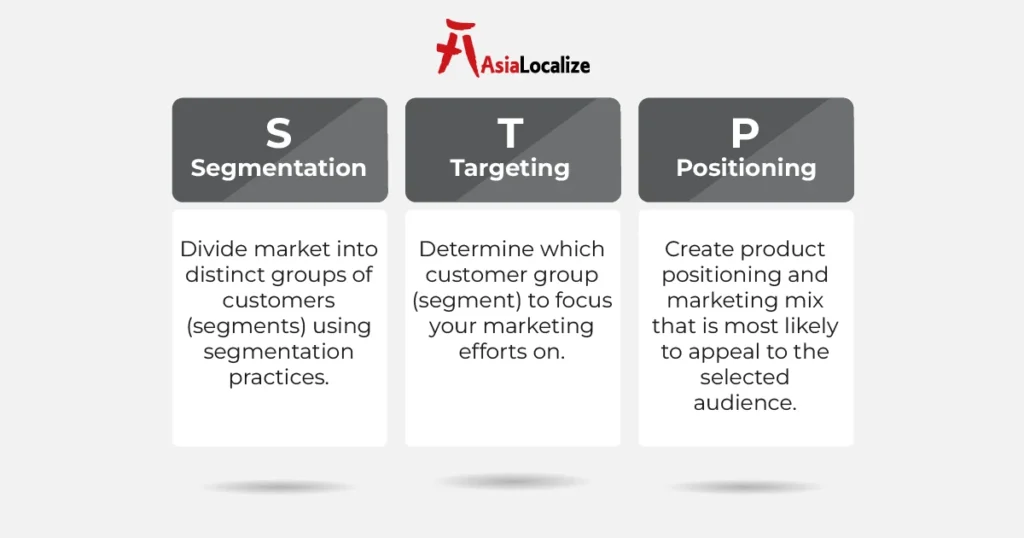
Segmentation on its own guides positioning.
The real question becomes:
What are you promising, to whom, and why should they believe you?
- A Tier 1, younger audience might respond to innovation, design, and brand narrative.
- A family-oriented segment in a Tier 2 city may prioritize safety, reliability, and value clarity.
- A niche, experience-driven segment could be drawn to emotional payoff, lifestyle alignment, and quality signals.
Each of these requires a different expression of value, even when the core product remains the same.
Build content that actually resonates with Chinese consumers through our expert Chinese Translation Services.
The brands that gain traction early are the ones that speak directly to a specific audience, in a way that feels tailored and context-aware.
China has become more exacting.
What used to be enough—broad messaging, lightly adapted content, a translated website—no longer holds attention for long. Not because demand has disappeared, but because expectations have sharpened. People read more carefully now. They compare with ease. And they move on just as quickly when something doesn’t feel right.
That’s the shift.
The brands that gain traction are the ones that feel in place. They understand who they’re speaking to, what matters to that audience, and how to express their value in a way that feels natural rather than adjusted.
And this is where localization starts to matter in a very real way.
The language, the tone, the details you choose to emphasize—those are the cues people use to decide whether you belong.
At AsiaLocalize, that’s the focus.
Helping brands show up with clarity, relevance, and a sense of place, so when someone lands on your content, it simply feels right.
Marketing Translation Services tailored for China!
FAQs About Chinese Consumers
What do Chinese consumers want in 2025–2026?
Chinese consumers want products and services that feel worth the money. They are looking for quality, trust, safety, convenience, emotional value, cultural relevance, and clear proof that a brand understands their needs.
Why is localization important for reaching Chinese consumers?
Localization helps brands move beyond literal translation. It adapts language, tone, cultural references, search behavior, platform content, and conversion messaging so the brand feels relevant and trustworthy to Chinese consumers.
Why are Chinese consumers spending more carefully?
Chinese consumers are spending more carefully because of economic uncertainty, job concerns, real estate pressure, and stronger savings behavior. However, many are still willing to spend on categories that support personal fulfillment, lifestyle improvement, health, travel, dining, and self-expression.
How do Chinese consumers discover brands?
Chinese consumers discover brands through a mix of social platforms, ecommerce marketplaces, peer reviews, short videos, influencers, brand communities, and search. Xiaohongshu, Douyin, WeChat, Tmall, and JD.com are especially important depending on the product category and audience segment.
How can global brands market to Chinese consumers?
Global brands should avoid treating China as one audience. The best approach is to segment by city tier, age, income, lifestyle, digital habits, and purchase motivation, then localize messaging, visuals, product claims, and proof points for each audience.