
The Official Language of China & The Country’s Diverse Linguistic Landscape
Languages spoken in China reflect one of the world’s most complex linguistic landscapes. Mandarin Chinese, also known as Putonghua, is the official common language of China and the main language used across government, education, media, and national communication.
But China is not a single-language market. Alongside Mandarin, the country is home to many regional language groups and varieties, including Cantonese, Wu, Min, Hakka, Gan, Xiang, and Jin.
For businesses entering the Chinese market, this matters. The right language, writing system, tone, and localization approach can shape how clearly audiences understand your message and how strongly they trust your brand.
The History of the Many Spoken Languages of China
The story of China’s linguistic diversity dates back thousands of years, to a time when different tribes migrated across the vast regions of what is now modern China.
China is home to hundreds of living languages and dialects, reflecting the country’s long history, geography, and ethnic diversity.. However, Mandarin took the lion’s share, with more than 80% of speakers in China.
- Mandarin was introduced to the city of Beijing many centuries ago, around 1600 BCE.
- Its spread to the north was facilitated by the imperial courts and ruling elites.
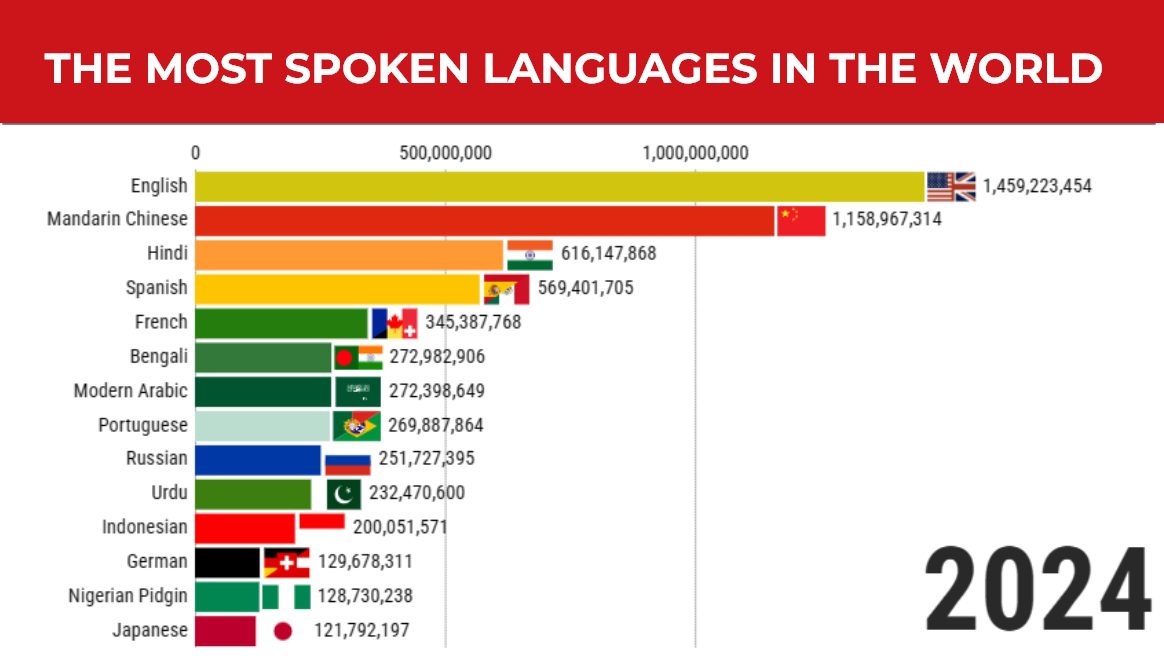
Over time, and with the 20th century’s efforts to unify the Chinese language, Mandarin underwent significant development. It became the most widely spoken language in the world, used by billions of people.
Today, it is the official language of Mainland China and plays a significant role in the country’s cultural heritage, serving as a unifying force in a linguistically diverse nation.

How Many Languages Are Spoken in China?
China is home to hundreds of living languages and dialects, but the exact number depends on how linguists classify languages, dialects, and regional varieties. Mandarin Chinese, also known as Putonghua, is the official common language and the dominant language used across government, education, media, and national communication.
For businesses, this means language planning should not stop at “Chinese.” The right choice may depend on the target region, writing system, audience, and content type.
Types Of Chinese Languages: The 8 Main Language Groups
Linguists usually group China’s many languages and dialects into several major language groups, including Mandarin, Cantonese, Wu, Min, Hakka, Gan, Xiang, and Jin. These groups include a wide array of dialects and subdialects, each with its own unique characteristics and regional variations.
The map below illustrates the 10 language groups, though we will focus on providing a concise overview of the most common 8 of them.
Understanding China’s language landscape is only the first step. For companies entering the Chinese market, the bigger challenge is choosing the right language variety, writing system, tone, and digital experience for the audience they want to reach.
Professional Chinese translation services help businesses adapt websites, product pages, marketing campaigns, technical documents, legal content, and customer support materials with accurate terminology and culturally appropriate wording.
This is especially important because Chinese localization is not only about translating words. Businesses may need to consider Simplified Chinese, Traditional Chinese, Mandarin, Cantonese, regional expectations, platform behavior, search habits, and how users interact with digital content.
For online growth, website localization services can help adapt page structure, forms, calls to action, product descriptions, visuals, and multilingual SEO elements. For campaigns, marketing localization services can also help brands adjust messaging so it feels natural to Chinese-speaking audiences instead of directly translated.
- Mandarin
Standard Mandarin, which belongs to the Sino-Tibetan language family, is the most spoken language variety of Chinese, spoken by about 65.7% of the Chinese population. This language variety is diverse, with many dialects divided into four main subgroups:
- Northern Mandarin
- Northwestern Mandarin
- Southwestern Mandarin
- Southern Mandarin
Initially spoken in Beijing, Standard Mandarin gradually gained popularity and acceptance across China. Today, it is the primary communication tool in the country, a testament to its widespread use and influence.
Since Mandarin is the most spoken language in China, let’s give it a bigger share in our discussion and explore together some of its unique characteristics.

Some Characteristics of Standard Mandarin
Tonal Nature
Mandarin boasts 4 basic tones and a fifth neutral one. Each tone carries a distinct meaning. For instance, tāng with a high tone signifies ‘soup,’ while táng with a rising tone means ‘sugar.’ It’s truly a linguistic marvel, isn’t it?
This unique tonal system is one of the defining features of Mandarin and sets it apart from other languages.

No Verb Conjugations
Unlike English, Mandarin has no verb conjugations. There is only one single form for each verb. For instance, the verb 吃 (which means eat) can express present, past, or future. The only way to understand the tense of a sentence is through time expressions.
No Plural Nouns, Comparative or Superlative Adjectives
Mandarin lacks plural nouns and comparative adjectives. Instead, for plural, Chinese uses classifiers or “measure words” to indicate numbers. For example, “three people” would be said as “三个人(sān ge rén)” where 个 is the classifier for people.
To indicate comparisons between adjectives, Mandarin uses words like 比较 (bǐjiào) for comparative or 更/最 (gèng/zuì) for superlative rather than changing the adjective’s form.
- Cantonese
Cantonese, also known as Yue, is a vibrant and widely spoken dialect, with over 70 million speakers in China. With its unique tonal system and preservation of ancient spoken Chinese, Cantonese stands out as a testament to the vibrancy and distinctiveness of Chinese dialects, making it the second most popular Chinese dialect after Mandarin.
Its origin is traced to Guangzhou, a city also known as Canton, where the dialect gets its name. As you can see in the map below, most Cantonese speakers reside in the Guangdong province, with significant populations in Macau and Hong Kong. Each of these regions has its own distinct variation of Cantonese, contributing to the language’s diversity.

- Gan
Gan Chinese is mainly spoken in Jiangxi Province, and that’s why it’s also commonly referred to as (Jiāngxīhuà). It is found in Hunan, Hubei, Fujian, and Anhui.
This Chinese language is spoken by around 25 million people in China, about 3.9% of the population, and is considered to be closely related to Hakka.

- Hakka
Spoken by 3.5%, around 36.8 million speakers, of the Chinese population, Hakka is found in Guangdong, Fujian, Guangxi, Hainan, Sichuan, Jiangxi, Guizhou, Hong Kong, and Taiwan. It’s the third most popular Chinese language worldwide, following Mandarin and Cantonese.

- Min
Min is commonly spoken in the coastal province of Fujian by 6.7% of the Chinese population. Due to its geographic isolation, numerous Min varieties have developed, with Hokkien being the most popular.
The language is divided into Northern and Southern Min, with the Southern variant being spoken by around 50 million speakers.
- Wu
Wu, commonly known as Shanghainese, is spoken by roughly 8% of the Chinese population, amounting to about 85 million people. It is primarily used in the eastern regions of China, including Zhejiang, Shanghai, southern Jiangsu, and parts of Anhui, Jiangxi, and Fujian.
While Wu shares the same writing system and similar grammatical patterns with Mandarin, it stands out for its use of seven or eight tones to differentiate meanings between words or word elements with the same consonants and vowels, compared to Mandarin’s four tones.

- Xiang
Approximately 3% of the Chinese population speaks Xiang, which is primarily heard in Hunan Province and parts of Guangxi, Guizhou, and Hubei. Xiang is divided into two major varieties: New Xiang and Old Xiang.
New Xiang, mainly spoken around Changsha, the capital of Hunan, has seen considerable influence from Mandarin Chinese. In contrast, Old Xiang, found in areas like Shuangfeng, retains characteristics that are similar to the Wu language.
- Jin
About 63 million people, 5.2% of the Chinese population, speak Jin Chinese in northern China, in Shanxi Province, and parts of Inner Mongolia, Hebei, Henan, and Shaanxi. Historically, Jin was considered a dialect of Mandarin, but its unique characteristics have led linguists to classify it as a separate language group.
| Region | Common Language Consideration | Business Note |
|---|---|---|
| Mainland China | Mandarin / Simplified Chinese | Best default for national communication |
| Guangdong / Hong Kong / Macau | Cantonese / Traditional Chinese in some markets | Important for regional campaigns and customer support |
| Shanghai / Zhejiang / Jiangsu | Wu / Mandarin | Mandarin works broadly, but local nuance may matter |
| Fujian / Taiwan-related communities | Min varieties / Traditional Chinese in Taiwan | Writing-system choice matters |
| Xinjiang / Tibet / Inner Mongolia | Uyghur, Tibetan, Mongolian + Mandarin | Sensitive content may need regional review |
Simplified vs. Traditional Chinese: What Businesses Should Know
Businesses entering Chinese-speaking markets should also consider the writing system. Simplified Chinese is commonly used in Mainland China, while Traditional Chinese is used in markets such as Taiwan, Hong Kong, and Macau.
This distinction matters for translation and localization because the difference is not only visual. Terminology, tone, user expectations, platform behavior, and regional preferences can also vary. Choosing the wrong writing system can make content feel unfamiliar or poorly adapted to the target audience.
Conclusion
A single article couldn’t cover the richness of the Chinese languages. Its diversity and complexity can be daunting for those looking for translation services to or from the language. However, this should not deter you from exploring the Chinese market, which offers a wealth of opportunities for businesses.
At AsiaLocalize, we provide precisely that. Our team of native Chinese experts is proficient in both traditional and simplified Chinese, as well as all dialects and subjects. They can help you access any region in China that you aim to enter.
Additionally, our Chinese translation services are tailored to meet your deadlines, ensuring a quick launch of your product or service in the Chinese market without sacrificing quality.
Ready to speak the rich languages spoken in China?

FAQs About Languages and Localization in China
What is the official language of China?
Mandarin Chinese, also known as Putonghua, is the official common language of China and is widely used in government, education, media, and national communication.
What are the main languages spoken in China?
The main Chinese language groups include Mandarin, Cantonese, Wu, Min, Hakka, Gan, Xiang, and Jin, along with many regional and minority languages.
Do businesses need Simplified or Traditional Chinese?
For Mainland China, businesses usually need Simplified Chinese. Traditional Chinese is commonly used in Taiwan, Hong Kong, and Macau, so the right choice depends on the target market.
Why does Chinese localization matter for businesses?
Chinese localization adapts more than words. It adjusts terminology, writing system, tone, user experience, calls to action, and marketing messages for Chinese-speaking audiences.