Choose a multilingual SEO agency by checking five capabilities: native-language keyword research, content localization, international technical SEO, relevant local authority building, and reporting by market. Ask for sample deliverables, named owners, and evidence from comparable projects. Before signing, agree on implementation responsibilities, fees, and how success will be measured.
Translation can give a website a local voice. Search research helps determine whether that voice matches what customers are looking for. People in Cairo, Jakarta, or Seoul may use local terminology, English loanwords, transliterations, or phrases that have no simple equivalent in your source-language keyword list.
For marketing leaders and teams expanding into new markets, the challenge is finding a provider that connects language expertise with search strategy and implementation. This guide explains what to assess, which questions to ask, and how to compare proposals on a consistent basis.
What does a multilingual SEO agency do?
A multilingual SEO agency helps websites improve organic search visibility in more than one language. Its work connects local search demand with relevant content, accessible language versions, and measurable business goals.
Multilingual and international SEO overlap, but their scope differs. Multilingual SEO addresses languages; international SEO can also address different countries that share a language, such as Spanish-language sites for Spain and Mexico. Many providers therefore describe themselves as an international SEO agency even when language work is central. Define each target locale—the language and, where relevant, country combination—before comparing agency coverage. For the wider planning steps, see our guide to international SEO strategy.
5 things to check before hiring a multilingual SEO agency
A multilingual SEO agency’s scope usually covers five connected areas. Assess each one separately: strength in one area rarely makes up for a gap in another.
1. Native-language keyword research for each market
Keyword research begins with the products, services, audiences, and commercial goals for each market. Native-language SEO specialists then investigate the phrases people use, the intent behind them, and the types of pages appearing in relevant search results.
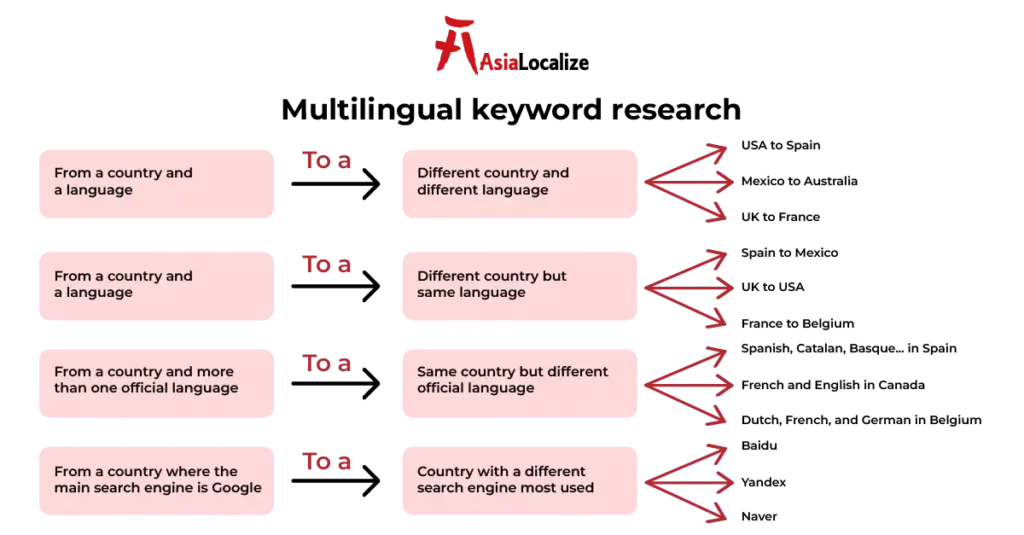
This research may uncover several ways of expressing the same idea: a formal term, a colloquial alternative, an English loanword, a transliteration, or a regional variation. Countries sharing a language may still need different research and content decisions.
Ask for a keyword map that connects each priority query to its market, search intent, destination page, and recommended content format. Estimates of demand and competition should identify the tool, location, and collection date. A search-volume figure without market context is difficult to evaluate.
Research should also confirm which search engines your customers use. Baidu in mainland China and Naver in South Korea have their own ranking systems and webmaster tools (Baidu Search Resource Platform and Naver Search Advisor), so research and reporting built only around Google can leave gaps. Ask which search engines the agency will optimize and report on in each market.
The research should explain where an existing source page can work, where deeper adaptation is needed, and where the market calls for new content.
2. Content localization shaped by search intent
Keyword research should shape your global content strategy before localization begins. Some pages can follow the source closely. Others need a different angle, structure, level of detail, or call to action.
The agency should decide which content to localize, adapt, create, consolidate, or leave out. Linguists and SEO specialists then work together on headings, body copy, title tags, meta descriptions, internal links, and conversion elements, the on-page side of website localization. Image descriptions should explain the image accurately rather than repeat keywords.
Effective content localization also considers terminology, examples, tone, and the customer journey. Ask how the team checks product claims and resolves disagreements between natural wording, search demand, and brand preferences.
3. International technical SEO for every locale
Each language or regional version needs a clear, crawlable place within the website. The agency should explain the tradeoffs between country-code domains (ccTLDs), subdomains, and subdirectories, then recommend an approach suited to your existing site and operating model. Google’s documentation summarizes the tradeoffs: country-code domains signal the target country most clearly but cost more to run, while subdirectories are easier to set up and maintain on one host.
Google recommends using different URLs for each language version of a page. It also advises against automatically redirecting visitors based on their assumed language; visible links to the other language versions work better. Google determines a page’s language from its visible content, not from code-level signals such as lang attributes. See Google’s guidance for multilingual websites.
Ask the provider to explain these technical terms in the context of your pages:
- Hreflang: annotations identifying alternate language or regional versions of a page.
- Canonical: a signal indicating the preferred representative URL among duplicate or very similar pages.
- XML sitemap: a file listing URLs to help search engines discover content.
- Indexation: whether a search engine has included a page in its index; this is distinct from crawling or ranking it.
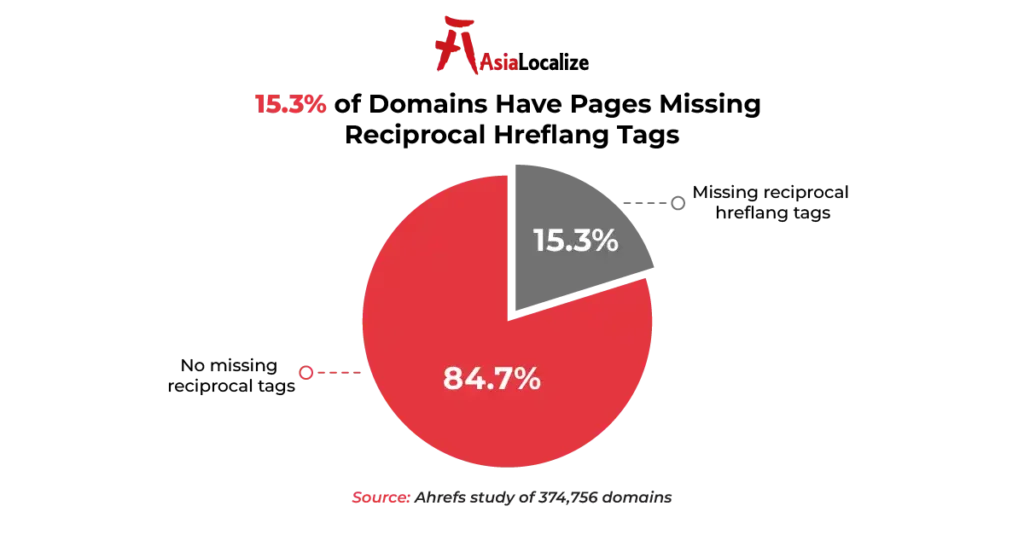
The technical plan should cover return links between hreflang alternatives, supported language and region codes, canonical consistency, redirects, language selectors, and crawlability. Google’s localized-version documentation explains the annotation requirements. Mistakes are common: in an Ahrefs study of 374,756 domains using hreflang, 67% had at least one issue, and 15.3% had pages missing reciprocal tags.
A capable provider supplies implementation specifications, checks the staging environment, validates the deployed changes, and monitors problems after launch. Establish whether its fee covers implementation or recommendations for your developers to implement.
4. Local authority building in the target market
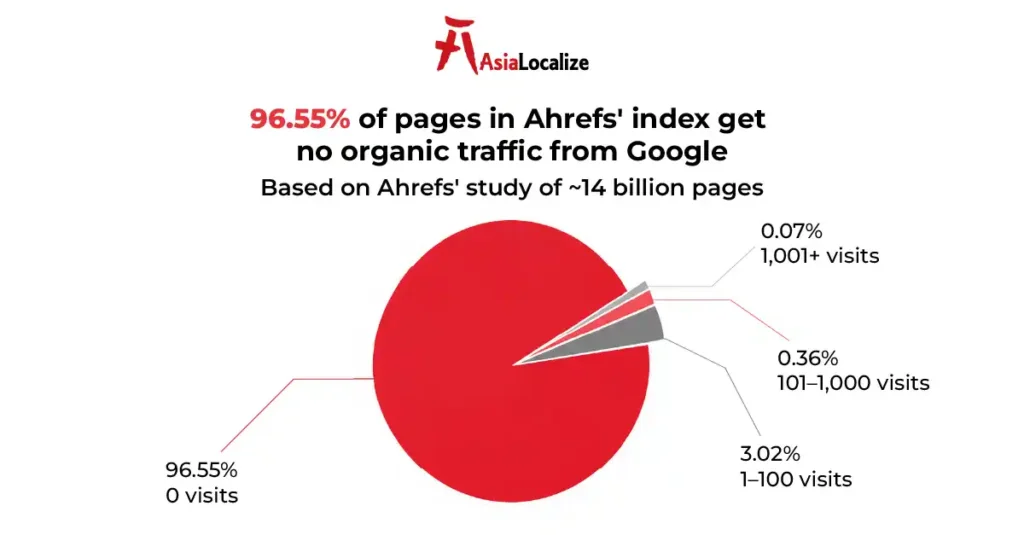
Localized pages can be carefully written and still receive little search traffic: in an Ahrefs analysis of about 14 billion pages, 96.55% received no organic traffic from Google, often because of weak backlink profiles or content that misses search intent. Multilingual link building depends on relevance. A market-specific strategy identifies credible publications, industry resources, associations, and partners, then develops material worth referencing.
That may involve original research, expert commentary, useful resources, or outreach to relevant trade publications. Ask for examples of intended audiences and editorial contexts, not just a monthly link quota.
Assess relevance, referral potential, and editorial quality alongside any tool-generated domain metrics. Google identifies links created primarily to manipulate rankings as link spam. An agency should be able to explain its methods and how it handles paid placements.
5. Reporting by market
A single international traffic figure can conceal weak performance in individual markets. Ask for reporting that separates target countries and locale pages, with clearly defined data sources and baselines.
Useful measures include organic impressions, clicks, click-through rate, relevant query visibility, indexed pages, organic sessions, and qualified leads or sales where tracking supports them. Compare branded and non-branded demand when the available data allows it.
Do not assume a visitor’s country identifies the language of a page they viewed. Ask how the agency combines country reporting with locale URL groups and explains any measurement gaps. Each report should identify what changed, why it matters, and the next action.
How to compare multilingual SEO agency proposals
Whether you are comparing a specialist multilingual SEO company or a translation provider that also offers SEO, give every shortlisted provider the same brief: target languages and countries, priority products, existing URLs, CMS, internal resources, and commercial goals. Then compare evidence and deliverables rather than the number of services listed.
| Evaluation area | Evidence to request | What to look for |
|---|---|---|
| Market research | Redacted keyword-to-page map | Country/language context, intent, sources, and selection rationale |
| Content quality | Localized brief and reviewed page | Terminology decisions, brand review, and named language reviewers |
| Technical delivery | Sample audit and implementation specification | Specific tasks, owners, dependencies, and validation steps |
| Relevant experience | Comparable project example or reference | Starting conditions, work performed, reporting period, and limitations |
| Authority building | Example outreach plan | Relevant audiences and transparent methods |
| Reporting | Sample market-level report | Baselines, commercial measures, analysis, and next actions |
| Commercial scope | Itemized proposal | Included work, exclusions, revisions, and additional costs |
Use a simple review label for each area: evidence supplied, clarification needed, or not included. This is a procurement aid, not a ranking formula. A low price can be appropriate for a narrow scope; it becomes difficult to compare when important work is unspecified.
What should the quote include?
Ask the agency to separate one-time discovery and technical work from ongoing content, outreach, and reporting. Confirm:
- The languages, countries, templates, and page quantities covered.
- Whether research, writing, translation, review, and CMS entry are included.
- Who implements technical changes and pays for development work.
- Revision limits, approval deadlines, and acceptance criteria.
- Any tool, media, outreach, or third-party costs.
- The pricing basis. A per-word rate prices translation volume; it does not by itself cover research, technical work, outreach, or reporting.
- Ownership of content, research files, reports, and accounts at handover.
For example, a proposal covering two languages and ten service pages is not directly comparable with one covering five country-language combinations, a migration, and ongoing editorial work. Request equivalent scope before deciding which offers better value.
Four red flags in a multilingual SEO proposal
1. English keywords go in; translated keywords come out
A keyword can be translated accurately and still miss local search intent. Ask the agency to explain one decision where in-market research led it away from the source keyword. A provider should be able to show its reasoning, not merely a translated spreadsheet.
2. Technical SEO disappears from the scope
“Technical SEO support” leaves too much room for interpretation. Look for named deliverables, implementation owners, staging checks, and post-launch validation. Your development team may handle implementation, but that division of responsibility should be agreed before work begins.
3. Rankings come with a guaranteed position or date
An agency can commit to agreed work and delivery dates. It cannot control search algorithms, competitors, or whether and when search engines index a page. Google’s guidance on hiring an SEO states plainly that no one can guarantee a #1 ranking on Google.
Ask for assumptions, dependencies, and measurable milestones. Completed research, approved content, implemented fixes, and validation reports are deliverables; traffic and conversion growth are outcomes to assess against a baseline.
4. Every market receives the same URL recommendation
An immediate recommendation to migrate every market to a new domain deserves scrutiny. Ask how the agency assessed your existing structure, CMS limitations, regional responsibilities, and expansion plans.
A shared architecture may be appropriate. The warning sign is a recommendation made without understanding your circumstances or explaining migration costs and dependencies.
Four questions to ask your shortlisted agencies
Use these questions to establish who will perform the work and what evidence you will receive. They build on Google’s own list of questions to ask an SEO, which includes what experience the provider has developing international sites.
Who researches the keywords for each market?
“We use native speakers” gives you only part of the answer. Ask about the researcher’s SEO experience, market knowledge, and familiarity with your sector. Request a walkthrough of how they validate terminology and review search results.
For illustration, a business targeting Japan and Indonesia could request a small sample mapping the same service to local search intent in each market. The purpose is to examine the research process, not to demand that both markets use identical pages or terminology.
Who takes technical recommendations through to validation?
Ask who prepares specifications, works with developers, checks staging, and verifies the deployed pages. Establish who resolves issues if a CMS or translation workflow changes URLs or tags later.
Confirm the handover format and escalation process. A useful audit should lead to an actionable task list rather than an unexplained export of crawl errors.
How will you connect reporting to business results?
Request a sample report and ask how the team distinguishes visibility changes from improvements in qualified enquiries or sales. Agree on review frequency and who owns conversion tracking.
If AI visibility reporting is included, ask which platforms, languages, prompts, and dates are sampled. Treat those observations separately from website visits and conversions. Google says there are no additional requirements or special schema needed to appear in AI Overviews or AI Mode, and that inclusion is not guaranteed. See Google’s AI features guidance.
Who performs and approves the in-market work?
Native fluency, professional translation experience, and SEO expertise serve different parts of the workflow. They may sit with one experienced specialist or across several people working together. Either model can work when responsibilities and review stages are clear.
Ask how the team handles disputed terminology, sensitive claims, and AI-assisted drafts. Confirm who checks accuracy, who approves publication, and how corrections are handled. Keep the conversation anchored in people, deliverables, review stages, and owners.
Frequently asked questions about choosing a multilingual SEO agency
What is the difference between a multilingual SEO agency and a translation agency?
A translation agency converts existing content into another language accurately. A multilingual SEO agency decides what each market searches for, which pages to create or adapt, and how search engines find each language version, then measures results by market. Some providers offer both; check that search research happens before translation, not after it.
Should we hire one agency for all markets or a specialist for each market?
One provider simplifies briefing, technical standards, and reporting across markets. A local specialist can add depth in a single market, especially where the search landscape differs, as in China or South Korea. A hybrid model pairs one lead international SEO agency with a market-specific multilingual SEO consultancy. In any model, name one owner for hreflang and site architecture.
How long does multilingual SEO take to show results?
There is no fixed timeline. Results depend on the site’s starting point, how quickly technical changes are implemented, how much content each market needs, and local competition. Google suggests asking any SEO provider what results they expect, in what timeframe, and how they measure success. Agree on milestones per market so progress is visible before traffic changes.
How AsiaLocalize supports multilingual SEO
AsiaLocalize’s multilingual SEO services combine native-language keyword research, international technical SEO, localized content optimization, and market-specific quality assurance. The service also covers international website structure, relevant regional search platforms, and local authority development through useful assets and earned coverage.
Bring your target markets, priority pages, current website setup, and internal delivery resources to the discussion. Agree on the research, content, implementation, and reporting responsibilities for your project before work begins.
The best fit is a provider that can explain its market decisions, show relevant evidence, and make delivery responsibilities clear. Use the comparison checklist to turn a promising sales pitch into a scope your team can evaluate.
Discuss your target markets with AsiaLocalize or get a free multilingual SEO quote.