
A campaign can cross a border in a file transfer and still never truly arrive. When the message sounds imported, the imagery feels borrowed, or the offer ignores how people search and buy locally, translation may be complete, but the marketing is not.
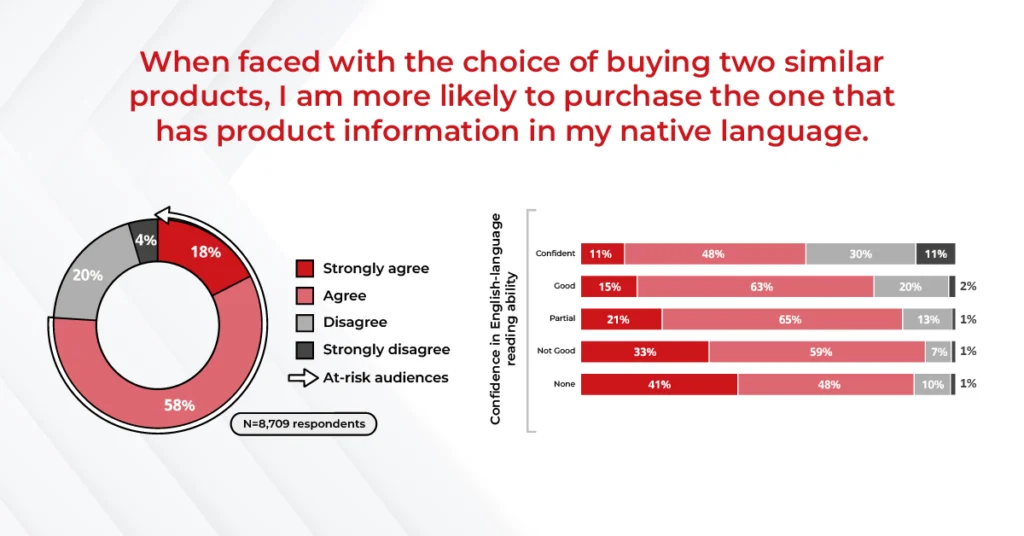
A marketing localization strategy closes that gap. It helps global marketing and localization teams decide which markets to prioritize and adapt, and how to turn local relevance into measurable growth. The stakes are real: In a survey of 8,709 consumers across 29 countries, CSA Research found that 76% preferred products with information in their own language, while 40% said they would not buy from websites in other languages.
This guide moves beyond the familiar “translate, review, publish” model. It shows you how to build local insight into your messaging, so your brand remains recognizable everywhere without sounding identical everywhere.
What a Marketing Localization Strategy Actually Covers
A marketing localization strategy is the plan a company uses to adapt its positioning, content, channel mix, campaign operations, and performance measurement for individual markets while keeping the brand recognizably its own.
It determines whether the central value proposition will travel, which benefits should lead in each market, how tone and creative need to shift, where local audiences discover and evaluate brands, and what a meaningful conversion looks like. It also assigns ownership: who provides in-market insight, who approves creative adaptations, how linguistic and brand quality are controlled, and which KPIs justify further investment.
| Approach | The question it answers | Typical scope |
| Translation | How do we carry this meaning accurately into another language? | Individual content and assets |
| International marketing | How will the business compete and grow across countries? | Market entry, products, pricing, distribution, and promotion |
| Marketing localization strategy | How should the brand communicate and operate in this specific market? | Positioning, content, channels, workflows, customer experience, and measurement |
Why Good Translations Still Fail Without a Localization Strategy
An individual translation can be linguistically excellent and still represent a poor marketing decision. The copy may be accurate, polished, and delivered on time. Yet if it carries the wrong message or reaches the market after the campaign has lost momentum, language quality can’t repair the system around it.
The same pattern appears across enterprise content operations. Content Marketing Institute’s 2026 research, based on 296 enterprise marketers, found that 61% had improved their content strategy; among them, 73% credited strategy refinement. Yet 38% still identified performance measurement as a leading challenge, while 33% pointed to cross-departmental collaboration. Localization magnifies both problems with each additional market, language, and approval layer.
Translation quality matters, but sustainable global execution depends on the operating model surrounding it.
1. The Brand Begins Speaking in Several Voices
When regional teams, agencies, and translators work independently, each makes reasonable choices from a limited view of the brand. Over time, those choices pull the messaging in different directions. One market may sound premium and authoritative, another overly casual, while a third follows the source copy so closely that the brand feels distant.
A strategy establishes the shared foundations: brand voice, positioning, approved terminology, message hierarchy, and the degree of creative freedom available to local teams.
2. Teams Repeatedly Pay for Work They Already Own
Disconnected translations tend to disappear into emails, spreadsheets, agency folders, and individual markets. Previously approved terminology gets researched again. Product descriptions are retranslated. Reviewers correct inconsistencies that a shared glossary or translation memory could have prevented.
A coordinated approach creates one source of truth for approved content, terminology, assets, and market feedback. It also defines how updates are tracked and reused, turning previous work into an asset rather than an invoice that keeps returning.
3. Budgets Follow the Master Campaign instead of Local Behavior
The easiest workflow looks deceptively sensible: create one campaign, translate every asset, and distribute it across the same channels worldwide. The problem appears when local customers search differently or spend their time on entirely different platforms.
Localization strategy starts with audience behavior. It identifies where customers discover brands, how they evaluate claims, which content formats influence decisions, and where conversion actually happens. Teams can then invest in the channels that matter locally instead of reproducing a global media plan market by market.
4. Approvals Turn into a Traffic Jam
Without defined decision rights, a single headline can circulate between central marketing, regional teams, legal reviewers, product owners, linguists, and external agencies. Each reviewer protects a different priority, and no one knows whose decision closes the discussion.
A strategic workflow assigns ownership before production begins. It sets approval stages, response times, escalation paths, and clear boundaries between linguistic, creative, legal, and brand review. Local teams gain enough authority to move quickly, while central teams retain control over genuine brand risks.
5. Cultural Risk Surfaces After the Expensive Work is Finished
Cultural problems rarely sit in the translated sentence alone. They can appear in an image, offer, product claim, seasonal reference, influencer choice, joke, color, or call to action. Discovering the issue after design, media booking, and production leaves teams choosing between an expensive revision and a risky launch.
In-market expertise belongs at the concept stage. Early cultural review allows teams to adapt the idea while it’s still flexible, protecting both the audience relationship and the campaign budget.
6. Performance Disappears inside Global Averages
Scattered translation requests produce equally scattered data. Procurement tracks spend, localization teams monitor delivery and quality, marketing owns engagement, and sales records revenue. Without shared market tags, baselines, and reporting rules, no one can connect the localized campaign to its commercial outcome.
Word counts, turnaround times, and error rates remain useful operational measures. Business impact requires another layer: local search visibility, engagement, conversion rate, cost per acquisition, lead quality, retention, and revenue by market.
How to Build a Marketing Localization Strategy
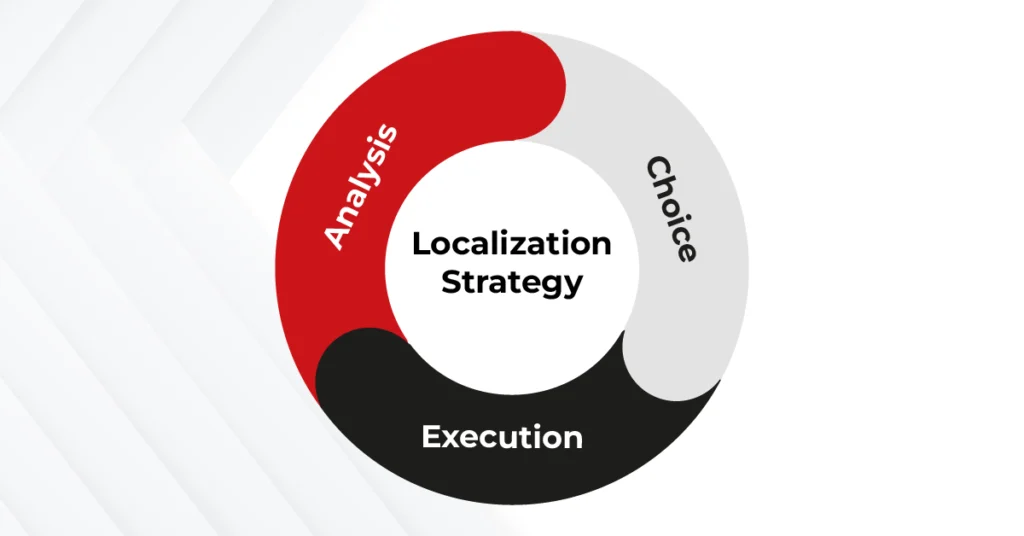
Most localization problems begin before a translator sees a word. A market is chosen on instinct, a campaign is built around one audience, and the finished assets arrive with little room for local adaptation. A sound strategy reverses that order:
1. Set Business Objectives and Guardrails
“Enter a new market” describes an activity. Define the outcome first: market validation, customer acquisition, product adoption, retention, revenue, or brand growth.
Choose one primary goal, then document the conditions surrounding it: budget, timeline, product readiness, legal requirements, brand standards, data restrictions, and local support capacity. Clarify what regional teams can change, which decisions remain global, and what evidence would justify scaling, revising, or stopping the program.
The strategy should be clear on one page before the production plan spreads across twenty.
2. Prioritize Markets with Evidence
Choose markets before choosing languages. Review existing demand, customer value, competition, language preferences, operational readiness, regulatory conditions, and the full cost of serving each market.
Useful evidence may come from analytics, CRM data, sales enquiries, support requests, search demand, competitor activity, distribution partners, and local market research. A shared language doesn’t make two markets commercially identical; buying behavior, terminology, regulation, pricing, and channel use can still differ considerably.
A scorecard can help organize the evidence, but its weighting should reflect the business. A SaaS company may prioritize product readiness and data regulation, while an e-commerce brand gives greater weight to payments, fulfillment, and acquisition cost.
3. Research Local Audiences and Journeys
Study how local audiences describe their needs, which objections slow the decision, who influences the purchase, what creates trust, and where research actually takes place.
Interview local customers, sales teams, distributors, and support staff. Examine native-language search results, competitor reviews, social conversations, and local campaign data. Pay attention to language variants and levels of formality; the language used on a corporate website may differ from the vocabulary people use in search, paid social, or customer support.
McKinsey found that 71% of consumers expected personalized interactions and 76% became frustrated when companies failed to provide them. Personalization differs from localization, but the underlying expectation is similar: people respond more readily when a brand understands their context.
4. Define Global and Local Positioning
Separate the brand core from the parts that need local freedom.
The core usually includes the brand purpose, values, product truths, central promise, visual identity, and legal standards. Local teams can then adapt the message hierarchy, proof points, tone, imagery, examples, offers, calls to action, and channel tactics.
A useful market-positioning brief identifies the audience, their central need, the benefit that should lead, the objection the campaign must overcome, and the evidence most likely to build confidence.
The global team protects the strategic intent. Local experts shape how that intent earns attention and trust.
5. Audit and Prioritize Assets
Inventory the complete customer journey: website pages, advertising, social content, email, video, sales materials, product content, onboarding, and customer support.
Before localizing anything, remove outdated content, consolidate duplicates, and identify the correct source version. Then prioritize assets according to four factors:
- Customer impact
- Reuse potential
- Cultural or regulatory risk
- Production effort
The goal for the first release should be the shortest complete customer journey. High-intent pages, forms, product information, essential sales materials, and support content often deserve attention before low-performing or short-lived assets.
6. Choose Translation, Localization, or Transcreation
The right treatment depends on what the content must achieve, how closely it relies on the original wording, and how much cultural or creative risk it carries.
| Approach | Use it when | Typical content |
| Translation | Accurate transfer of information is the priority | Specifications, internal communications, and factual product content |
| Localization | The content must function naturally within a particular market or channel | Websites, SEO content, user interfaces, email, product pages, and support materials |
| Transcreation | Persuasive impact depends on tone, emotion, wordplay, or a creative concept | Taglines, campaign headlines, advertising, scripts, and brand storytelling |
One campaign may use all three. Product specifications can be translated, the landing page localized for search and conversion behavior, and the headline transcreated to preserve the campaign’s intended effect.
7. Design the Operating Workflow
Decide how content will move before the first deadline arrives.
Every project needs a brief covering the objective, audience, market, channel, desired action, tone, reference materials, cultural considerations, and technical constraints. Assign clear owners for translation or transcreation, independent linguistic review, subject-matter input, in-market approval, legal review, publishing, and final sign-off.
Support the process with approved terminology, style guides, translation memories, version control, automated QA, and documented feedback. Quality checks should cover accuracy, tone, cultural fit, functionality, layout, links, and compliance.
Most importantly, feed approved changes back into the language assets. Otherwise, every campaign pays to solve the same problem again.
8. Launch, Measure, and Improve
Set a baseline before launch, then report results by market, language, and channel. Global averages can easily hide a strong local campaign or protect a weak one from scrutiny.
Match the metrics to the original goal. Acquisition programs may track qualified traffic, conversion, cost per acquisition, and lead quality. Retention initiatives may focus on adoption, repeat purchase, renewal, and support outcomes. Operational metrics such as turnaround time, quality trends, content reuse, and approval delays show whether the localization system itself is improving.
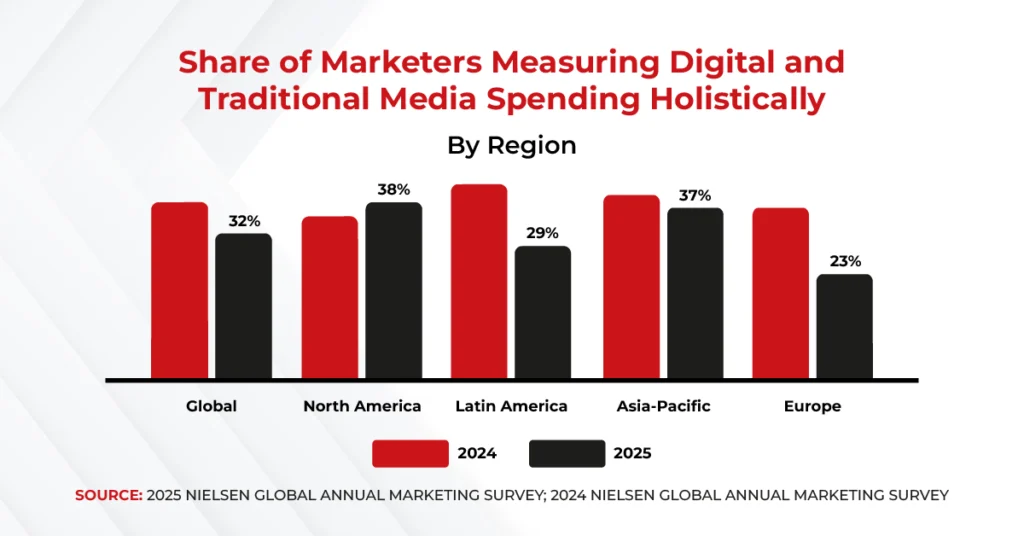
Measurement remains difficult across marketing as a whole. Nielsen’s survey of 1,400 marketers found that only 32% measured traditional and digital media spending holistically. Localization adds another layer, making shared market tags and connected reporting essential.
Test meaningful variables, review results at a cadence suited to the campaign, and turn every finding into an action: scale, refine, retest, pause, or retire.
Put your Localization Strategy into Action
A useful localization strategy should leave you with clear priorities: which markets to enter, which assets to localize first, how to adapt them, who owns each stage, and how results will be measured.
AsiaLocalize can turn those decisions into delivery through:
- Marketing translation services for customer-facing content that protects meaning, tone, and brand consistency.
- Transcreation services for campaigns, headlines, slogans, and creative concepts that need to recreate persuasive impact.
- Website localization services for a complete digital journey adapted across content, design, functionality, and user experience.
- Digital marketing services for multilingual SEO, localized paid media, content strategy, and market-level performance measurement.
Already weighing several markets?