To run multilingual PPC campaigns, treat each language-and-market pair as its own campaign: choose the platforms local buyers use, research keywords natively, write ads for local intent, send clicks to a matching localized landing page, and measure each market separately. Translation is one input to multilingual PPC, not the strategy.
A translated ad can be word-perfect and still waste the click. Search intent is local: buyers describe the same need differently, use market-specific terms, and respond to distinct proof points and calls to action.
A keyword that performs brilliantly in English may sound unnatural in another market, signal the wrong intent, or have almost no search volume at all. Yet every misplaced click still costs money. In a survey of 8,709 consumers in 29 countries, CSA Research found that 76% of online shoppers prefer products with information in their own language, but effective multilingual PPC goes far beyond swapping words.
This guide explains how to run multilingual PPC step by step, from platform choice and native keyword research to campaign structure, localized landing pages, and market-by-market measurement.
What Is Multilingual PPC?
Multilingual PPC (multilingual pay-per-click, or multilingual paid search) involves creating paid campaigns for different languages and markets, tailored to the way people in each one actually search, browse, and buy. The process begins with native keyword research, then carries that local intent into the ad copy, platform choice, targeting, and landing page.
A direct translation of a successful English campaign rarely captures the full picture. The equivalent keyword may have limited search volume, suggest a different level of buying intent, or sound unnatural to local users.
For that reason, every language-and-region combination needs to be approached as its own campaign environment, even when several markets share the same language.
The Translation Trap: Why Correct Keywords Miss Real Search Demand
A keyword can pass every linguistic check and still underperform once the campaign goes live. Translation answers one question: what does this phrase mean? Paid search asks another: what would a buyer in this market type into the search box, and what would they expect to find after clicking? The gap between those two questions is where budget starts to leak.
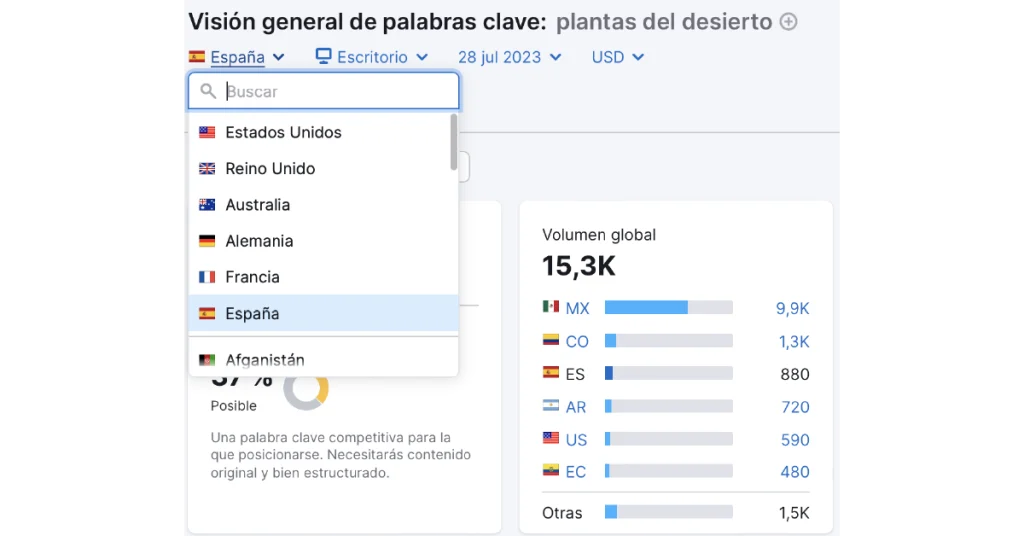
Search demand is already highly fragmented. Across its keyword database, Ahrefs estimates that 94.74% of keywords receive ten searches per month or fewer. Directing an already limited pool of demand toward an unnatural or overly literal term makes a campaign even easier to miss. Native keyword research looks beyond linguistic equivalence to examine local search volume, cost per click, related queries, competing ads, and the commercial intent behind each variation.
Country-level vocabulary adds another layer. A car is commonly called coche in Spain, carro in Mexico and Colombia, and auto in Argentina. All three are valid Spanish, but their value as paid keywords changes with the target market. That distinction matters at scale: Instituto Cervantes estimated more than 635 million potential Spanish users worldwide in 2025, spread across markets with their own vocabulary, habits, and competitive landscapes.
The strongest keyword is rarely the closest equivalent to the source term. It’s the phrase that connects the right local searcher with the right offer.
How to Run Multilingual PPC Campaigns in 7 Steps
Most multilingual campaigns begin too late. By the time localization enters the workflow, the source ads have been approved, the keywords locked, the audience settings chosen, and the landing page built. The linguist is left to translate decisions made for another market, then the team wonders why the new campaign attracts clicks without conversions.
Multilingual PPC brings local insight into the campaign from the start. Each language-and-market combination receives its own research, targeting, creative, landing experience, and measurement plan. French campaigns for France and Canada may share a language, for example, while differing in terminology, search volume, competition, currency, offers, and conversion cues. The strategy follows the market as closely as it follows the language.
1. Choose Platforms Around Each Market
A global media plan built entirely around Google can overlook a significant share of local demand. According to StatCounter’s September 2026 figures, Baidu accounted for 46.65% of search-engine usage in China, while Google accounted for 1.46%. South Korea presented a very different picture, with Google at 47.97% and Naver close behind at 43.06%.
Those differences affect far more than media spend. Baidu, Naver, Google, Microsoft Advertising, and other regional platforms have their own ad formats, keyword behavior, policies, bidding systems, and landing-page expectations. Platform selection therefore forms part of the localization strategy from the outset.
2. Research Keywords in the Language People Actually Search In
Search queries rarely resemble polished marketing copy. People type fragments, abbreviations, local product names, colloquialisms, English loanwords, and transliterations. They may also switch languages depending on the product: someone could search for a service in Arabic, compare providers using English terms, and complete the purchase in Arabic again.
A keyword translated directly from a successful English campaign may be linguistically flawless and commercially useless. The local audience might use a shorter phrase, a regional alternative, or a completely different category name. The translated term may also attract researchers when the original keyword attracted buyers.
Even search behavior within one market never stands still. Google reports that 15% of the searches it sees each day are entirely new. A fixed glossary therefore can’t double as a keyword strategy. Native-language research needs to examine local search volumes, regional variants, long-tail queries, commercial intent, competitor wording, cost per click, and negative keywords.
3. Structure Campaigns by Language and Market
Give each language-and-market pair its own campaign, or at least its own ad groups, so keywords, ads, and landing pages stay in one language. A clear naming convention, such as “JA-JP | Search | Brand”, keeps reporting readable as the account grows. Set budgets per market so a high-volume market doesn’t absorb spend intended for a new one.
Google Ads changed how language works in Search in September 2026. The campaign-level language setting no longer applies to Search campaigns or to Search Network ads in Performance Max, and Google says it prioritizes ads that match the language of the user’s search term. Google still aims to show an ad in a language the user understands, so multilingual users may see ads in a language other than their query. Ad language, landing-page language, location targeting, and negative keywords are now the main controls. See Google’s language targeting documentation.
4. Write Ad Copy for Local Intent, Not Word for Word
Ad copy also needs room to move beyond the source wording. Native PPC copywriters work with the search intent, placement, character limits, brand voice, offer, and conversion goal. Sometimes a close adaptation delivers the strongest result. Elsewhere, the market may respond better to a different benefit, level of detail, emotional cue, or call to action. Testing settles that question more reliably than instinct alone.
For headlines, slogans, and offers built on wordplay or cultural references, the work is closer to marketing transcreation than translation.
Localize the ad assets as well. Sitelinks, callouts, structured snippets, phone numbers, prices, and promotions should use local terms, currencies, and contact details. An English sitelink under a Japanese headline breaks the experience before the click.
5. Match the Landing Page to the Ad Promise
A click confirms that the ad earned attention. The landing page determines whether that attention becomes action.
The keyword, headline, offer, currency, form fields, trust signals, payment methods, and contact options should feel like parts of the same conversation. This is where paid search depends on website localization: sending a localized ad to an English page wastes the work done before the click.
6. Check Local Ad Policies and Regulations
Advertising rules differ by country and platform. Google Ads policies restrict categories such as gambling, healthcare and medicines, and financial services, and expect advertisers to research the local regulations for every location they target. Baidu and Naver apply their own advertising policies. Confirm what each market allows before adapting claims, offers, or disclaimers, and have a native reviewer check regulated wording.
7. Measure and Refine Each Market Separately
Report each language-and-market pair separately: impressions, clicks, cost, conversions, cost per acquisition, and return on ad spend. Use the same conversion definitions everywhere and convert revenue into one reporting currency so markets can be compared fairly.
Review search terms with a native speaker. Search-term data reveals how people actually look for the offer once the campaign is live, which phrases deserve their own ad groups, and which should become negative keywords. Feed those findings back into keyword research and ad testing.
Multilingual PPC FAQs
Should each language have its own PPC campaign?
Usually, yes, or at least its own ad groups. Separate campaigns let you set budgets, bids, schedules, and location targeting per market, and keep keywords, ads, and landing pages in one language. Markets that share a language, such as Spanish for Spain and Mexico, often still need separate campaigns because terminology, prices, and competition differ.
Do I still need language targeting in Google Ads?
Not for Search campaigns. Starting in late September 2026, Google no longer applies the campaign-level language setting to Search campaigns or to Search Network ads in Performance Max, and prioritizes ads that match the search term’s language. Language settings still apply to Display, YouTube, Discover, and Gmail. Ad language, landing-page language, location targeting, and negative keywords now do most of the work.
Is international PPC the same as multilingual PPC?
They overlap. An international PPC campaign targets several countries, which may share one language. Multilingual PPC targets several languages, often across countries but sometimes within one, such as English and French in Canada. Most international campaigns need both country and language decisions.
How AsiaLocalize Builds PPC Around Local Search Behavior
Every paid-search conversion begins with a local decision: the words someone types, the result they trust, and the offer they choose. Google reports seeing more than five trillion searches every year, yet search habits remain deeply shaped by language, location, and culture.
AsiaLocalize combines native-language knowledge with paid media expertise, giving international campaigns the local grounding they need before any ad goes live. Our multilingual PPC services bring keyword research, ad localization, landing-page alignment, and linguistic review into one coordinated workflow.
- Keywords researched within the market: Native specialists identify the terminology people actually use, including regional variations, transliterations, long-tail searches, competitor language, and differences in commercial intent. Every keyword list is grounded in local search data.
- Ad copy shaped around search intent: Paid media linguists turn those keywords into natural, campaign-ready headlines, descriptions, assets, and calls to action. The copy reflects local buying motivations while meeting brand guidelines and platform character limits.
- Language and region considered together: Campaign recommendations account for differences between markets that share a language.
- Landing pages aligned with the ad promise: Offers, currencies, forms, proof points, and conversion paths are localized to continue the same experience after the click. Users arrive on a page that answers the intent behind their original search.
- Native review informed by performance: Search-term reports and campaign data help specialists refine terminology, expand promising keyword groups, identify negative keywords, and develop stronger copy variations over time.
Your next customer already knows what to type. Make sure your campaign does too.