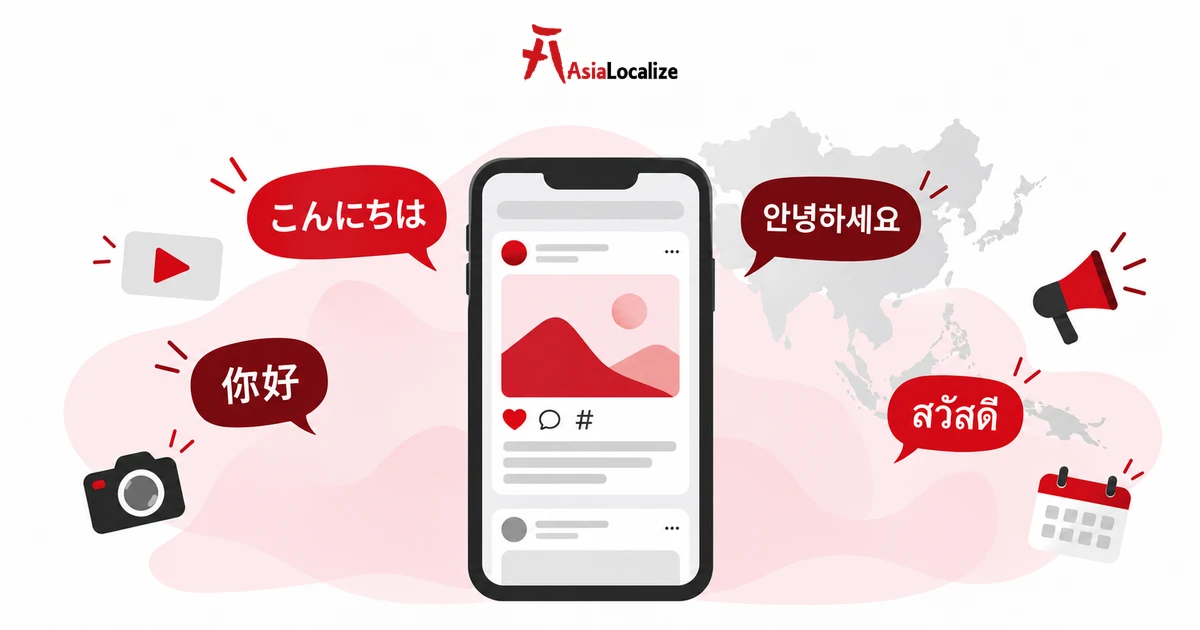
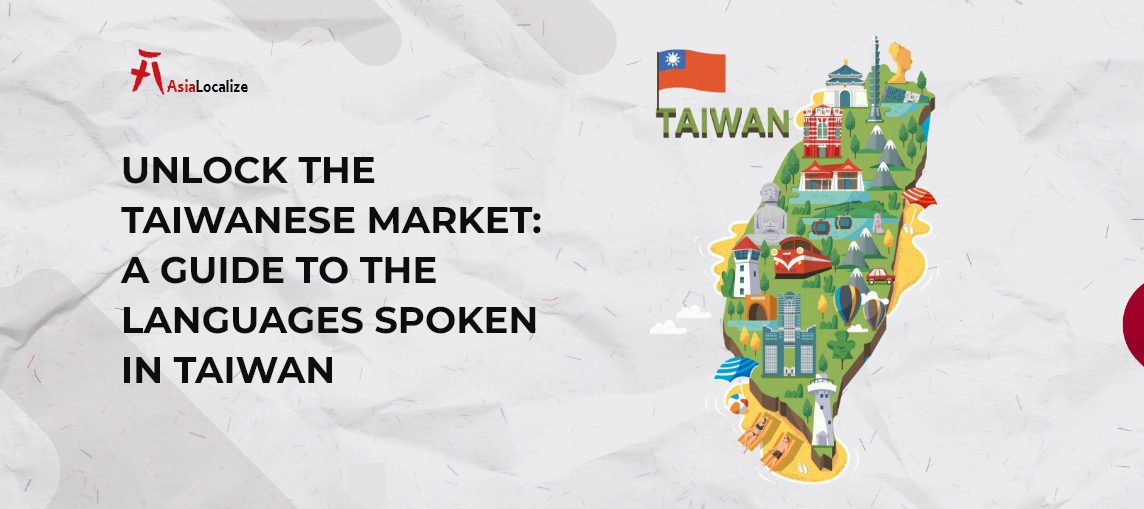
Languages spoken in Taiwan include Mandarin, Taiwanese Hokkien, Hakka, Indigenous languages and Taiwan Sign Language. Mandarin is the shared language of government, education and most business, while Traditional Chinese is the standard written form. Companies should localize for Taiwanese vocabulary, tone and user expectations—not simply convert Simplified Chinese characters.
Updated: October 6, 2026
What Languages Are Spoken in Taiwan?
Taiwan is multilingual. Mandarin is the most widely used common language, but it exists alongside Taiwanese Hokkien (often called Taiwanese or Taigi), Hakka, Indigenous Austronesian languages, Taiwan Sign Language and languages used by international communities.
| Language or form | Role in Taiwan | When businesses need it |
|---|---|---|
| Mandarin Chinese | Shared spoken language across government, education, media and business | Default spoken language for nationwide business communication |
| Traditional Chinese for Taiwan | Standard written form for public and customer-facing content | Websites, apps, contracts, product information, support and marketing |
| Taiwanese Hokkien (Taigi) | Major heritage and community language used in daily life | Local campaigns, community outreach and culturally specific audio or video |
| Hakka | National language with strong regional and cultural importance | Hakka-focused public, cultural or regional communication |
| Indigenous languages | Austronesian languages of Taiwan’s Indigenous peoples | Community-specific, cultural, educational and public-service projects |
| Taiwan Sign Language | A national language protected under Taiwan’s language framework | Accessible public information and services for Deaf audiences |
| English and other community languages | Used in international business, tourism, education and migrant communities | Selected B2B, tourism, recruitment and community communication |

Does Taiwan Have One Official Language?
Calling Mandarin Taiwan’s only official language is an oversimplification. Mandarin functions as the dominant common language in public life, education and business. However, Taiwan’s Development of National Languages Act defines a national language as any natural language or sign language used by Taiwan’s ethnic groups and states that all national languages are equal.
That distinction matters. A nationwide commercial launch will normally prioritize Taiwanese Mandarin and Traditional Chinese, but a public, cultural or regional project may also require Hakka, an Indigenous language, Taiwanese Hokkien or Taiwan Sign Language.
How Many People Speak Mandarin, Taiwanese and Hakka?
Taiwan’s 2020 Population and Housing Census gives the clearest nationwide comparison for residents aged six and over. It separates the language people primarily speak from a language they use secondarily, which helps explain Taiwan’s widespread multilingualism.
| Language | Primarily spoken | Primary or secondary use |
|---|---|---|
| Mandarin | 66.4% | 96.8% |
| Taiwanese Hokkien | 31.7% | 86.0% |
| Hakka | 1.5% | 5.5% |
| Indigenous languages | 0.2% | 1.1% |
The Main Languages of Taiwan Explained
Taiwanese Mandarin
Taiwanese Mandarin is the safest default for nationwide spoken communication. It is used in meetings, schools, broadcasting, customer service and government. Although speakers in Taiwan and Mainland China can generally understand one another, pronunciation, vocabulary, preferred expressions and cultural references differ.
For business content, “Mandarin” describes the spoken language; it does not specify the writing system or the market. A complete brief should state Traditional Chinese for Taiwan (zh-TW) and define the intended audience and content type.
Taiwanese Hokkien (Taigi)
Taiwanese Hokkien is distinct from Mandarin and remains deeply embedded in family life, local culture, entertainment, politics and community communication. Usage varies by age, region and situation, so it should not automatically replace Mandarin in a national campaign. It can, however, create stronger local resonance when the audience and channel justify it.

Hakka
Hakka is both a language and an important marker of cultural identity. It has several varieties and is particularly relevant to Hakka communities and regions. Businesses should use qualified native linguists and confirm the required variety before commissioning community-specific content.
Indigenous Languages
Taiwan’s Indigenous languages are not dialects of Chinese. They belong to the Austronesian language family and represent distinct peoples, histories and knowledge systems. A project involving an Indigenous community should identify the exact language and work with community-qualified speakers rather than use a generic “Formosan” label.
Taiwan Sign Language
Taiwan Sign Language is expressly included in Taiwan’s national-language framework. Accessibility planning may therefore require sign-language interpretation or signed video in addition to captions, depending on the audience, service and legal context.
English, Japanese and Southeast Asian Languages
English appears in international business, technology, tourism, transport and education, but it is not a substitute for Traditional Chinese when addressing the general consumer market. Japanese has historical and commercial visibility, while Vietnamese, Indonesian, Thai and Filipino languages support important migrant and family communities. Use them when audience research—not assumption—shows a need.
Does Taiwan Use Traditional or Simplified Chinese?
Taiwan uses Traditional Chinese characters. Yet changing Simplified Chinese characters into Traditional Chinese is only character conversion, not localization. Taiwan and Mainland China also differ in terminology, phrasing, punctuation, tone, transliteration and digital conventions.
| Localization element | What Taiwan-ready content requires |
|---|---|
| Locale | Use zh-TW (or a more precise project convention) rather than a generic “Chinese” label |
| Terminology | Choose words familiar in Taiwan; do not carry over Mainland terminology after character conversion |
| Tone | Adapt formality, politeness and calls to action for the audience and channel |
| Names and romanization | Follow the client’s approved Taiwan forms and verify names individually |
| Formats | Localize dates, addresses, phone numbers, currency and units |
| Search | Research the terms Taiwanese users actually enter, including local variants |
| Quality assurance | Review language in context on the final page, app or document |
Which Language Should Your Business Use in Taiwan?
- Start with the audience. Define location, age, community, language preference and accessibility needs.
- Specify the content. A legal contract, product UI, television spot and local event need different language decisions.
- Use Taiwanese Traditional Chinese as the general-market default. Pair it with Taiwanese Mandarin for voice work unless research points elsewhere.
- Add community languages selectively. Use Hokkien, Hakka, an Indigenous language or another language when the target audience and channel support the choice.
- Test with native users. In-country review catches terminology, tone and usability issues that character conversion cannot.
AsiaLocalize supports Chinese translation services, website localization, software localization and marketing translation for organizations preparing Taiwan-ready content.
Common Taiwan Localization Mistakes
- Treating Mandarin, written Chinese and Traditional Chinese as interchangeable terms.
- Converting Simplified Chinese characters without adapting Mainland terminology.
- Using Hong Kong Traditional Chinese for Taiwan without market review.
- Calling every local language a Chinese dialect.
- Assuming English is sufficient for a general consumer launch.
- Choosing a heritage language without validating the region, community and channel.
Localize for the Taiwan Market with Confidence
For most businesses, the right starting point is Taiwanese Traditional Chinese in writing and Taiwanese Mandarin for speech. The right final mix depends on the people you need to reach. A localization partner should verify the locale, terminology, subject matter, channel and review workflow before translation begins.

Frequently Asked Questions
What language is spoken in Taiwan?
Mandarin is the most widely used shared language in Taiwan. Taiwanese Hokkien, Hakka, Indigenous languages, Taiwan Sign Language, English and other community languages are also used.
Is Mandarin the official language of Taiwan?
Mandarin functions as Taiwan’s dominant common language in government, education and business, but Taiwan’s Development of National Languages Act recognizes the natural and sign languages used by its ethnic groups as national languages and says they are equal.
Is Taiwanese the same as Mandarin?
No. Taiwanese usually refers to Taiwanese Hokkien, also called Taigi. It is distinct from Mandarin, although many people in Taiwan use both.
Does Taiwan use Traditional or Simplified Chinese?
Taiwan uses Traditional Chinese. Effective Taiwan localization also adapts vocabulary, tone, formats and cultural references; character conversion alone is not enough.
Do people in Taiwan speak English?
English is visible in international business, education, technology, tourism and transport, but proficiency varies. Traditional Chinese remains the safer default for general consumer communication.
What Chinese locale should businesses use for Taiwan?
Use Traditional Chinese for Taiwan, commonly identified as zh-TW, and specify Taiwanese terminology and in-country review in the project brief.
Sources
- Taiwan Ministry of Culture: Development of National Languages Act
- Directorate-General of Budget, Accounting and Statistics: 2020 Population and Housing Census
- National Development Council: Bilingual policy and national languages
For a broader market comparison, see our Business Languages of Asia reference.