Going global is always an appealing decision until the inevitable question arises: What is the localization cost for projects, and how much value will we be able to get from that investment?
It’s a valid question considering the critical nature of time-to-market and ROI in any expansion into a foreign region.
This connection has been well-proven by research, which suggests that 76% of online shoppers prefer to buy products with information in their native language, while 40% never buy from websites in other languages (CSA Research, 2020).
This is precisely why localization is crucial to going global. When teams optimize localization processes, the speed of launching grows, adoption skyrockets, and the entire hassle surrounding releases is eliminated.
However, failure to allocate resources wisely can quickly result in costly repercussions – poor quality, increased rework, and slow release cycles in markets supposed to provide an advantage.
What Really Shapes Your Localization Bill: A Look Inside the Workflow
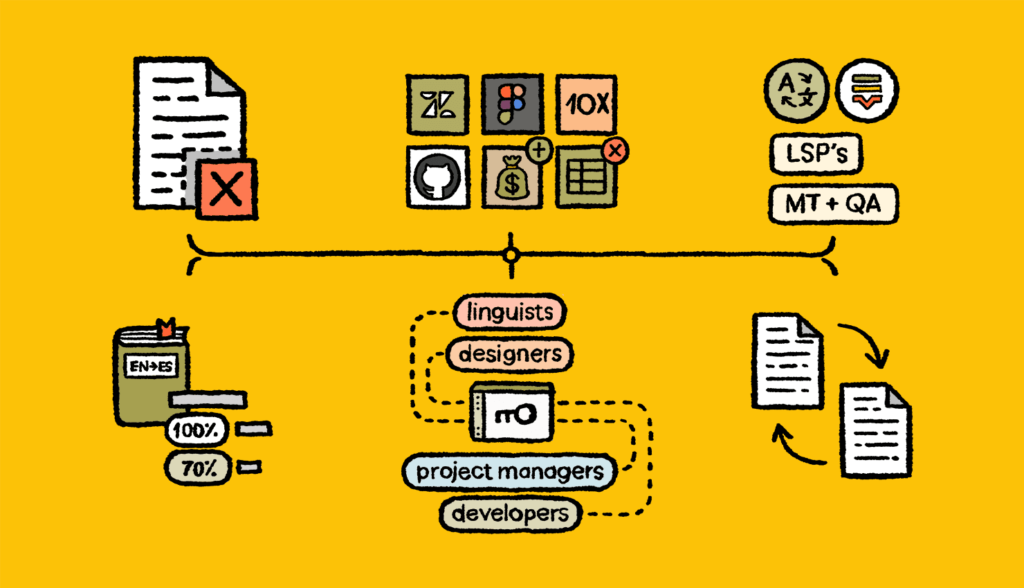
The localization cost is almost never a one-off figure. There is always a process of layers behind each quotation involving linguists, engineers, designers, reviewers, and project managers – all adding something unique to the mix. It is surprising how many multinational companies fail to understand this concept, but when the layers become clear, so does the costing.
- Linguist Rates: Depth, Domain, and Market Availability
Linguist pricing changes based on:
- Language pair (e.g., Japanese, Korean, or Nordic pairs cost more due to limited supply).
- Domain complexity—legal, medical, life sciences, financial, or technical content needs specialist linguists with proven backgrounds.
- Content nature—creative marketing takes longer than straightforward UI or product text.
- Localization Engineering (File Prep, Builds, Regex, Integrations)
Engineering becomes one of the biggest cost-drivers when:
- Files include complex XML, JSON, INDD, Figma exports, or custom-dev formats.
- Content requires tag protection, placeholder handling, and automation checks.
- Platforms need API integration with CMS, repositories, or TMS systems.
- QA & LQA: Quality Validation Beyond Linguistic Review
Quality assurance covers:
- Functional checks for UI/UX issues (text expansion, truncation, overflow).
- Linguistic QA for terminology alignment, tone consistency, and regulatory compliance.
- Market-level LQA with in-country testers to validate cultural fluency and usability.
- Project Management: The Operational Backbone
PM effort grows based on:
- Number of languages.
- Number of content types.
- Whether the brand uses agile sprints, large drops, or continuous localization.
- Required reporting (KPIs, defect logs, SLA tracking).
- Multilingual DTP (Desktop Publishing)
DTP is important when:
- Content includes brochures, manuals, packaging, compliance docs, certificates, or catalogues.
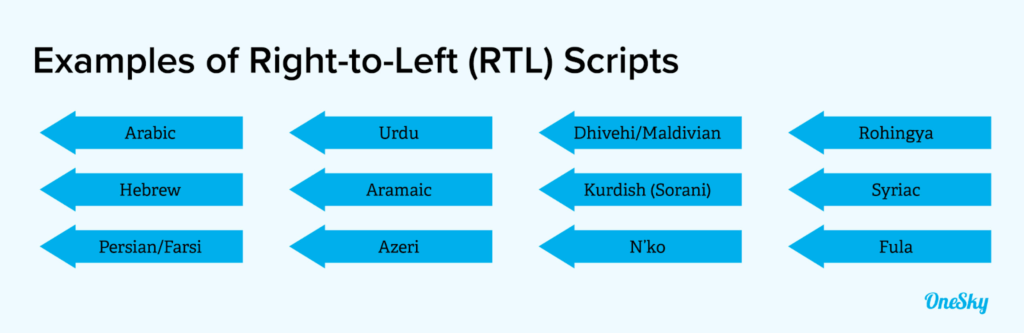
- Languages involve right-to-left layout (Arabic, Hebrew, Farsi).
- Indic scripts (Hindi, Odia, Bengali, Tamil) require OpenType shaping for accurate display.
- Reflow is needed after translation to avoid broken lines and layout shifts.
Strengthen your global communication with our Professional Translation Services.
The Core Factors That Shape Your Localization Cost
Localization costs fluctuate depending on several variables that may not be immediately apparent, yet play an important role in the localization process. The number of words is typically considered the main point of the project; however, there is more to it than meets the eye when you consider the language pair, complexity of content, delivery time frame, and format requirements.
Total Word Count
Word count provides the basic foundation:
- Legal and financial documents → lengthy and complex, thus more time-consuming
- Marketing texts → need careful attention to style and localization
- UI strings → concise, but rich in context and expansion problems
Language Pair Complexity
- English ↔ Japanese, English ↔ Korean, English ↔ Nordic
→ less access to specialists, tighter capacity, increased cost
- English ↔ Spanish, English ↔ Arabic
→ more linguists to draw from, predictable cost, but format complications with Arabic
With the rarity of linguists in the required language, more time is spent on terminology checks and style adjustments.
Turnaround Time (Standard vs. Compressed)
Time pressure affects localization efforts a lot:
- Team size (the more linguists, the more alignment)
- Quality Assurance volume (less time, the need for parallel QA)
- Engineer transfer windows
Formatting and File Structure
Logically, with complex formatting, a more significant translation work is needed.
- Some manuals, catalogues, and projects that are heavy on InDesign
- Excel documents that contain variables
- JSON/XML essential for software localization
- Figma or Sketch for UI localization
So, before localization, each file format requires distinct processing and engineering efforts.
CJK & RTL Script Considerations (The Hidden Cost Layer)
The CJK (Chinese, Japanese, Korean) and RTL (Arabic, Hebrew, Farsi) languages require more precise translation considerations:
CJK:
- Fallback font support in cases of missing glyphs
- Character line breaking rules
- Vertical line spacing handling
- Double-byte character support in some environments
CJK text rarely fits into western designs without resizing and some adjustment.
In RTL Languages (such as Arabic):
- Layout Reflection
- Right alignment of UI elements
- Paragraph reflow as text extends
- OpenType shaping (ligatures, diacritics, joins etc)
All of this can affect timings/budgets for development/DTP.
Common Misconceptions About “Cheap” Localization

Localization teams emphasize per-word prices, believing that the lower the price, the more efficient the process. The truth is that it is either rushed work, done by inexperienced linguists, or a lack of proper QA.
Cheap translation is rarely cheap because extra costs emerge down the line due to inconsistency in terminology, tone, UI string breaks, or the need to translate everything again.
Rework is what costs the most in budgets. Engineering teams spend hours fixing layout problems, translators spend additional time reviewing content, and releases are delayed, undoing all cost savings from a supposedly low per-word quote.
Per-word pricing does not equal the real deal. It’s the whole process behind per-word rates that makes the difference: linguists’ skills, terminology management, quality assurance, engineering support, and technology that keeps the content consistent across markets.
The cheapest choice usually ends up being the most expensive one. Wasted time and corrections ultimately cost more than a proper localization process would have from the get-go.
Global success depends on precision. Content that resonates the first time around protects your brand image, accelerates product launches, and yields much higher ROI than any per-word rate ever will.
Smart Strategies to Control Localization Cost Without Compromising Quality
Localization cost savings have nothing to do with doing things on the cheap. Teams get their biggest wins by designing smarter processes that eliminate redundancy, avoid duplication, and maintain consistency throughout the process. Here are the techniques that always make a difference for global brands.
Leverage Translation Technology for Efficiency
With the right translation technologies, you can reduce cost without sacrificing quality. The most used at the TMS (Translation Management Systems), CAT Tools (Computer-aided Translation Tools), and automatic QA software. The cost-saving potential comes from the following features:
- Translation memory (TM)
The technology reuses repeated content and saves time and money. The most significant effects are noticeable for companies with a lot of documentation or frequently updated materials.
- Termbases (TB)
It ensures consistent use of terms, avoids unnecessary reviews and revisions, and guarantees that all linguists use a unified voice for different materials.
- Automatic QA checks
Automated QA tools find any missing content, wrong punctuation, broken tags, translation errors, or any inconsistencies before the content goes to the review process.
The consistent terminology allows for fewer repeat translations or review cycles, so effort and time is reduced.
Integrate MTPE and AI Wisely
Using machine translation post-editing (MTPE) is an efficient way of processing large amounts of content, provided that it is done with caution.
The following are some of the ways that MTPE cuts down expenses:
- Machine translation works on translating repetitive operational content.
- Post-editors ensure high-quality results by checking facts, tone, and grammar.
- Efficiency increases in terms of turnaround for processing large amounts of content.
With that, localization costs fall without sacrificing consistency or brand safety.
Plan Localization Early in Product Design
Localization is much cheaper when done before coding or launching your product.
It’s cheaper when teams do things like:
- Making sure that UI elements can grow without breaking
- Using non-hardcoded text
- Keeping UI text separate from code
- Preparing your UI layout for CJK and RTL languages (e.g., Arabic)
- Designing a flow of content that adapts to various regions
- Allowing room for longer text, currency differences, and date formats
All of this eliminates many expensive issues later on, such as text cutting off, redesigning, and re-engineering changes.
Actionable Steps to Build a Localization Budget That Actually Scales
When teams make intentional decisions about what content will be localized, by which markets, and how much value they can expect to receive in return, they almost always see better performance across all three of those dimensions.
The following is a practical framework for building budgets that scale and generate tangible ROI.
Set Realistic Budgets by Content Type
Not all content types require the same effort, time, or price. When you compare your content to the correct category, you can easily make sure that you do not spend too much money on unneeded services.
Here is a short guide to some reasons can affect cost:
- Documents (policies, manuals, legal docs):
Can be a per-word/page rate. Here is the thing, legal or financial documents probably take much longer time and money because of terminology requirements and additional reviews.
- Software User interface & product strings:
Safely treated by per-word option, but sometimes additional work is required for placeholders, variables, and context validation or updates.
- Websites:
Can vary dramatically with CMS, dynamic nature, SEO compliance, and many more. They are a bit more complicated.
- eLearning modules:
Price is not only for word translation, sometimes it includes subtitles, voice over, SCORM / xAPI packaging, etc.
Price Differences Between APAC and Western Languages
The language requested highly affects the cost. For example, the cost is higher in languages such as Japanese, Korean, and Chinese, which require linguists specializing in each language and the culture behind it.
On the other hand, Western European languages fall somewhere in between because more linguists are available.
The emerging APAC languages (like Thai, Vietnamese and Indonesian) fall somewhere in between, considering the topics and availability of resources.
Additional Value beyond the Cost
Always think about the added value you get through localization, as it makes the product easier to use and reduces effort to some extent.
Check if:
- Customer support tickets are reduced
The more localized your help material is, the less likely users are to experience the issues.
- Engagement and retention rates are higher
Natural language usage in the application means users tend to engage more with the application.
- The onboarding and activation process is shortened
The use of locale-specific wording throughout the application interface, help text, and tooltips reduces the process.
ISO Certification = Budget Control
If you keep your processes structured and finished, you keep your costs controlled. Certifications guarantee it.
- ISO 17100 ensures professional translation processes, certified linguists, and detailed multilevel editing.
- ISO 9001 controls the quality through all steps of the production.
With those principles, there is no time or resources to invest into rework, no hidden costs to incur, and no additional time to take. Creating a localization budget that will fund global growth will not be about the lowest costs; it will be about the best structure.
Our experts at AsiaLocalize can support your business as you move away from fragmented, informal translations to an organized and effective workflow, leading to better quality, accelerated timelines, and optimized costs.
See how we can help with our localization solutions.