
A strong international SEO strategy is what separates brands that scale globally from ones that hit a wall the moment they step outside their home market. You can have the best product in your category — tight UX, sharp messaging, strong retention — and still stay invisible if your brand doesn’t exist in the way international audiences search, read, and decide.
Here’s the reality most teams underestimate: only 25.9% of internet users are English speakers. That means the vast majority of your potential customers are searching, comparing, and buying in entirely different languages. And in a 2020 CSA Research survey of 8,709 consumers, 76% of online shoppers said they prefer to buy products with information in their native language, while 40% said they never buy from websites in other languages.
This is where international SEO stops being a technical add-on. Done right, it transforms your global website visibility from scattered and inconsistent into something intentional and scalable.
In this guide, we’re not walking through surface-level checklists. We’re unpacking how international SEO really works.
International SEO vs. Multilingual SEO
The two terms overlap, and many teams use them interchangeably. Multilingual SEO is about language: making sure people searching in Japanese, Thai or Arabic find a page written and optimized in that language. International SEO is about markets: telling search engines which country each version serves, even when two markets share a language. Most growing brands need both, and the steps in this guide cover both.
What Is International SEO?
At its core, international SEO means structuring and optimizing your website so search engines can clearly understand who your content is for—by country, by language, and by intent. It’s how Google (and other search engines) decide whether your Spanish page targets users in Mexico or Spain, or whether your French content is relevant in Canada or France. Without those signals, even well-written content can float in the wrong market—or not appear at all.
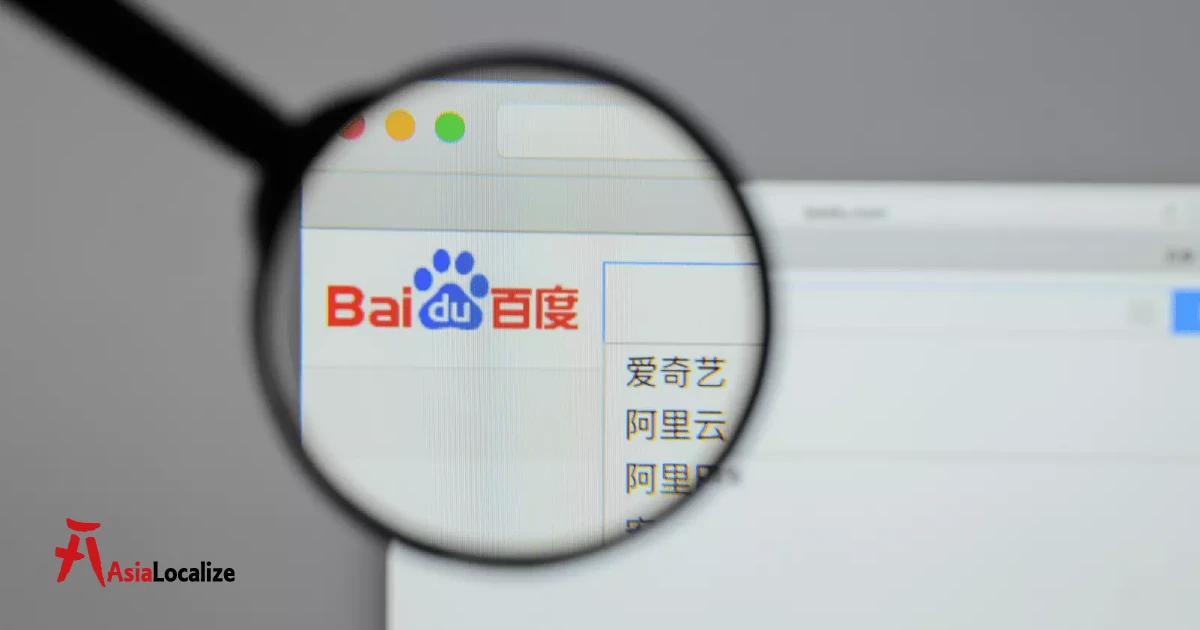
And the stakes are real. Google still holds over 90% of the global search engine market share, but that dominance shifts regionally—Baidu leads in China, Naver in South Korea, Yandex in Russia. Treating search behavior as universal is where many strategies quietly fail.
The difference between standard SEO and international website optimization comes down to scope. Traditional SEO focuses on ranking within one language and market. International SEO expands that into multiple regions, where language, culture, and even search engines vary.
This is also where most brands get it wrong:
- Word-for-word translation: Direct translation misses how people actually search. A keyword that performs in English may have zero search volume—or a completely different intent—in another language.
- Ignoring technical signals: Without proper hreflang tags, URL structures, and geo-targeting, search engines struggle to match the right content to the right audience.
- Assuming Google behaves the same everywhere: Algorithms, competitors, and user behavior shift across markets. What ranks in the US may not stand a chance in Japan or Germany.
That’s the foundation any solid international SEO strategy has to get right before anything else.
Speak your customer’s language, wherever they are.
Check out the languages we translate.
Ready to Turn International SEO Strategy into Multilingual Growth?
International SEO works best when keyword research, localized content, technical SEO, and cultural search behavior are aligned. AsiaLocalize helps global brands build multilingual SEO strategies that connect the right pages with the right markets.
From blog insight to SEO execution
Identify how users search across languages, regions, and local search intent.
Adapt pages for search visibility, readability, terminology, and cultural relevance.
Support international pages with SEO localization, internal linking, and scalable workflows.
Global SEO Basics — Choosing the Right Website Structure
Before keywords, before content, before even translation—your international SEO strategy stands on one decision: how your website is structured for different countries and languages.
Get this right, and everything else compounds—rankings build faster, authority flows naturally, and your localized content performs the way it should. Get it wrong, and even great content struggles to be discovered.
Search engines rely heavily on structure to understand geo-targeting. Google itself emphasizes clear URL signals and consistent architecture when serving multilingual content. That means your choice between domains, subdomains, or folders directly affects how your site is indexed and ranked across markets.
And here comes the powerful role of strategy.
ccTLD vs Subdomain vs Subdirectory — Which One Is Right for You?
There’s no one-size-fits-all answer. Each structure carries trade-offs across SEO strength, cost, and operational complexity. The key is aligning your setup with your growth stage and resources.
| Structure | Example | SEO Strength | Pros | Cons | Best For |
| ccTLD (country-code domains) | example.de | ⭐⭐⭐⭐ (strong geo-signal) | Strong local trust, clear country targeting | High cost, separate SEO authority, complex management | Large enterprises with dedicated regional teams |
| Subdomain | de.example.com | ⭐⭐ (moderate signal) | Flexible setup, easier separation of markets | Weaker authority sharing, needs separate SEO effort | Mid-sized companies testing markets |
| Subdirectory (subfolder) | example.com/de/ | ⭐⭐⭐⭐⭐ (shared authority) | Consolidates SEO strength, easier to manage, scalable | Slightly weaker geo-signal than ccTLD | Most businesses expanding globally |
Why Subdirectories Win for Most Growing Brands
For companies scaling into new markets, language subfolders (like /de/, /fr/, /ar/) strike the best balance between performance and practicality.
They allow you to:
- Build on your existing domain authority instead of starting from zero
- Centralize SEO efforts across markets
- Launch faster without heavy infrastructure costs
Google openly supports this approach because it keeps everything under one domain while still sending clear localization signals .
A clean global website folder structure might look like:
- example.com/en/
- example.com/fr/
- example.com/ar/
- example.com/ja/
When ccTLDs Make Sense
There are cases where country-code domains earn their complexity.
If you’re operating with:
- Dedicated local teams
- Independent marketing strategies per region
- Strong legal or branding requirements by country
Speak Google’s Language: Mastering Hreflang for Global SEO
Google accounts for over 90% of global search traffic , and its ability to serve the right localized result depends heavily on clear technical signals like hreflang.
Hreflang Tag Implementation Guide
At its simplest, the hreflang attribute signals the language and regional targeting of a page. It connects equivalent pages across different markets, so search engines treat them as alternatives.
Here’s what it looks like in practice:
<link rel=”alternate” hreflang=”fr-FR” href=”https://example.com/fr/page/” />
<link rel=”alternate” hreflang=”en-US” href=”https://example.com/en/page/” />
<link rel=”alternate” hreflang=”x-default” href=”https://example.com/” />
Line by line:
- rel=”alternate” tells search engines this page has alternative versions
- hreflang=”fr-FR” defines the language (French) and region (France)
- href=”…” points to the localized version of that page
- x-default acts as a fallback when no specific match exists—usually your global or English page
Hreflang vs Canonical Tags
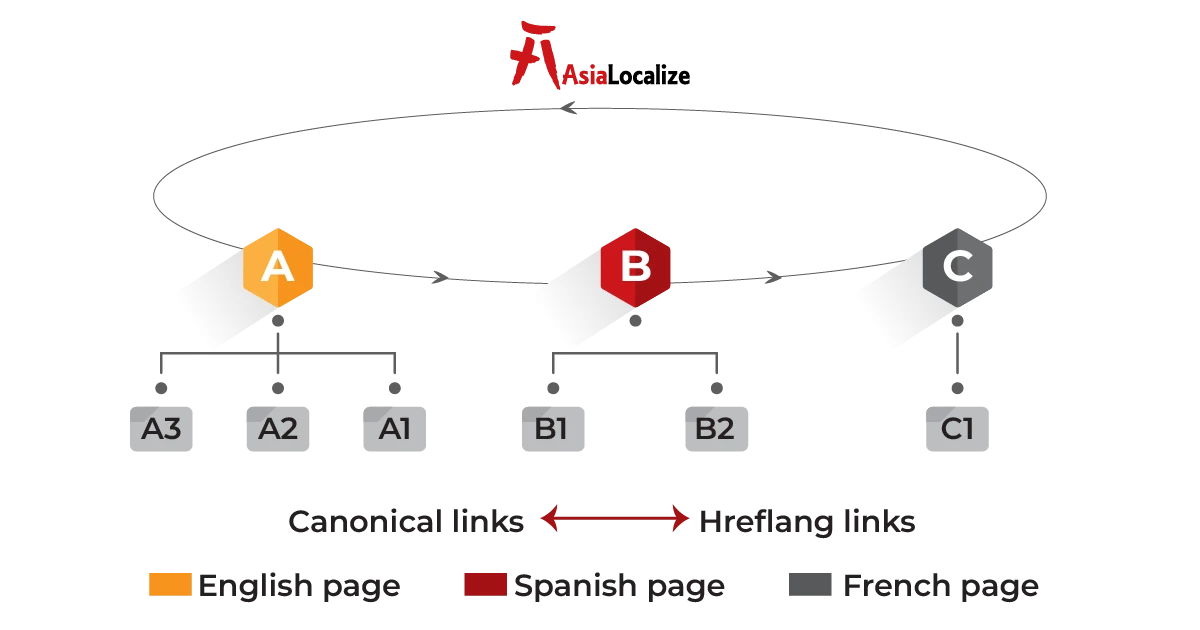
This is where confusion creeps in.
- Hreflang: guides which version to show based on language or region
- Canonical: defines which version is primary when content is duplicated
They solve different problems. Mixing them incorrectly can cancel out your localization efforts entirely.
Implementation Options
Depending on your setup, hreflang can be implemented in three ways:
- HTML <head> tags — the most common method for standard websites
- XML sitemaps — useful for large sites with thousands of pages
- HTTP headers — ideal for non-HTML content like PDFs
Build a multilingual website that works as well as it reads.
Discover our Localization Engineering Services.
Global SEO Starts with Local Intent: Rethinking Keyword Research
If your keywords don’t match local search behavior, your content remains invisible, no matter how accurate the translation.
Keyword Translation vs Transcreation
Take a simple keyword like “running shoes.” A direct translation into Japanese might give you a technically correct phrase, but local users often search using terms closer to “training sneakers” or brand-influenced variations shaped by retail trends and cultural context.
That shift reflects something deeper: search behavior is cultural.
- Some markets prioritize function (“lightweight marathon shoes”)
- Others lean toward lifestyle (“street sneakers for running”)
- Some rely heavily on brand-driven or hybrid English-local terms
How to Do Multilingual Keyword Research the Right Way
A strong process blends tools with local insight:
- Google Keyword Planner
Filter by country and language to uncover real local demand - Ahrefs / SEMrush
Analyze regional search volumes, keyword difficulty, and competitor gaps - Manual SERP analysis
Search like a local user—what shows up? Product pages, blogs, marketplaces, or forums?
Start with Long-Tail, Win with Intent
When entering a new market, broad keywords are crowded and expensive. Smart strategies begin with international long-tail keywords.
Instead of chasing “running shoes,” you might target:
- “best running shoes for flat feet in Germany”
- “lightweight marathon shoes Japan price”
These phrases mirror real user intent and give you traction faster.
Choosing Which Languages to Target First
You do not have to launch every language at once. Start with the markets that already show demand: regions sending unexpected traffic, visitors who engage but rarely convert, and customer inquiries arriving in other languages. Then validate those signals with keyword research in each language, checking how many people search for your products and how competitive those terms are, before committing budget to translation.
The Real Power of Content Localization
Content localization strategy reshapes the entire experience:
- Message & tone: What feels persuasive in one culture may feel aggressive or vague in another
- Imagery & design: Colors, visuals, and layouts carry different meanings across regions
- CTAs & formatting: Even how you ask users to take action shifts by market
Cultural awareness also plays a protective role. Culturally sensitive SEO content avoids phrases, symbols, or references that could confuse—or worse, alienate—local audiences. At the same time, it embraces local idioms and expressions, making content feel natural and searchable.
And the strongest strategies go even further: they create locally relevant content. That means addressing:
- Regional regulations
- Market-specific pain points
- Local competitors and expectations
Drive qualified global demand with our digital marketing services.
Geo-Targeting, Non-Google Search Engines & Regional SEO Signals
Geo-targeting and regional SEO signals tell search engines not just what your content says but where it belongs.
Geo-Targeting in SEO: Telling Search Engines Where You Operate
Search engines rely on multiple signals to connect your content with the right geographic audience:
- Google Search Console geo-targeting
For generic domains (.com, .net), you can set a target country, helping Google understand your primary market - IP-based geo-targeting
Server location acts as a supporting signal. Hosting closer to your target audience can improve load speed and regional relevance - ccTLD vs gTLD signals
Country-code domains (.de, .fr) send strong location signals by default, while generic domains rely more on technical configuration
Optimizing for Non-Google Search Engines
- Baidu SEO (China)
Requires simplified Chinese content, fast-loading sites hosted on Chinese servers, and often an ICP license. JavaScript-heavy sites struggle, and content freshness plays a bigger role than backlinks - Yandex SEO (Russia)
Places stronger emphasis on user behavior—click patterns, dwell time, and engagement signals—rather than relying heavily on backlinks - Naver SEO (South Korea)
Operates as a content platform as much as a search engine. Visibility often depends on publishing within its ecosystem (like Naver Blog), not just your own website
International Technical SEO
A strong audit ensures your site performs consistently across languages and regions:
- Hreflang implementation
Confirms that each page points to the correct language and regional versions - Crawl paths & indexation
Ensures search engines can access, understand, and index every localized page - Regional site speed
Tests performance across target markets
Canonical Tags for Multilingual Sites
Canonical tags signal which version of a page should be treated as primary for indexing purposes, while hreflang handles regional targeting. Used together correctly, they prevent translated pages from being flagged as duplicate content while preserving their visibility in local markets.
Crawl Budget & Site Prioritization
Large multilingual sites can easily overwhelm search engine crawlers.
Without prioritization, valuable pages compete with low-impact ones for attention. A smart setup:
- Highlights high-value pages (product, service, conversion pages)
- Limits unnecessary duplication or thin content
- Keeps internal linking clean and intentional
XML Sitemaps for Multilingual Websites
Search engines rely on sitemaps for structure and discovery.
You can:
- Create separate sitemaps per language
- Or maintain a single sitemap with hreflang annotations
Page Speed & Global Performance
Speed changes by region.
Optimizing for international audiences includes:
- CDN usage to distribute content closer to users
- Image compression for faster load times
- Server location alignment with target markets
Mobile-First, Globally
In markets like Southeast Asia, India, and Africa, mobile drives the majority of traffic. A responsive, fast-loading mobile experience shapes both rankings and conversions.
Structured Data Across Regions
Structured data helps search engines interpret your content in context.
For international sites, that means:
- LocalBusiness schema with region-specific details
- Pricing in local currencies
- Accurate business hours per market
Discover how top brands localize their online stores for global success. Read Our Multilingual eCommerce Blog!
Tools That Make Multilingual SEO Manageable
Running SEO in several languages is easier with the right tools, as long as they support people rather than replace them.
AI Tools
AI tools can speed up international keyword research and produce first drafts of headlines, meta descriptions and other short copy in several languages. They do not reliably handle cultural nuance, humour or market-specific sensitivities, so customer-facing content and brand messaging still need review by a native speaker.
Translation Management Systems
Once you translate more than a few pages, a translation management system (TMS) keeps translations consistent across the site, manages glossaries so product names and key terms stay the same, and lets translators, editors and developers work in one place.
Analytics and Performance Tracking
Track each language version separately: impressions and rankings in Search Console for each market, organic traffic and conversions by language in your analytics tool, and crawl or hreflang errors that stop a version from being indexed. If you would rather hand this to a specialist team, see our multilingual SEO services.
International Link Building & Global Authority

No international SEO strategy is complete without a market-by-market authority plan.
A strong domain in your home country helps, but search engines still look for local validation. Google’s ranking systems rely heavily on relevance and authority signals, including backlinks . And in international SEO, relevance becomes geographic. A link that carries weight in one market may barely register in another.
Building Authority Where It Actually Matters
A successful global link building strategy focuses on earning trust inside each target market:
- Country-specific backlinks
Links from local news sites, directories, and industry publications signal real regional relevance - Local domain authority
A backlink from a .de website strengthens your visibility in Germany far more than a generic .com - International guest posting
Collaborate with local bloggers and publishers to build presence where your audience already spends time - Multilingual outreach
Outreach emails written in the local language consistently outperform translated pitches. It signals effort and earns trust faster - Regional PR for SEO
Press releases distributed through local media channels carry strong geo-signals and often generate high-quality backlinks
Expanding into new markets sounds exciting on paper—new audiences, new revenue streams, new growth curves. But as you’ve seen, global success rarely comes down to a single tactic — it depends on a well-sequenced international SEO strategy.
It’s the alignment of all three:
International SEO brings visibility.
Localization builds relevance.
Technical precision ensures everything actually works.
Miss one piece, and growth slows. Get them working together, and your brand starts to feel local everywhere.
At AsiaLocalize, we don’t approach this as a one-size-fits-all process. We look at your product, your markets, and your goals—then build the right mix around them.
- Entering a new market fast? We combine SEO-driven localization with scalable workflows.
- Managing high-risk or regulated content? We apply ISO-certified TEP processes with native reviewers.
- Scaling multilingual content? We integrate translation memory, terminology management, and the right level of human + AI support.
Show up correctly in all markets that matter!
Explore our Localization Services.