
A third of logistics workers spend more than 50% of their time on manual tasks, just coordination, handoffs, tracking, and fixing what systems never fully connected.
Localization teams may work in a different domain, but the operational problem is exactly the same.
Many translation and localization programs still run on one or two CAT tools layered with spreadsheets, email threads, and shared drives. On the surface, everything functions. Files move. Vendors deliver. Deadlines are mostly met. But behind the scenes, teams are spending an outsized amount of time managing work instead of improving quality, scaling output, or supporting the business.
As content volume grows and more stakeholders enter the workflow—product, marketing, legal, regional reviewers—the cracks widen fast. Manual tracking replaces visibility. Context gets lost between tools. Costs rise without clarity. And suddenly, what looked like a “lean” setup becomes a bottleneck.
That’s why the discussion around CAT Tools vs Translation Management Systems has shifted from a technical debate to an operational one.
CAT tools are indispensable for linguists. Yet, they were never designed to run complex localization programs. Translation management systems, on the other hand, exist to run people, processes, content, and data at scale. Understanding where one ends and the other begins is no longer optional for teams operating beyond a handful of markets.
In this blog, we break down that distinction clearly—what CAT tools do best, what TMS platforms are built to solve, and how to choose the right model based on scale, risk, and growth stage.
Clearing the Confusion Between CAT Tools and TMS
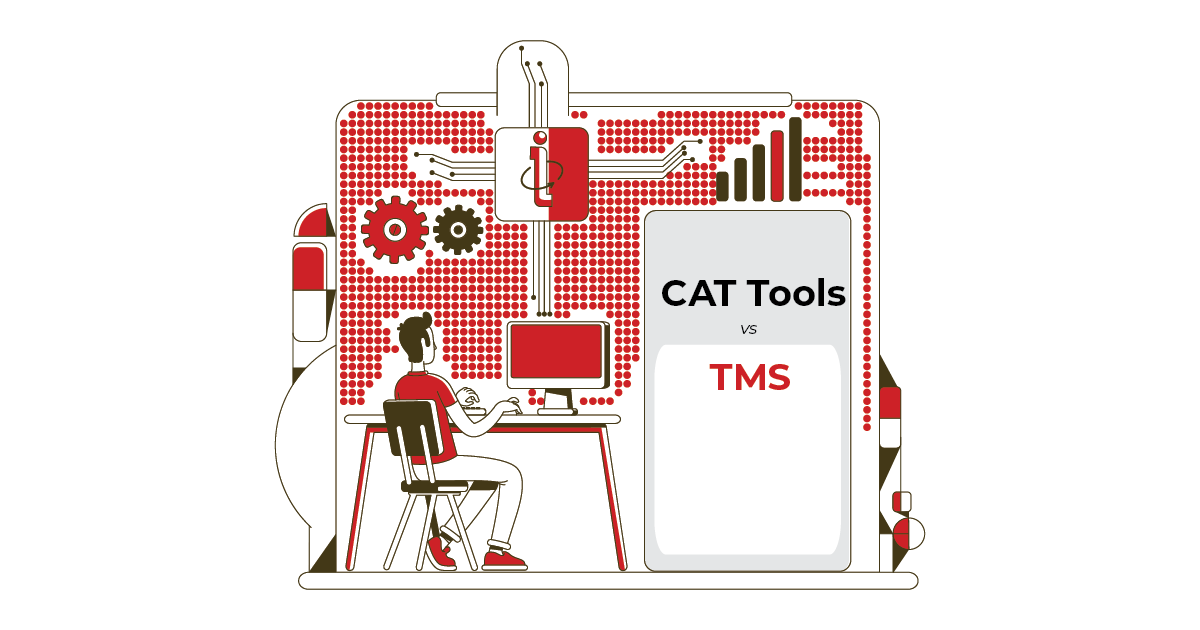
At a high level, CAT tools exist to help translators translate better and faster. Translation management systems exist to help organizations run localization programs efficiently at scale. One lives at the workbench. The other runs the factory.
Let’s break that down properly.
CAT Tools, Explained — The Translator’s Workbench
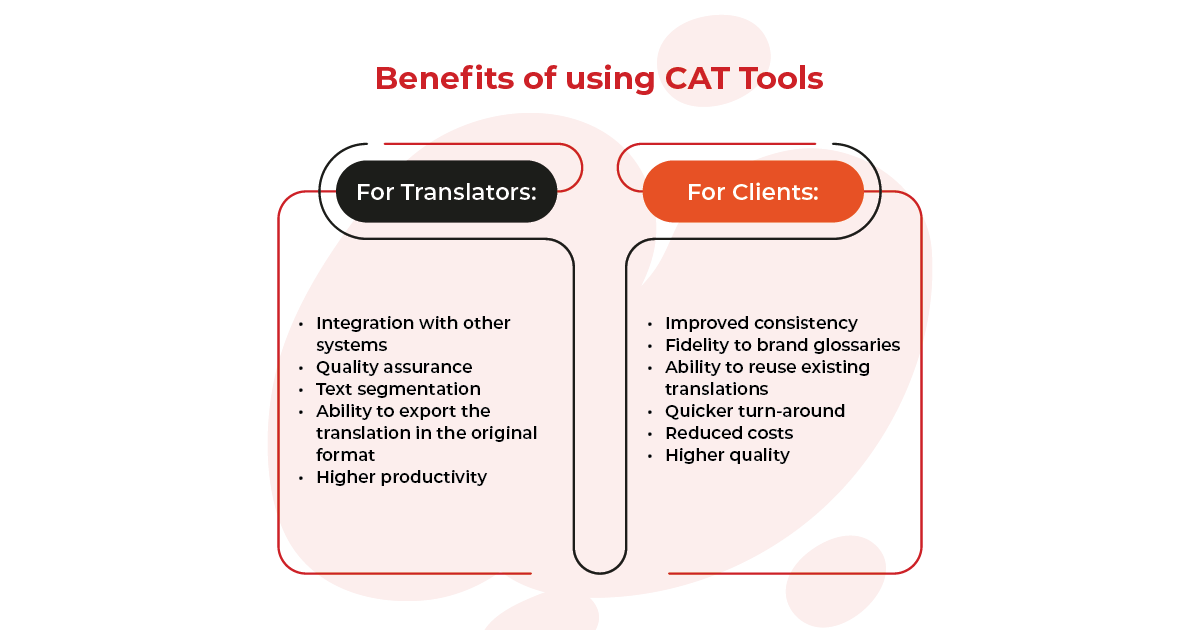
Computer-Assisted Translation (CAT) tools are designed around the translator’s core task: producing consistent, high-quality translations efficiently.
At their heart, CAT tools provide:
- Translation Memory (TM) to reuse previously approved segments
- Terminology management to enforce preferred terms and style
- Segment-based editors that break content into manageable units
- Translation quality assurance (QA) checks for consistency, formatting, and basic linguistic errors
This focus makes CAT tools indispensable—but also intentionally narrow. They only optimize translation work.
That limitation becomes visible as soon as content volume increases or workflows involve more than a handful of people. CAT tools don’t manage vendors. They don’t automate routing. They don’t provide real-time operational visibility. And they were never meant to.
Translation Management Systems
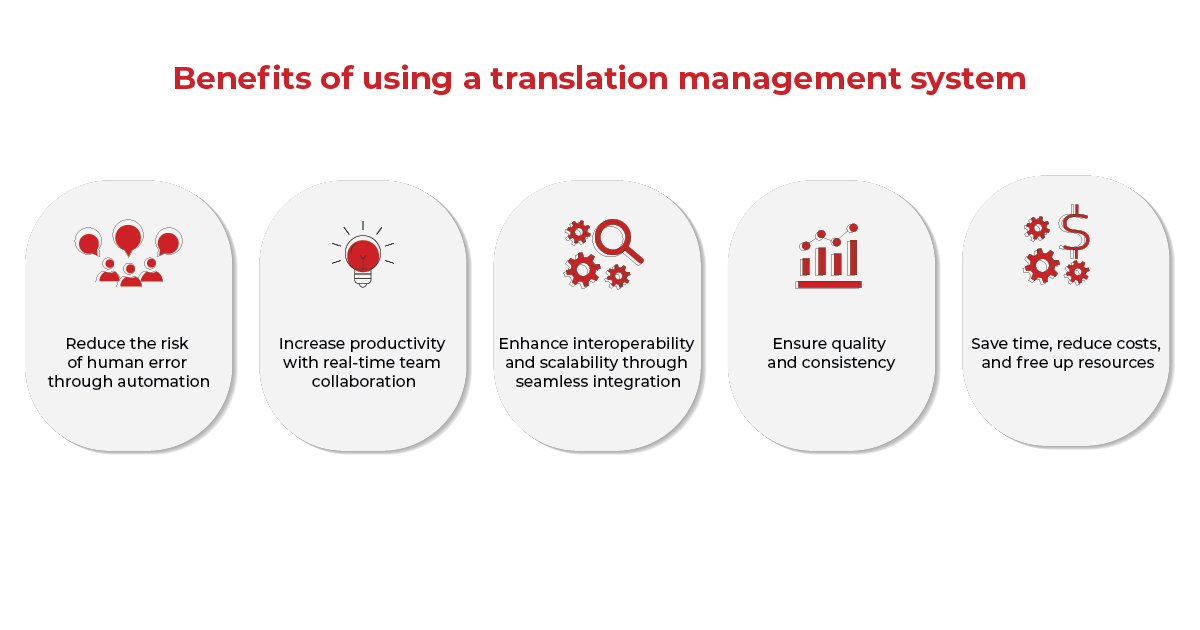
A Translation Management System (TMS) sits one level above the CAT tool.
Instead of focusing on how a translator edits a sentence, a TMS focuses on how translation work moves through an organization—from content creation to delivery, across teams, languages, and vendors.
In practical terms, a modern TMS provides:
- Centralized workflow across languages and vendors
- localization workflow automation for file handoff, job creation, assignments, and delivery
- Collaboration layers that enable collaboration between teams
- Cost tracking, reporting, and governance
- integration with CMS and code repo, design tools, and marketing stacks
Why Most Modern TMS Platforms Include CAT Capabilities
If CAT tools and TMS platforms serve different purposes, why do so many TMS solutions now include built-in CAT editors?
The answer is pragmatic.
Vendors realized that forcing translators to jump between systems introduced friction, errors, and resistance. Embedding CAT functionality inside a TMS keeps translators productive while allowing organizations to retain control over workflows, assets, and data, often through a centralized translation memory.
What matters is directionality:
- CAT tools that add workflow features still think like CAT tools
- TMS platforms that embed CAT editors think like systems of record and often function as a cloud-based localization platform
That distinction determines whether your setup scales cleanly or quietly accumulates operational debt.
So no, a TMS is not “the same as a CAT tool.” And treating it that way is often the reason localization programs feel fragile just as demand accelerates.
Core Differences — CAT Tools vs Translation Management Systems, Side by Side
Once localization programs move beyond a single market or a single content type, the question stops being “What features does this tool have?” and becomes “What role does this system play in our operation?”
That shift matters. Because CAT tools and Translation Management Systems solve different layers of the localization problem, and comparing them feature by feature without context often leads teams to buy the wrong thing.
At their core, CAT tools are editing environments. They optimize how translators interact with text.
Translation Management Systems are platforms. They coordinate how work moves across people, tools, and systems.
That design intent explains nearly every difference you’ll see in real-world use.
| Capability | CAT Tools | Translation Management Systems |
| Translation memory | Core feature | Centralized, shared across workflows |
| Terminology management | Linguist-focused | Governed, role-based, enforced |
| Editing interface | Advanced, segment-based | Embedded or integrated |
| Project management | Limited or manual | End-to-end project management for translation |
| Automation | Minimal | Extensive localization workflow automation |
| Integrations | Few, often manual | integration with CMS and code repo |
| Reporting & analytics | Basic stats | Business intelligence dashboards |
| Localization workflow automation | Not native | Core capability |
| Scalability | File-based | Program-based |
Who They’re Built For — From Individuals to Enterprises
CAT tools historically evolved for freelance translators and small in-house teams. Their success metric is simple: help linguists work faster while maintaining quality.
Translation Management Systems evolved for organizations—companies, localization departments, and vendors managing multiple languages, markets, and stakeholders simultaneously.
That difference shows up clearly in adoption patterns:
- Freelancers and boutique teams gravitate toward CAT tools.
- Product-led companies, SaaS firms, and global brands gravitate toward TMS platforms.
Deployment, Architecture, and Integrations — How They Fit into Your Stack
CAT tools traditionally began as desktop applications, later adding cloud or hybrid options. Their world revolves around files.
Modern TMS platforms are cloud-native by design. They operate at the system level—connecting content sources, translation resources, reviewers, and delivery endpoints.
This architectural difference unlocks capabilities that CAT tools struggle to support:
- Continuous localization for agile product teams
- API-driven workflows
- Real-time status visibility
- Cost forecasting and performance tracking
As localization increasingly intersects with product releases and marketing campaigns, teams need infrastructure that talks to the rest of the business.
Technical Translation Services for Modern Localization Pipelines.
When a Full Translation Management System Becomes Non-Negotiable
Teams usually notice the shift before they can articulate it. The work still ships, but it feels fragile.
Common triggers include:
- Managing multiple brands or products with shared linguistic assets
- Supporting dozens of locales with different release cadences
- Coordinating multiple vendors and reviewers across time zones
- Syncing localization with CMSs, design tools, or code repositories
- Spending more time tracking jobs than improving output
This is the moment CAT tools start being stretched beyond their purpose.
What a TMS Changes — And Why It’s a Structural Shift
A Translation Management System does not simply add features. It changes how localization connects to the business.
At the foundation level, modern TMS platforms introduce:
- Localization workflow automation that removes manual handoffs
- Connectors to CMSs, design tools, and code repositories
- Vendor and resource management across languages and regions
- Content change detection to avoid re-translating unchanged strings
- Role-based collaboration between product, marketing, and reviewers
How Mid-Size and Enterprise Teams Typically Implement a TMS
There’s no single rollout model—but successful implementations tend to follow similar patterns.
Mid-size teams often start with:
- One core TMS connected to their CMS or product repo
- Centralized terminology and translation memory
- A small set of trusted vendors onboarded into the system
Enterprise teams usually expand that model by:
- Supporting multiple content sources (CMS, Git, design systems)
- Layering approval workflows by region or business unit
- Adding reporting and cost governance for leadership visibility
Explore real localization examples that show how strategy, workflows, and execution come together across industries.
Evaluation Framework — How to Build the Right Localization Technology Stack
By the time teams start comparing CAT tools, TMS platforms, and “all-in-one” promises, the real problem is rarely technology. It’s alignment.
Most localization stacks fail not because the tools are weak, but because they were chosen without a clear picture of how work actually flows today and how it will flow six or twelve months from now.
Step 1: Map Your Localization Workflow
Before evaluating any platform, map how localization truly happens today.
That includes:
- Where content originates (CMS, design tools, code repositories)
- How translation memory and terminology management are handled
- Where handoffs break down or require manual intervention
- How approvals, reviews, and final delivery actually occur
This exercise usually reveals a familiar pattern: translation itself occupies a fraction of the timeline, while coordination consumes the rest.
Future-proofing matters here. A workflow that supports five locales behaves very differently at twenty. A weekly release cadence behaves differently under continuous deployment.
Step 2: Clarify Requirements by Role
One of the fastest ways to derail a localization technology decision is to treat “the team” as a single stakeholder.
In reality, each role optimizes for something different:
- Linguists care about translation memory quality, terminology enforcement, and editor performance
- Localization PMs care about workflow automation, vendor coordination, and visibility
- Developers care about integrations, APIs, and content change detection
- Finance teams care about cost tracking, forecasting, and ROI
A strong evaluation framework documents these needs explicitly and accepts that not every requirement carries equal weight.
Step 3: Prioritize What Moves the Needle — Features vs Budget vs Change Tolerance
At this stage, teams face a necessary reckoning.
Key decisions often revolve around:
- How much workflow automation delivers immediate ROI
- Whether MT integration fits quality and risk thresholds
- How aggressively to centralize terminology management
- How much reporting and analytics leadership truly needs
Step 4: Pilot, Measure, and Pressure-Test Vendors
The most overlooked step in localization stack selection is disciplined piloting.
A proper pilot:
- Uses real content, not demo files
- Involves real users across roles
- Measures cycle time, error reduction, and coordination effort
- Surfaces’ friction early—before contracts lock it in
This is where claims around localization workflow automation, cloud-based localization platforms, and business intelligence dashboards either hold up or collapse.
CAT tools. Translation management systems. Hybrid stacks.
On paper, the choice looks technical. In reality, it’s operational—and deeply strategic.
The difference between a localization program that merely functions and one that actually scales rarely comes down to a single platform. It comes down to how well technology is aligned with your content velocity, your teams, your markets, and your tolerance for risk. Tools don’t fail in isolation. They fail when they’re forced to solve problems they were never designed to handle.
At AsiaLocalize, we approach localization technology the same way we approach translation itself: context first. We work with teams to understand where their content lives, how it moves, who touches it, and what success actually looks like—before recommending any setup. Sometimes that means optimizing an existing CAT-based workflow. Sometimes it means introducing a full translation management system with automation, integrations, and reporting. Often, it means designing a stack that evolves as the business grows.
Because the goal is never “more tools.”
The goal is fewer bottlenecks, clearer ownership, predictable costs, and translations that arrive when the business needs them—without friction.
As a translation and localization company, we sit at the intersection of language, technology, and operations. That vantage point allows us to help clients choose the right solution for their reality, the one that delivers real localization ROI.
Build a Localization Stack That Actually Scales.
Explore our localization engineering services and see how we design workflows, integrations, and automation that support real growth.