Translation Workflow Automation: How to Integrate Your CMS, TMS & APIs
Translation workflow automation connects your CMS, TMS and APIs. Learn the architecture, security, quality controls and launch plan for scalable localization.
Read article Translation workflow automation connects your CMS, TMS and APIs. Learn the architecture, security, quality controls and launch plan for scalable localization.
Read article
What USCIS requires for a certified translation: the 3 rules in 8 CFR 103.2(b)(3), a sample certification, RFE triggers and how to translate Asian civil documents.
Read article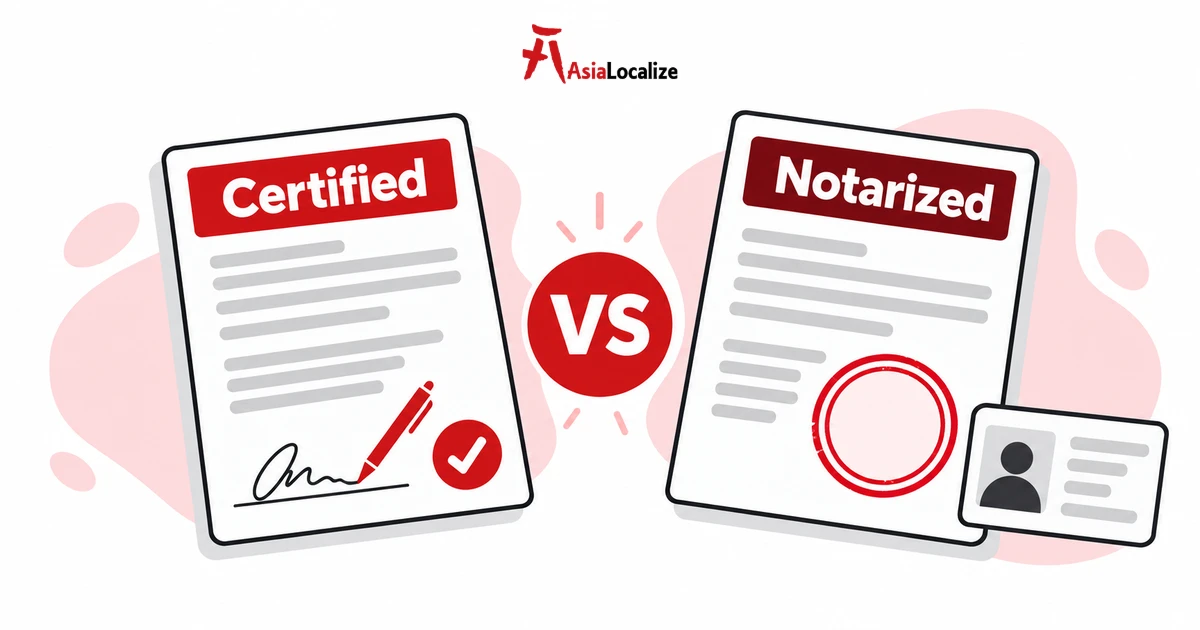
Certified vs notarized translation: what each proves, who requires which, and how sworn translations and apostilles work in the US and across Asia.
Read article
Translation vendor management for buyers: prepare files, write the brief, own glossaries and TM, accept work by score, track 6 KPIs and control costs.
Read article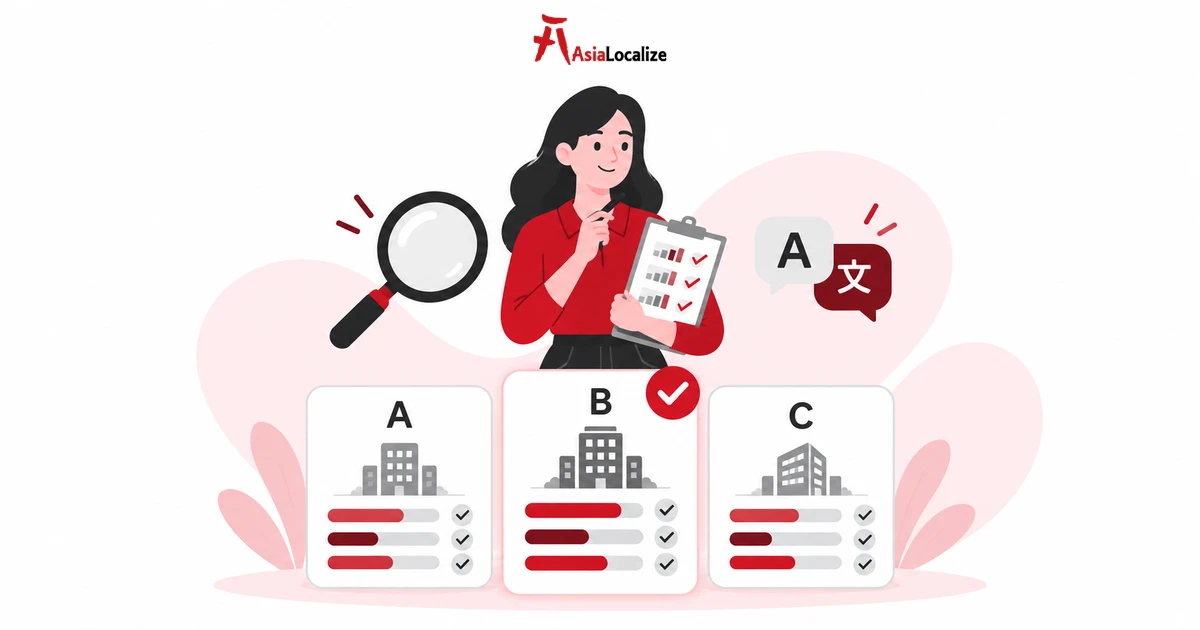
How to choose a translation agency in 6 steps: knock-out gates, a weighted scorecard, evidence checks, Asian-language tests and a scored paid pilot.
Read article
Machine translation errors can sound fluent while changing meaning. Learn 10 common failures, where they create business risk, and how MTPE and QA prevent them.
Read article
A practical guide to 20 types of translation, from human and machine workflows to legal, medical, technical, marketing, audiovisual, website, and software localization.
Read article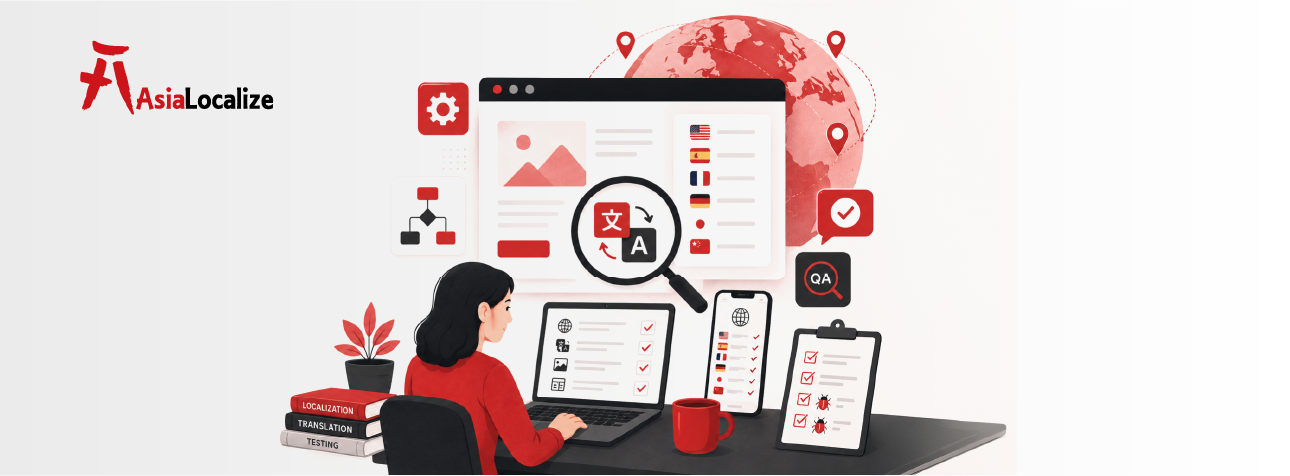
Use this translation testing checklist to verify language, layout, functionality, locale formats, accessibility and SEO before launching localized content.
Read article
Phone: +603-2169-6313
Email: info@asialocalize.com
