

Reaching people is easy. Resonating across cultures? That’s where real strategy begins.
International marketing means building campaigns that make sense—linguistically, emotionally, and behaviorally—to audiences in different countries. It’s where smart global marketing strategy starts: not with a bigger budget, but with a sharper understanding.
While domestic marketing operates within shared cultural defaults, cross-border marketing demands more nuance. Language, values, humor, even pacing—these shift dramatically from one region to another. A campaign that thrives in Toronto might feel cold or off-key in Jakarta. That disconnect costs more than attention. It costs trust.
Numbers back it up:
- 76% of global consumers prefer to buy from websites that present information in their native language.
- 40% avoid buying platforms that feel linguistically unfamiliar or culturally misaligned.
Brands that continue to replicate the same message across markets will feel irrelevant. On the other hand, those that invest in localized messaging—tailored to real global consumer behavior—see stronger conversion rates and measurable market impact.
In this guide, we’ll break down what it really takes to craft high-performing multinational marketing campaigns.
Creating a Strong Global Marketing Strategy
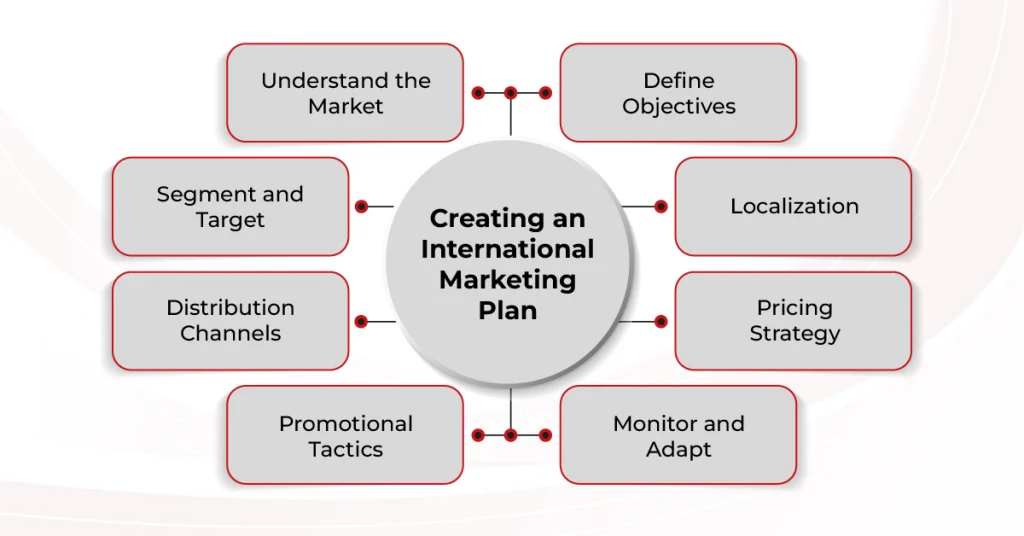
Over the past decade, we’ve seen one truth consistently play out across hundreds of international campaigns: brands that lead with insight outperform those that lead with assumption.
Here are the essential pillars of any international marketing strategy that’s built to scale without losing meaning along the way.
Market Research: Know the Landscape Before You Launch
To connect with audiences across borders, you first need to understand how they think, choose, and compare. That means going beyond surface-level trends to explore the cultural values, economic behaviors, and brand expectations that shape buying decisions in each market.
As digital connectivity deepens, the demand for tailored engagement is growing fast. In the Asia-Pacific region alone, digital ad spend is expected to exceed USD 175 billion by 2026—driven in part by smartphone penetration reaching over 76%. But even in this high-growth region, no two markets behave the same. What engages a consumer in India may fall flat in South Korea.
In Southeast Asia, for instance, shoppers tend to be highly price-conscious and comparison-driven, while in the Middle East, emotional connection and brand loyalty often carry more weight.
So, messaging tone, visual style, even the pace of your campaign rollouts—all must be rooted in localized understanding.
Market Entry Strategy: Choosing the Right Country, Time & Language
Entering a new market is as much a business decision as a cultural one. Timing, readiness, and competitive dynamics all matter.
An effective market entry strategy considers:
- Which regions offer not just potential, but operational readiness?
- Which languages carry the most trust in your vertical?
- Whether your systems, content, and country-specific marketing channels are aligned with local expectations.
International Pricing Strategy: The Hidden Conversion Factor
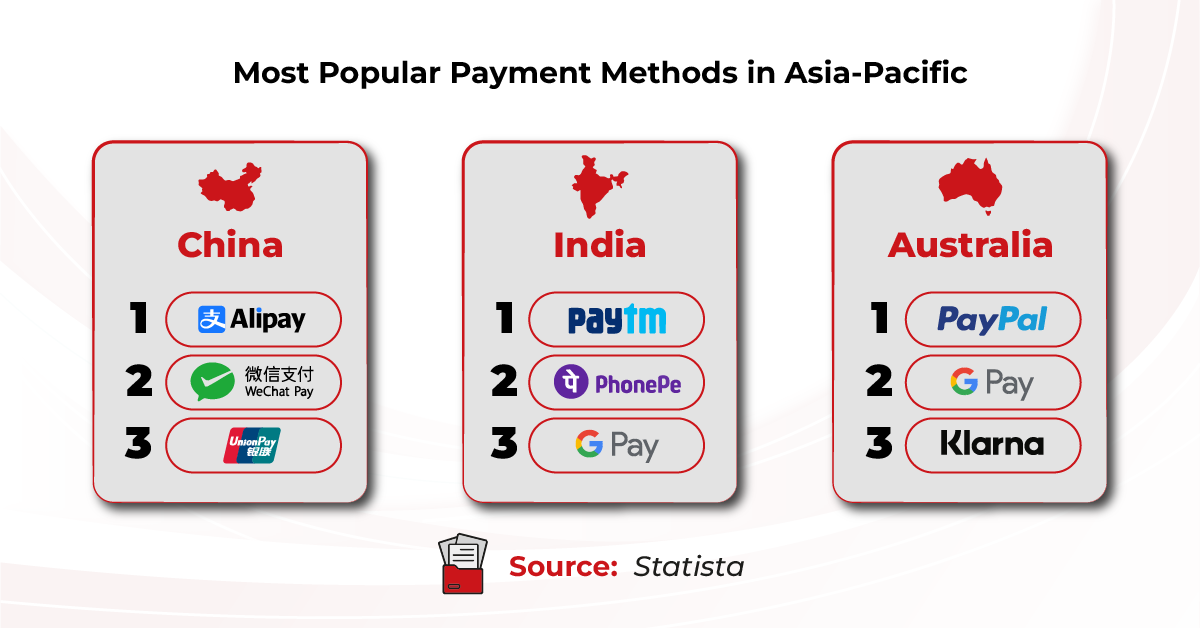
In many markets, how customers pay matters just as much as what they pay. E-wallets dominate in Southeast Asia, while cash-on-delivery remains preferred in parts of the Middle East. When these local preferences are overlooked, conversion drops—fast. In fact, 76% of global consumers abandon purchases due to pricing misalignment or lack of localized payment options.
A product seen as “premium” in one country might feel overpriced in another. In some markets, bundling offers or local payment methods (like e-wallets in Southeast Asia or cash-on-delivery in parts of the Middle East) significantly impact adoption.
No matter how compelling your message is, if the price doesn’t feel right, the rest won’t matter. Your international pricing strategy needs to reflect global product positioning and local buyer psychology.
Localization in Marketing Is Key
A global campaign can be beautifully designed and perfectly timed, but still fall short if it doesn’t feel personal or culturally familiar. Localization is what transforms a well-made campaign into one that actually connects.
Why Cultural Adaptation Matters
Consumers don’t just respond to language. They respond to meaning, familiarity, and tone. Without this layer of adaptation, even the most polished campaign can miss its moment.
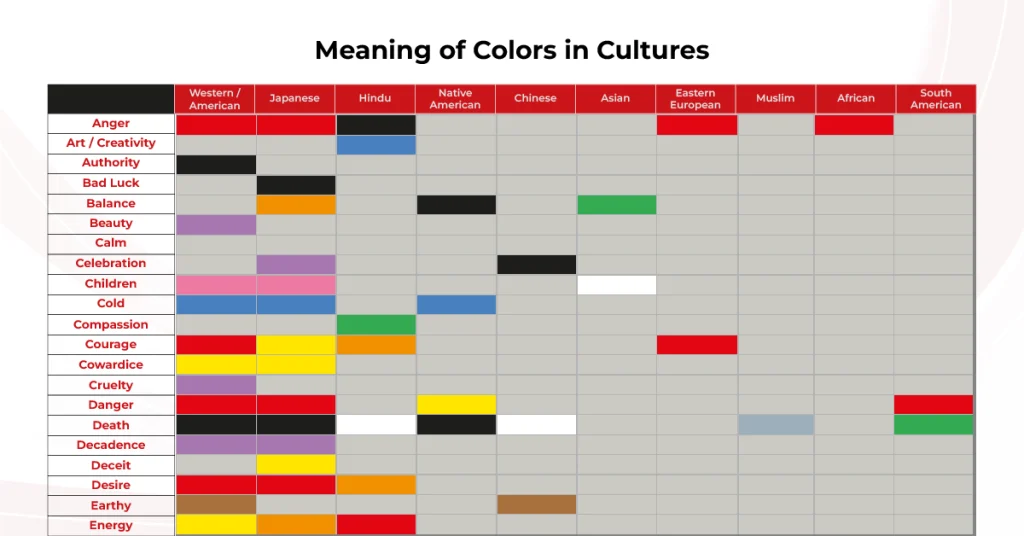
Consider how these elements shift across cultures:
- Colors: White symbolizes purity in the West, but mourning in some East Asian cultures.
- Slogans: Literal translations often fail to capture wit, wordplay, or emotion.
- Humor: What’s funny in London may come off as awkward—or even inappropriate—in Tokyo.
Visual cues: Hand gestures, facial expressions, and even text layout are interpreted differently across regions.
| See how hyper-localization helps brands stop blending in—and start belonging. |
Managing Global Brand Consistency
The further your message travels, the more pressure it faces to shift. Balancing global brand consistency with local adaptation is a brand survival skill.
A strong brand voice is built over time. It’s how your audience learns to recognize you, trust you, and eventually advocate for you—through tone, vocabulary, rhythm, and intent. But as you cross borders, what sounds confident in one language might come across as aggressive in another. What feels playful in one culture might fall flat—or worse, feel inappropriate—somewhere else.
This is where many brands lose coherence. And when consistency slips, so does trust.
In fact, brands that maintain consistency across all platforms can see up to 23% more revenue than those that don’t. And the more markets you’re in, the more at risk your message becomes without the right systems to hold it together.
Tools and Processes That Protect Brand Voice
Maintaining a consistent brand voice across multiple languages and regions starts with having clear brand foundations in place, but sustaining consistency across dozens of markets requires more than vision. It demands the right tools, workflows, and cultural insight.
Here are some of the most effective methods global teams rely on to preserve brand identity at scale:
- Centralized termbases and translation memories ensure that brand-specific terminology—product names, taglines, tone markers—remains consistent, no matter how many markets or languages are involved.
- Localized style guides go beyond grammar and spelling. They adapt tone and writing style to suit cultural expectations, making sure that what’s meant to sound “bold” in English doesn’t feel abrasive in Japanese, or that a “friendly” voice in Arabic still commands respect.
- Linguist onboarding and brand immersion is key. Every member of the content chain—from translators and reviewers to final approvers—should be deeply familiar with the brand’s tone, hierarchy of messaging, and non-negotiables in voice.
International Digital Marketing Channels Deserve More Attention Than You Think
Each market has its own digital ecosystem—and assuming your existing channels will carry over is a costly mistake.
Choosing the right platforms is as important as crafting the right message. And aligning your strategy with region-specific behaviors is what separates high-performing international campaigns from the noise.
Social Media Isn’t One-Size-Fits-All
The platforms we default to in the West—Instagram, Facebook, LinkedIn—only scratch the surface of what’s effective globally.
- In China, for example, WeChat dominates as a multifunctional super app with over 1.3 billion active users, blending social, payments, and content in one.
- TikTok may have started as a Gen Z trend, but in countries like Indonesia, Brazil, and Vietnam, it’s now a central player in shaping consumer discovery.
- In B2B markets, platforms like LinkedIn remain powerful—but regional engagement patterns differ. For instance, users in the UAE and India engage more frequently with thought leadership posts than sales-oriented content.
Global Content Marketing That Scales
Successful global brands invest in locally adapted content that reflects cultural context, emotional tone, and language nuance. For instance:
- A whitepaper for pharma professionals in Germany needs technical rigor and clear regulatory references.
- A thought leadership blog for retail executives in Southeast Asia might require localized data, case examples, and a different narrative arc.
Email Marketing: A Global Channel with Local Personality
Email remains one of the most cost-effective tools for cross-border engagement, but its effectiveness hinges on more than translation.
Local norms around subject lines, calls-to-action, and even send times vary greatly. In Japan, a polite and formal tone often outperforms catchy subject lines. In the Middle East, visuals and mobile formatting play a critical role. Small adjustments like these increase open rates, reduce unsubscribes, and build long-term engagement.
When campaigns are managed with local input and tested regionally, email becomes a consistent performer—even in complex markets.
Advertising Across Borders
Your media mix in one region might be completely irrelevant in another. A high-performing Facebook campaign in the U.S. may go unnoticed in China. The return on your ad spend depends just as much on market fit as it does on creative execution.
A Multi-Channel Global Strategy
A truly effective international advertising strategy considers four core channels—TV, social, search, and print—then adapts each based on local behavior, platform reach, and performance metrics.
- Television: Still dominant in some regions (e.g., parts of the Middle East and Latin America), especially for product launches and national brand-building.
- Social Advertising: Highly effective, but platform preference shifts dramatically across borders. While Facebook Ads dominate in North America and parts of Europe, WeChat, LINE, and TikTok are top performers in Asia.
- Search Advertising: Where many international campaigns win or lose. Google might be the default in the West, but Baidu controls over 65% of the search engine market share in China.
- Print: Often overlooked, but still influential in specific B2B sectors and regulated industries. In Germany, for instance, trade magazines remain a trusted source for industrial and pharma marketing.
Facebook Ads vs. Baidu Ads: A Snapshot
| Primary Markets | North America, Europe, MENA | Mainland China |
| Targeting Strength | Behavioral + psychographic | Keyword + location + demographics |
| Language & Localization | English-first, multilingual supported | Mandarin, culturally specific UX |
| ROI Potential | High with visual creative + retargeting | High with intent-driven campaigns |
| Key Consideration | Creative fatigue, ad-block usage | Compliance, local keyword behavior |
Curious how global e-commerce brands make localization look easy?
The most powerful international marketing speaks just the right words to the right people, in the right moment—and it feels familiar, even if it’s the first time someone hears from you.
For over a decade, we’ve partnered with teams ready to grow beyond borders but not willing to lose their voice in the process. With native linguists across 120+ languages, ISO‑certified workflows, and deep cultural insight built into every step, we craft global strategies that feel personal in every market.