
Hong Kong is a city full of life, and its diverse mix of cultures is beautifully reflected in the languages spoken by its people. While 93.7% of people in Hong Kong aged 5 and over can speak Cantonese (2021 Population Census), the city has also embraced many more languages from around the world, creating a unique space where different traditions and cultures come together.
The languages spoken in Hong Kong tell the story of Hong Kong’s past, present, and its ever-evolving role on the global stage. So, what are the most common languages you’ll hear there, and how do they shape life in this vibrant city?
Let’s take a closer look at the history, significance, and cultural importance of the languages spoken by the people of Hong Kong.
Quick Answer: What Languages Are Spoken in Hong Kong?
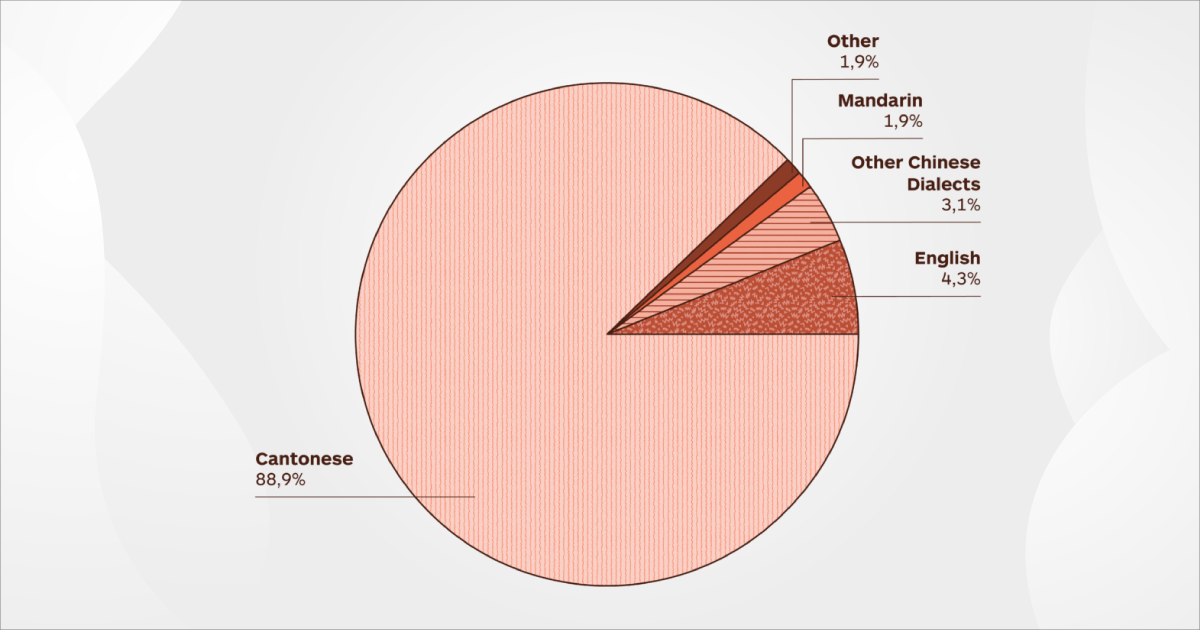
The main languages spoken in Hong Kong are Cantonese, English, Putonghua, and other Chinese dialects such as Hakka, Chiu Chow, and Hokkien. Cantonese is the dominant everyday spoken language, while Chinese and English are the official languages used in government, law, education, and business.
For companies entering the Hong Kong market, language choice is not only about translation. Most customer-facing content should use Traditional Chinese, while English remains important for legal, financial, corporate, and international business communication.
| Language | 2021 Census: Usual Spoken Language | 2021 Census: Able to Speak |
|---|---|---|
| Cantonese | 88.2% | 93.7% |
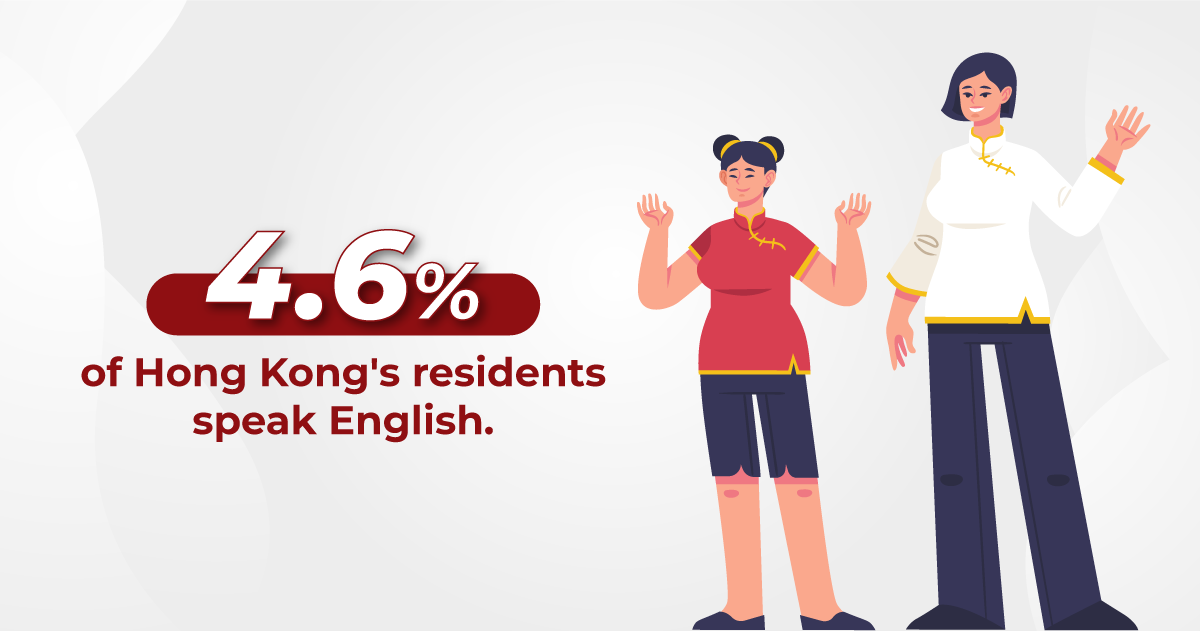
| English | 4.6% | 58.7% |
| Other Chinese dialects | 2.8% | – |
| Putonghua | 2.3% | 54.2% |
| Other languages | 2.1% | – |
Source: Hong Kong 2021 Population Census, usual spoken language data.
A Brief Overview of Spoken Languages in Hong Kong
The Official Languages of Hong Kong: English and Chinese
Hong Kong operates under a dual official language policy that recognizes both English and Chinese.
As a former British colony, English has held official status in Hong Kong since 1883. This colonial influence has ingrained English into many aspects of life, including government, business, and education.
English is commonly used in the legal system, official documents, and many corporate environments, where it is often the preferred language for international trade and communication.
On the other hand, Hong Kong recognizes Chinese and English as its official languages. In everyday life, Cantonese is the dominant spoken form of Chinese, while written Chinese is commonly used in Traditional Chinese characters. Cantonese thrives particularly in local media, education, and community discourse.
In educational environments, while Cantonese is primarily used, English is extensively taught as a second language, especially in international schools and universities. Many institutions strive to offer a bilingual education framework, equipping students to excel in both local and global contexts.
Businesswise, English predominates in multinational companies and sectors that are heavily engaged in international trade, while Cantonese is more commonly used in local businesses and interactions.
Reaching Hong Kong audiences?
Localize your content in Traditional Chinese and English with business-ready Chinese translation and website localization support.
Cantonese: The Heart of Hong Kong’s Culture
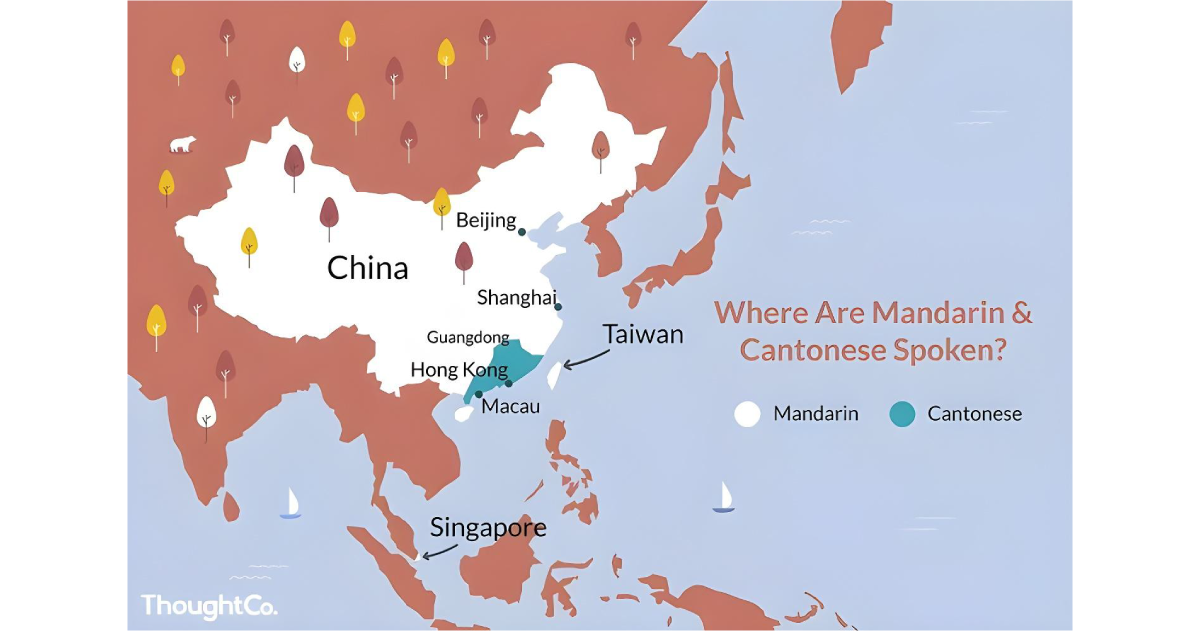
Spoken by the vast majority of the population, Cantonese is the most commonly used language in Hong Kong. It serves as the primary medium of instruction in schools and is the language of daily life across the city, from bustling markets to lively neighborhoods.
Cantonese is rich in cultural nuances, reflected in its expressive tones and unique idioms. The language carries a wealth of proverbs and sayings that embody the values, philosophy, and humor of the local community.
Cantonese is not just a spoken language in Hong Kong; it is also written using traditional Chinese characters, which further reinforces the city’s cultural connection to its past.
The significance of Cantonese is also evident in local media, including television, radio, and print, where it dominates dramas, news, and entertainment.
The Rise of Mandarin in Hong Kong
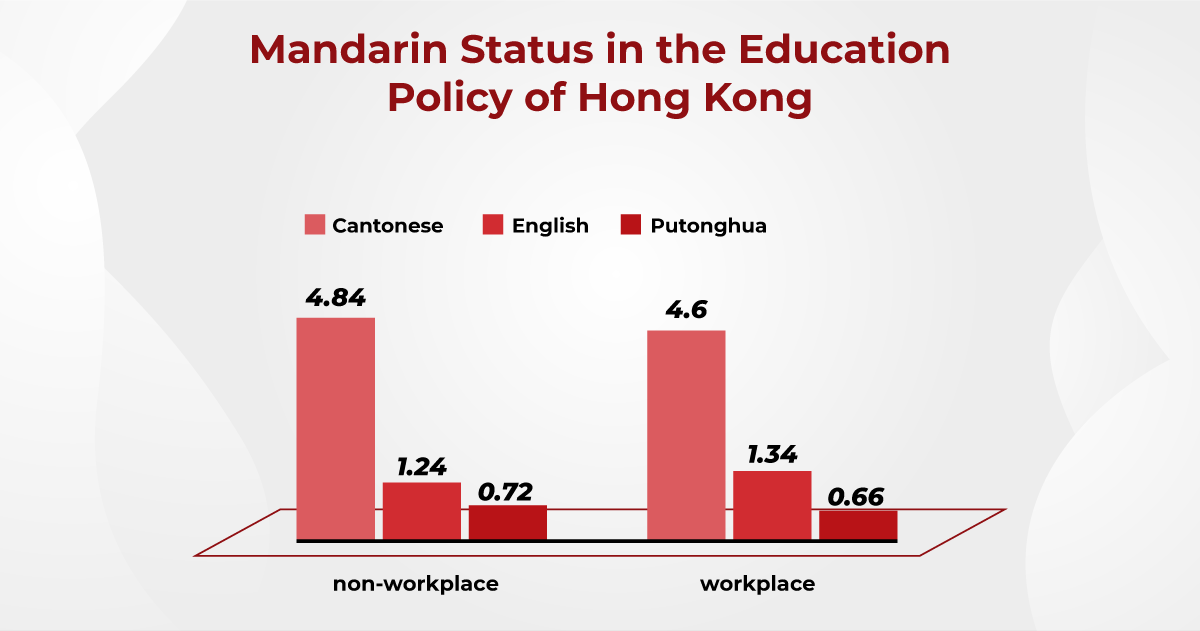
Mandarin, or Putonghua, is the official language of the People’s Republic of China and has been gaining prominence in Hong Kong island, largely due to the city’s deepening ties with the mainland.
In the 2021 Population Census, 54.2% of people aged 5 and over could speak Putonghua, up from 47.8% in 2011, reflecting a significant uptick in its usage and acceptance among residents.
This increasing presence of Mandarin can be attributed to several factors, particularly in business and government settings. As Hong Kong continues to strengthen its economic and political connection with mainland China, Mandarin has become essential for effective communication and collaboration within various sectors.
Moreover, the role of Mandarin in education is becoming more pronounced. Schools are increasingly incorporating Mandarin into their curricula, often alongside Cantonese and English.
The influence of Mandarin is further manifesting in popular culture, media, and social interactions. With more exposure to mainland Chinese films, music, and social platforms, younger Hongkongers are more inclined to embrace Mandarin as part of their everyday communication.
The Role of Minority Dialects in Hong Kong
Especially in the rural areas and the new territories, minority dialects such as Hakka, Chiu Chow, and Weitou enter the picture. And they play a crucial role in preserving local culture and identity. For instance, Chiu Chow, with its distinct phonetic structure and expressions, carries the nuances of the Chaozhou culture, which ties back to Guangdong province.
However, these minority dialects are facing challenges as urbanization continues to reshape the demographic landscape of Hong Kong. Many young people migrate to urban centers for better opportunities, and as a result, the intergenerational transmission of these dialects is declining.
The influence of Mandarin, as it becomes more prevalent in education and business, further contributes to this decline, leading many to prioritize proficiency in Mandarin over their local dialects.
Despite these challenges, there are ongoing efforts to preserve these dialects and the cultural stories they carry.
Why Understanding Hong Kong’s Languages Matters for Businesses
While it’s obvious to go for Cantonese when tapping into Hong Kong’s market, many professionals in international business settings prefer English or, increasingly, Mandarin. So, it’s important to tailor communications to align with your needs and resonate with your potential audience. The goal is to deliver messages that aren’t just heard but understood and appreciated.
Hong Kong’s bilingual common-law system likewise makes accurate legal translation essential for contracts, filings, and compliance.
For formal documents, websites, product pages, and campaigns, professional Chinese translation services help maintain accuracy across language and context.
At AsiaLocalize, we operate from the heart of Asia, and we help clients navigate this linguistic and cultural diversity. For over 10 years, we’ve assisted businesses in breaking into Asia’s dynamic markets, ensuring their messages align with local customs and values.
Our team of experienced native translators, each with industry-specific knowledge, brings deep expertise to the table. With AsiaLocalize by your side, you can confidently deliver messages that make a lasting impact across the region.
Understanding the languages spoken in Hong Kong helps businesses choose the right mix of Cantonese, English, and Traditional Chinese content.
Traditional Chinese and English Localization for the Hong Kong Market
For businesses entering Hong Kong, the safest approach is usually a bilingual content strategy. Traditional Chinese should be used for most local customer-facing content, while English remains essential for corporate, legal, financial, and international business communication.
As a global financial center, Hong Kong also demands precise financial translation so disclosures and reports read accurately in both Traditional Chinese and English. Our end-to-end localization services adapt each campaign for the Hong Kong market.
This is where localization matters. A campaign written for Mainland China may not work as well in Hong Kong if it uses Simplified Chinese, Mainland phrasing, or cultural references that feel unfamiliar to local audiences.
Professional Chinese translation services and Traditional Chinese translation services help businesses adapt websites, product pages, contracts, marketing campaigns, software interfaces, and customer support content for the Hong Kong market.
For digital channels, website localization services can also improve user experience by adapting menus, forms, CTAs, payment flows, visuals, and tone of voice to match how Hong Kong audiences search, read, and make decisions online.
| We build strong relationships with your potential in Hong Kong. Contact Us Now! |
FAQs About Languages Spoken in Hong Kong
What are the official languages of Hong Kong?
Chinese and English are the official languages of Hong Kong. Cantonese is the dominant spoken form of Chinese in daily life.
What is the most spoken language in Hong Kong?
Cantonese is the most common usual spoken language in Hong Kong, used by 88.2% of the population according to the 2021 Population Census.
Does Hong Kong use Traditional Chinese or Simplified Chinese?
Hong Kong mainly uses Traditional Chinese for written communication, while Simplified Chinese is more common in Mainland China.
Is English widely used in Hong Kong business?
Yes. English is widely used in legal, financial, government, corporate, and international business contexts.
Why does localization matter for the Hong Kong market?
Localization helps businesses choose the right mix of Traditional Chinese, Cantonese-sensitive wording, English, visuals, CTAs, and user experience for Hong Kong audiences.
Hong Kong’s census figures quoted here is set out alongside the other 10 Asian markets we track in our Business Languages of Asia data reference, where every published figure is attributed to its named primary source.