Adaptation vs translation is the choice between preserving a source message accurately and reshaping it so it works naturally in a new cultural context. Translation prioritizes meaning transfer; adaptation gives the target text more freedom when tone, audience expectations, usability, or persuasive effect matters.
A headline can perform beautifully in one market, be translated line by line, and still fall flat when its tone, reference, or cultural cue does not travel.
Language access is the entry point. In a 2020 survey of 8,709 consumers across 29 countries, CSA Research found that 76% preferred product information in their own language and 40% would not buy from websites in other languages. But accurate words alone do not guarantee that a message will feel credible, useful, or persuasive.
Why Adaptation vs Translation Matters in Global Content
The adaptation vs translation decision matters because a message can be linguistically correct and still feel out of place. It may use unfamiliar examples, an inappropriate level of formality, an unclear call to action, or a visual reference that carries a different meaning locally. That gap affects message effectiveness across multilingual content, websites, apps, campaigns, and product experiences.
- Trust: Natural phrasing and culturally appropriate choices make the experience feel considered.
- Usability: Labels, instructions, dates, units, and interface patterns need to match local expectations.
- Brand voice: The expression may change while the brand’s recognizable personality remains consistent.
- Conversion: Calls to action must be clear and motivating for the audience, not merely correct.
Defining Translation
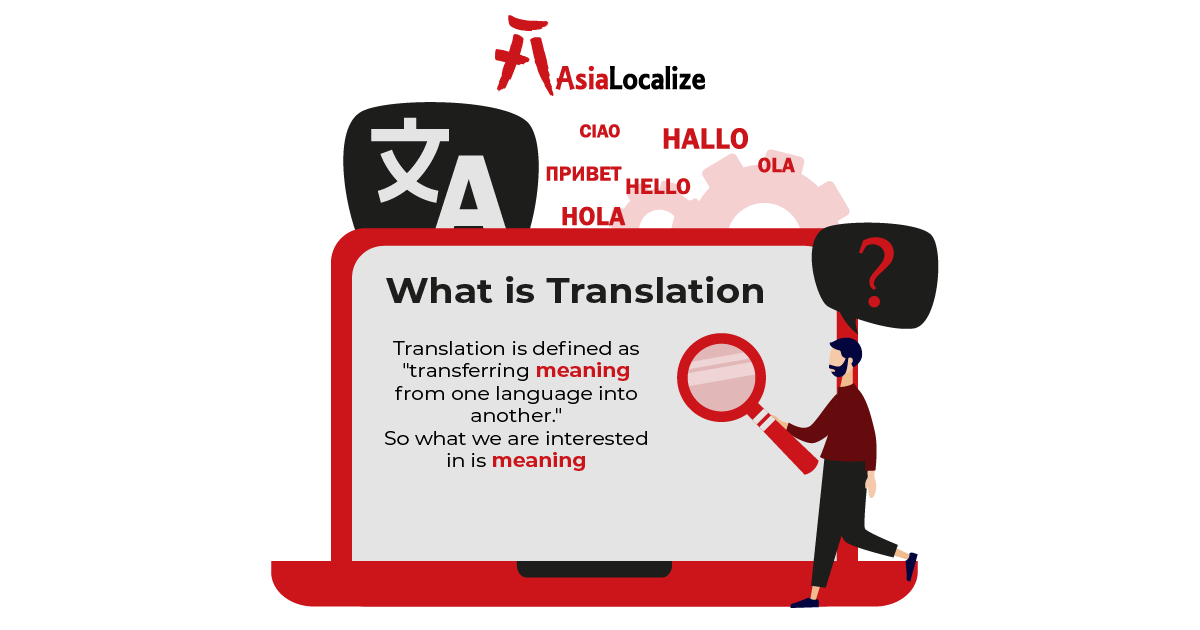
In adaptation vs translation projects, translation is the process of producing content in a target language from material in a source language. Its core goal is accurate meaning transfer: the target text should preserve the information, intent, terminology, and appropriate tone of the source as faithfully as the language allows.
Defining translation as word-for-word substitution is too narrow. Professional translators make grammatical and stylistic adjustments to achieve readable semantic equivalence. However, the source remains the main constraint, and unnecessary changes to content, claims, or structure are avoided.
Translation is usually the best fit for legal documents, technical manuals, compliance materials, policies, product specifications, knowledge-base content, and other assets where accuracy and traceability are the primary risks. Product teams can combine this discipline with software translation services for UI strings, documentation, testing, and linguistic review.
Defining Adaptation
The adaptation vs translation distinction becomes clear when content must fit a particular audience, medium, or local context. Adaptation changes content more freely. It protects the core idea and purpose, but may adjust wording, examples, tone, imagery, format, structure, or interaction design when a close rendering would not work.
The American Translators Association’s discussion of adaptation and translation highlights this wider freedom: adaptation permits changes to content and style that would normally be unacceptable in a close translation. Defining adaptation therefore requires looking beyond words to the experience the audience receives.
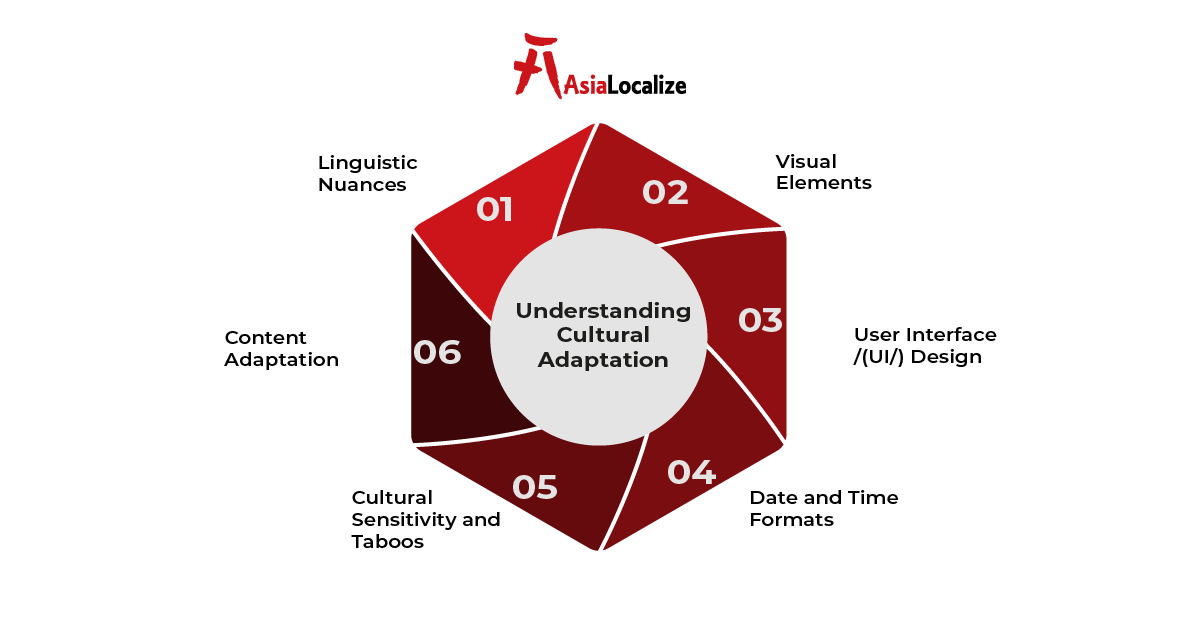
- Linguistic nuances: idioms, register, humor, sentence rhythm, and natural phrasing
- Visual elements: imagery, colors, symbols, gestures, and culturally specific references
- User interface design: labels, navigation patterns, text expansion, and reading direction
- Regional formats: dates, time, currency, units, numbers, names, and addresses
- Cultural sensitivity: taboos, legal restrictions, social expectations, and representation
- Content adaptation: local examples, proof points, calls to action, sequencing, and storytelling
Comparing the Two Directly
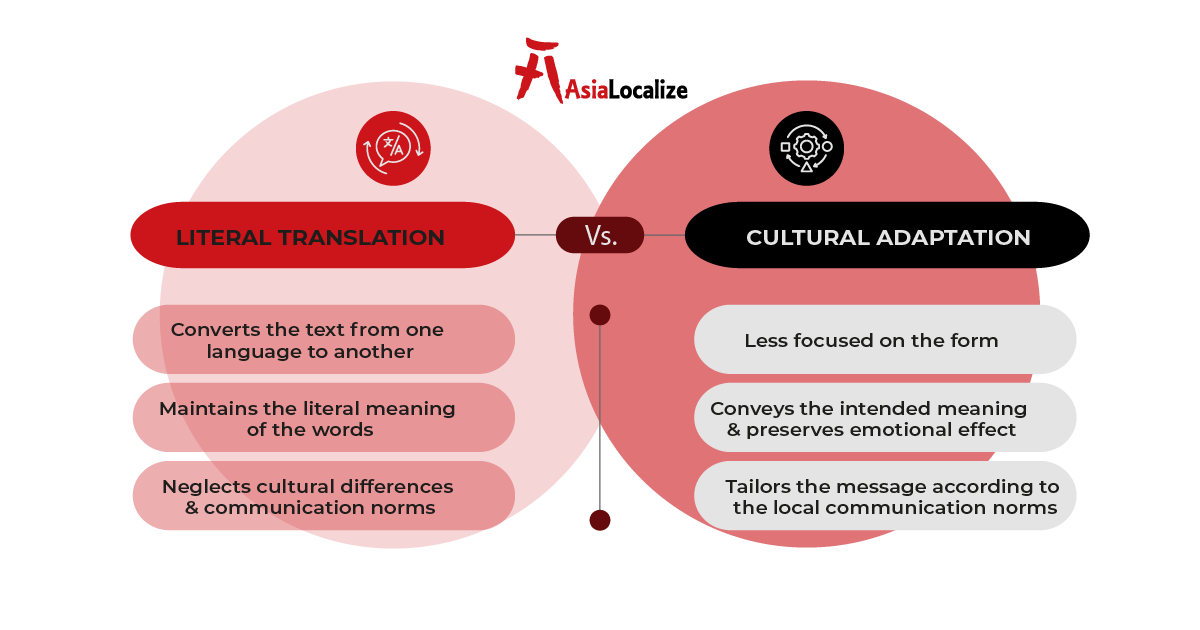
Comparing the two directly makes the adaptation vs translation trade-off clear: translation keeps the target text anchored closely to the source, while adaptation gives specialists more freedom to achieve relevance and the intended response.
| Decision area | Translation | Adaptation |
|---|---|---|
| Primary goal | Preserve meaning accurately | Make the message work in context |
| Creative freedom | Controlled | Broader, within approved guardrails |
| Source relationship | Close to the source text | May restructure or replace elements |
| Cultural layer | Necessary adjustments | Deliberate cultural adaptation |
| Best suited to | Legal, technical, compliance, and informational content | Websites, apps, marketing, media, and brand experiences |
| Main risk | Sounding rigid or imported | Drifting from the approved intent |
| Review focus | Accuracy, terminology, completeness, and readability | Accuracy, relevance, usability, voice, and audience response |
Explaining Key Differences Without Creating a False Choice
Explaining key differences does not mean treating adaptation vs translation as competing services. They sit on a spectrum. A free translation may change phrasing and sentence structure for clarity while remaining recognizable as the source. Adaptation goes further when locale-specific content, user behavior, or cultural meaning requires a different solution.
Adaptation vs translation is rarely all-or-nothing. Projects often use both methods: product specifications and warnings may need close translation, while landing-page headlines and calls to action are adapted by market.
Adaptation, Localization, and Transcreation
Adaptation vs translation sits inside a wider localization spectrum. W3C defines localization as adapting a product, application, or document to the language, cultural, and other requirements of a specific target market. That broader process can include translation, adaptation, engineering, formats, compliance, testing, and visual changes.
Transcreation is the most creative end of the spectrum. Microsoft describes transcreation as making extensive changes to preserve intent and cultural resonance, especially for slogans, headlines, campaigns, and artistic or emotional content. Our guide to marketing transcreation explains that process in more detail.
For the technical layer, see our guide to localization vs internationalization.
Practical Use Cases
These adaptation vs translation practical use cases show why one rule cannot govern every asset:
- Website copy adaptation: A direct translation of “Start your journey” may sound vague or overly dramatic. The local CTA should express the same action in language that matches market conventions.
- App content adaptation: An onboarding prompt may be accurate but too formal, too long for the interface, or unfamiliar to local users. The adapted version protects usability and communicative intent.
- Marketing translation: Product facts and legal qualifiers may be translated closely, while a campaign headline is adapted—or transcreated—to preserve brand voice and emotional effect.
- Media localization: Subtitles, voice-over, timing, on-screen text, humor, and visual references may require different levels of intervention within the same video.
The right localization tools support terminology, review, version control, and quality assurance at scale.
How to Choose the Right Approach
For an adaptation vs translation decision, answer these questions before starting the process:
- Is precise meaning transfer the main goal, or must the content persuade?
- Does the asset contain legal, medical, safety, or technical information?
- How much does success depend on humor, emotion, symbolism, or brand voice?
- Will local formats, behavior, regulations, or audience expectations change the experience?
- Can reviewers approve controlled creative departures from the source?
- Should effectiveness be tested with users or campaign performance data?
The more content depends on exact facts and traceability, the closer it should stay to the source. Cultural nuance, usability, persuasion, or market fit strengthens the case for adaptation or transcreation.
FAQs About Adaptation vs Translation
Is adaptation the same as translation?
No. In an adaptation vs translation comparison, translation transfers meaning into another language as accurately as possible. Adaptation allows broader changes so the message fits the target audience, context, medium, or purpose.
When should a business use adaptation instead of translation?
Use adaptation for content where natural tone, cultural fit, usability, brand voice, or persuasive effect is essential—such as website copy, app onboarding, campaigns, and media.
What is the difference between adaptation and localization?
Adaptation focuses on reshaping content for an audience or context. Localization is the broader market-readiness process and may also include translation, engineering, regional formats, visual design, compliance, and testing.
Is transcreation the same as adaptation?
Not exactly. Transcreation is a highly creative form of adaptation used when a message must be recreated to produce a comparable emotional or persuasive effect in the target market.
Can one project include translation, adaptation, and transcreation?
Yes. Multilingual projects often assign different methods to different assets. The right mix depends on content purpose, risk, audience expectations, and the level of creative freedom approved by the brand.
Make Global Content Feel Right in Every Market
The adaptation vs translation distinction is practical: it affects how clearly a message lands, how consistently a brand is understood, and whether the content fulfills its purpose. AsiaLocalize combines linguistic expertise, cultural insight, technology, and structured review to apply the right method to every asset.
Planning an adaptation vs translation workflow? Talk to our localization services team about the right method for your content, markets, and risk profile.