
Expanding into new markets always looks exciting on paper—until teams hit the question no one can avoid: What will localization cost, and what do we actually get for that spend?
It’s a fair concern, especially when global growth depends on two unforgiving metrics: time-to-market and ROI.
Research consistently shows the link. According to CSA Research, 76% of consumers prefer buying from brands that communicate in their language, and 40% refuse to purchase from websites in other languages.
That’s why localization sits at the core of global growth. When teams invest in the right workflows, launches move faster, adoption rises naturally, and the usual friction around international releases begins to fade. But when the budget gets squeezed in the wrong places, the ripple effects show up quickly: rework piles up, quality slips, and release cycles drag out, draining time and money from markets that were meant to scale.
Therefore, a precise grasp of localization cost gives teams an edge—especially when the details behind that number are often overlooked. The value is in understanding the elements that build the total investment—your language mix, content volume, file formats, engineering needs, review cycles, and the quality safeguards supporting them. The real skill lies in balancing these pieces so teams can release faster while keeping the brand’s voice and credibility intact.
In this guide, we break down the factors behind your localization budget, how each one affects time-to-market and ROI, and the decisions that turn localization from a cost center into a scalable competitive advantage.
What Really Shapes Your Localization Bill: A Look Inside the Workflow
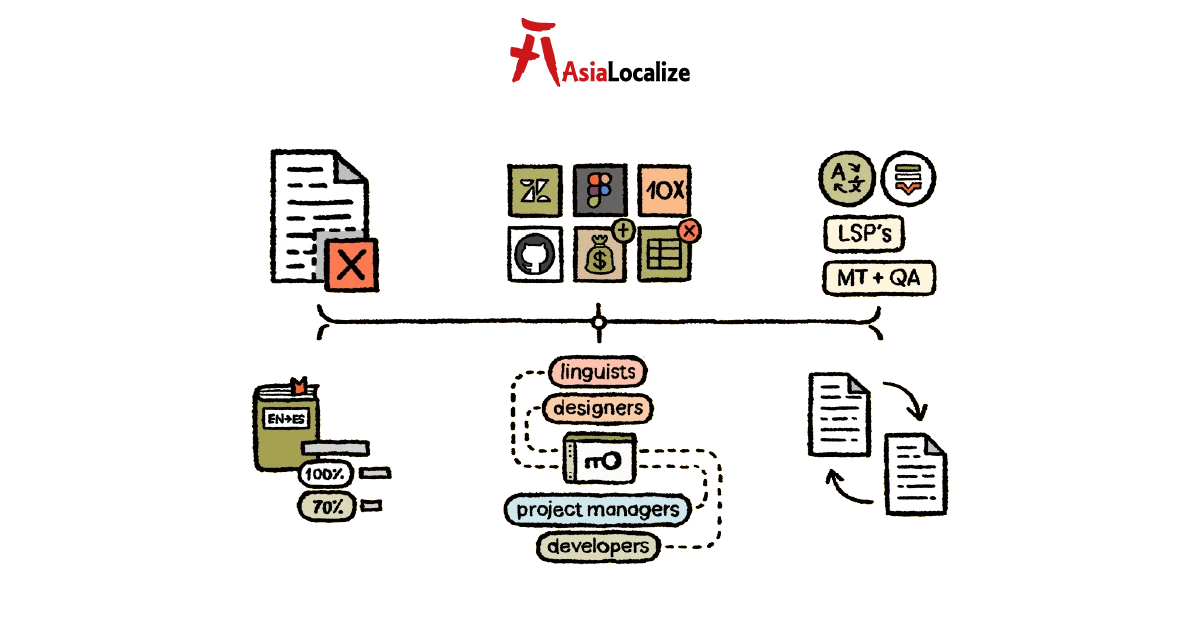
Localization pricing rarely comes from a single number. Behind every quote sits a layered workflow that touches linguists, engineers, designers, reviewers, and project managers—each adding something essential to the final outcome. Global brands often underestimate how these layers interact, but once the structure becomes clear, the pricing starts to make sense and decision-making becomes much sharper.
1. Linguist Rates: Depth, Domain, and Market Availability
Linguist pricing changes based on:
- Language pair (e.g., Japanese, Korean, or Nordic pairs cost more due to limited supply).
- Domain complexity—legal, medical, life sciences, financial, or technical content needs specialist linguists with proven backgrounds.
- Content nature—creative marketing takes longer than straightforward UI or product text.
2. Localization Engineering (File Prep, Builds, Regex, Integrations)
Engineering becomes one of the biggest cost-drivers when:
- Files include complex XML, JSON, INDD, Figma exports, or custom-dev formats.
- Content requires tag protection, placeholder handling, and automation checks.
- Platforms need API integration with CMS, repositories, or TMS systems.
3. QA & LQA: Quality Validation Beyond Linguistic Review
Quality assurance covers:
- Functional checks for UI/UX issues (text expansion, truncation, overflow).
- Linguistic QA for terminology alignment, tone consistency, and regulatory compliance.
- Market-level LQA with in-country testers to validate cultural fluency and usability.
4. Project Management: The Operational Backbone
PM effort grows based on:
- Number of languages.
- Number of content types.
- Whether the brand uses agile sprints, large drops, or continuous localization.
- Required reporting (KPIs, defect logs, SLA tracking).
5. Multilingual DTP (Desktop Publishing)
DTP becomes essential when:
- Content includes brochures, manuals, packaging, compliance docs, certificates, or catalogues.
- Languages involve right-to-left layout (Arabic, Hebrew, Farsi).
- Indic scripts (Hindi, Odia, Bengali, Tamil) require OpenType shaping for accurate display.
- Reflow is needed after translation to avoid broken lines and layout shifts.
Strengthen your global communication with our Professional Translation Services.
The Core Factors That Shape Your Localization Cost
Localization budgets rise and fall based on a few consistent variables—some obvious, others easy to miss until they slow down a release or inflate the final invoice. Teams usually expect the word count to take center stage, but the real picture includes the language pair, the technical weight of the content, the turnaround window, and the formatting demands behind the scenes.
Total Word Count
Word count forms the baseline:
- High-density legal or financial text → slower output, more review cycles
- Marketing copy → requires stylistic precision and creative adaptation
- UI strings → shorter, but context-heavy and prone to expansion issues
Language Pair Complexity
Some languages naturally require deeper linguistic and cultural adaptation:
- English ⇄ Japanese, English ⇄ Korean, English ⇄ Nordic→ fewer specialized linguists, tighter capacity, higher cost
- English ⇄ Spanish, English ⇄ Arabic→ larger linguist pools, more predictable pricing, though Arabic adds formatting complexity
The more linguistically distant the pair, the more time goes into research, term validation, and style reconciliation.
Turnaround Time (Standard vs. Compressed)
Tighter deadlines affect:
- Team size (more linguists = more alignment work)
- QA load (shorter cycles require parallel review)
- Engineering handoff windows
Formatting and File Structure
Complex formatting often drives a large chunk of the effort:
- Manuals, catalogues, and InDesign-heavy projects
- Excel sheets with embedded variables
- JSON/XML for software
- Figma or Sketch exports for UI work
Each format dictates different preparation and engineering steps before translation even starts.
CJK & RTL Script Considerations (The Hidden Cost Layer)
CJK (Chinese, Japanese, Korean) and RTL languages (Arabic, Hebrew, Farsi) add very specific workload requirements:
For CJK:
- Font fallback handling to prevent missing glyphs
- Character-based line breaking rules
- Vertical spacing adjustments
- Double-byte character compatibility in some systems
CJK text rarely fits into Western layouts without careful resizing.
For RTL Languages (e.g., Arabic):
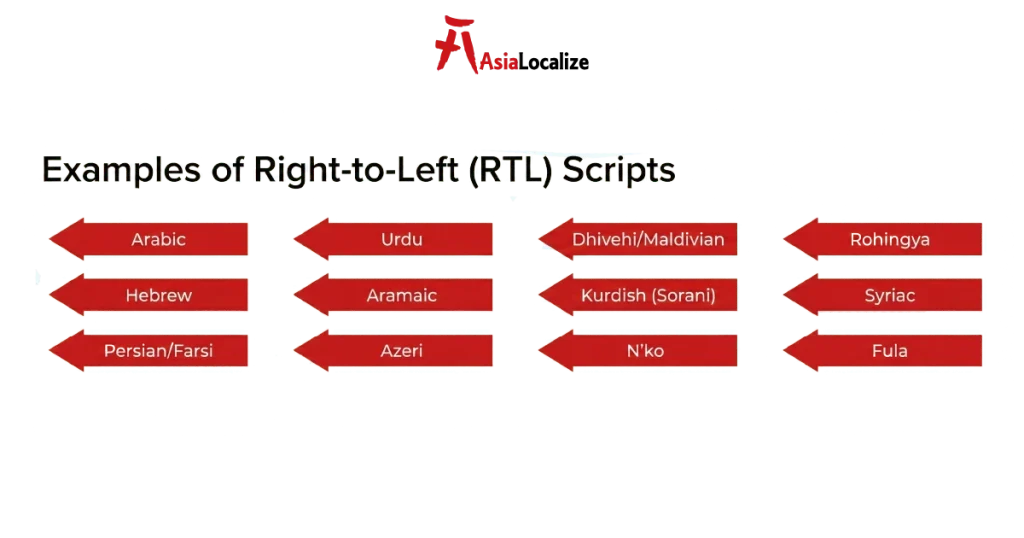
- Full layout mirroring
- Right-aligned UI components
- Reflowing paragraphs due to longer text expansion
- OpenType shaping for accurate display (ligatures, diacritics, character joins)
These adjustments shift both the timeline and the engineering/DTP budgeting.
Common Misconceptions About “Cheap” Localization

- Many teams focus on per-word rates, assuming a lower number means better efficiency. In reality, it often reflects rushed work, inexperienced linguists, or the absence of proper QA.
- “Cheap” translation rarely stays cheap. Hidden costs show up later through terminology inconsistencies, tone mismatches, broken UI strings, or content that needs to be retranslated altogether.
- Rework is where budgets quietly collapse. Engineering teams spend hours fixing layout issues, reviewers extend timelines, and releases stall — erasing any savings from the initial low quote.
- Per-word pricing alone doesn’t represent the real value. What matters is the workflow behind the scenes: linguist expertise, terminology management, quality gates, engineering support, and the tools that keep content aligned across markets.
- The cheapest option often produces the most expensive outcome. Delays, corrections, and poor user experience drain more time and money than investing in a reliable localization process from the start.
- In global markets, precision determines performance. Content that lands well the first time protects your brand, speeds up launch cycles, and produces far stronger ROI than any discount rate ever could.
Smart Strategies to Control Localization Cost Without Compromising Quality
Cost control in localization has nothing to do with cutting corners. Teams save the most when they build smarter workflows — ones that reduce repetition, prevent rework, and keep quality stable across every release. Here are the strategies that consistently move the needle for global brands.
Leverage Translation Technology for Efficiency
Using the right tools is one of the simplest ways to shrink costs without touching quality. A strong tech stack — TMS, CAT tools, and built-in QA engines — does more than store translations.
Here’s where the real savings happen:
- Translation Memory (TM):Repeated content gets reused automatically, which cuts down both time and cost. Brands with heavy documentation or recurring updates see the biggest impact.
- Termbases (TB):Keeping terminology aligned prevents inconsistencies, avoids endless back-and-forth review, and helps every linguist maintain the same voice across materials.
- Automated QA Checks:These tools catch missing variables, punctuation issues, broken tags, mistranslations, and style violations before content reaches reviewers — eliminating small but expensive fixes.
- Cumulative benefit:Consistent terminology and fewer repeat translations streamline review cycles, which reduces PM hours, reviewer time, and engineering friction.
Integrate MTPE and AI Wisely
Machine Translation Post-Editing (MTPE) offers a cost-effective route for high-volume content — as long as it’s handled with discipline.
Here’s how it reduces spend:
- MT handles the bulk lift for repetitive or operational content.
- Human post-editors refine accuracy, tone, and clarity to brand-ready quality.
- Turnaround times drop significantly for large content batches.
- Costs fall without sacrificing consistency or brand safety.
Plan Localization Early in Product Design
Localization becomes far more affordable when it’s considered before the product is coded, designed, or launched.
Teams save money when they:
- Build UI components that expand without breaking
- Avoid hardcoded strings
- Separate text from code
- Preparing UI for CJK typography and RTL mirroring (Arabic)
- Design content flows that adapt to different markets
- Plan space for longer text, different currencies, and date formats
These choices reduce a long list of expensive post-launch problems: text truncation, design fixes, engineering backtracking, and rushed updates.
Actionable Steps to Build a Localization Budget That Actually Scales
Teams that plan intentionally — by content type, by market, and by expected return — consistently waste less, ship faster, and build stronger global experiences.
Below is a practical, experience-driven framework that helps global teams structure budgets that stay stable and deliver measurable ROI.
Set Realistic Budgets by Content Type
Different content formats carry different effort levels, workflows, and pricing structures. Benchmarking against the right category protects your budget from unrealistic expectations.
Here’s how costs typically differ:
- Documents (policies, manuals, legal files)Charged per word or page. Legal and financial content takes longer due to terminology precision and multi-layer review.
- Software UI & Product StringsPriced per word with extra engineering for placeholders, variables, and contextual checks.
- WebsitesCost depends on CMS, dynamic content, SEO requirements, and continuous changes.
- eLearning ModulesPricing blends translation, subtitling, voice-over, SCORM/xAPI packaging, and multimedia DTP.
APAC vs. Western Pricing Variances
- Japanese, Korean, and Chinese require specialized linguists and deeper cultural review → higher rates.
- Western European languages fall into a more moderate range due to larger linguist availability.
- Emerging APAC languages (Thai, Vietnamese, Indonesian) sit between the two groups depending on subject matter and capacity.
Measure Value
Cost alone never paints the full picture. What matters is how localization contributes to smoother product adoption and lower operational load.
Key ROI indicators include:
- Reduced customer support ticketsClear, localized help content lowers user confusion.
- Higher engagement and retentionUsers stay longer when the product speaks their language naturally.
- Faster onboarding and activationLocalized UI, tooltips, and guides shorten the learning curve.
Choose ISO-Certified Partners for Cost Transparency
Budgets stay predictable when workflows stay consistent. Certifications provide that stability.
- ISO 17100 guarantees structured translation workflows with qualified linguists and multi-step review.
- ISO 9001 ensures consistent quality management across the entire production cycle.
With these frameworks, brands avoid rework, hidden fees, and unexpected turnaround extensions.
Building a localization budget that truly sustains global growth has very little to do with chasing the lowest rate and everything to do with choosing the right structure.
At AsiaLocalize, we help businesses move beyond one-off translations and into scalable workflows that protect quality, accelerate releases, and make every dollar count. Our specialists work closely with product, marketing, and engineering teams to build processes that grow with your roadmap.
Turn Your Global Vision into a Local Reality!
Explore our localization services.