

There are 359 million businesses operating worldwide today, all trying to earn a moment of attention from the same overstimulated customers. And when you look closely, most of them make the same mistake: they communicate in ways that feel interchangeable. Same claims. Same tone. Same value propositions. The result? Customers stop noticing—because nothing feels distinct enough to remember.
This is where the cracks start to show. 76% of consumers prefer to buy from brands that provide information in their own language, and 40% won’t purchase at all if the experience isn’t localized. In other words, if a brand doesn’t speak to people the way they expect to be spoken to, it becomes invisible.
And invisibility is expensive. Research shows that companies with clear, compelling differentiators grow 3.5× faster than their peers because they speak directly to buyer pain points instead of adding to the noise. For global brands, the pattern is even sharper: without tailored, culturally aware communication, even the strongest product ends up competing on price alone.
This blog digs into why that happens—and how the right approach to localized communication becomes one of the most reliable paths to meaningful, lasting market differentiation.
What Is Market Differentiation (And Why It Beats Competing on Price)
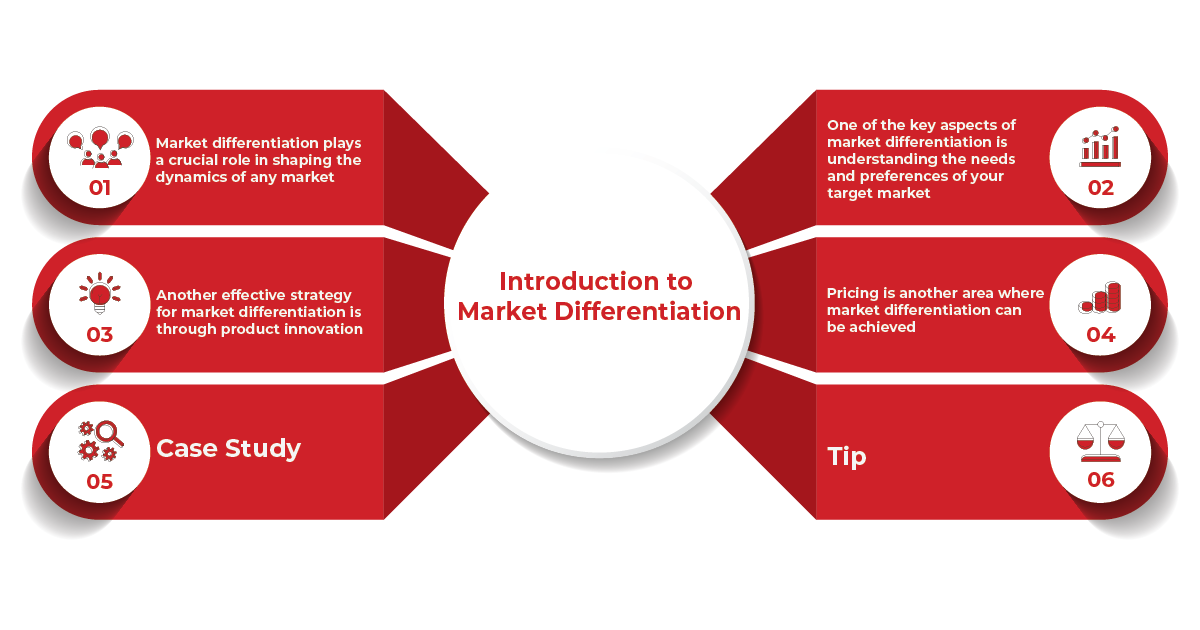
A buyer searching online is instantly met with tens of thousands of providers, most promising the same thing: accuracy, speed, quality, and competitive pricing. The sameness is so overwhelming that customers default to what feels safest—comparing rates—because nothing else stands out enough to justify paying more.
When your communication feels tailored—linguistically and culturally—you stop competing as “one vendor among many” and instead become the partner who gets the customer.
A strong differentiation strategy takes shape when a company understands what its buyers value most—speed, accuracy, cultural fluency, service reliability, domain expertise—and then builds its entire market positioning around delivering that consistently. This is exactly why localization matters: a brand cannot differentiate globally if its promise doesn’t feel relevant or native in each market.
Market Differentiation vs. Market Segmentation: The Real Difference
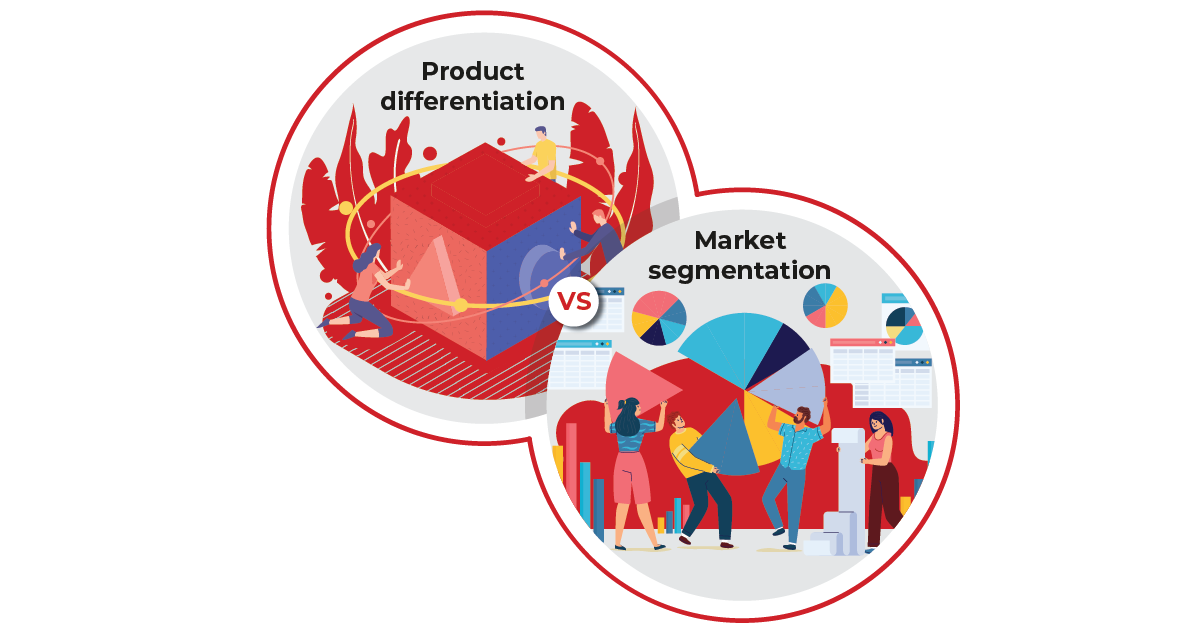
These two concepts are often mixed up, yet each answers a different question:
Market Segmentation
- Divides customers into defined groups.
- Focuses on who you’re targeting.
- Asks: “Which customers should we serve?”
Market Differentiation
- Makes your offering stand out within those groups.
- Focuses on how you’re different.
- Asks: “Why should these customers choose us?”
They work together. Segmentation identifies the audience. Differentiation convinces them you’re the right fit.
Why Market Differentiation Matters More Than Ever
Customers today are drowning in options. No matter the industry—technology, retail, finance, hospitality—people can compare a dozen alternatives in the time it takes to unlock their phone. That level of choice changes everything. When brands start to sound and look alike, buyers default to whatever feels quickest or cheapest. And that’s where companies unintentionally lose the battle.
When a company invests in competitive differentiation—shaping how it communicates, how it delivers value, and how it shows up across markets—the impact reaches every part of the business:
- The freedom to command better pricing
- Stronger customer loyalty
- Healthier margins that aren’t eroded by discounts
- A market position that’s easy to remember, not easy to replace
The 7 Differentiation Strategies Every Growing Brand Needs to Master
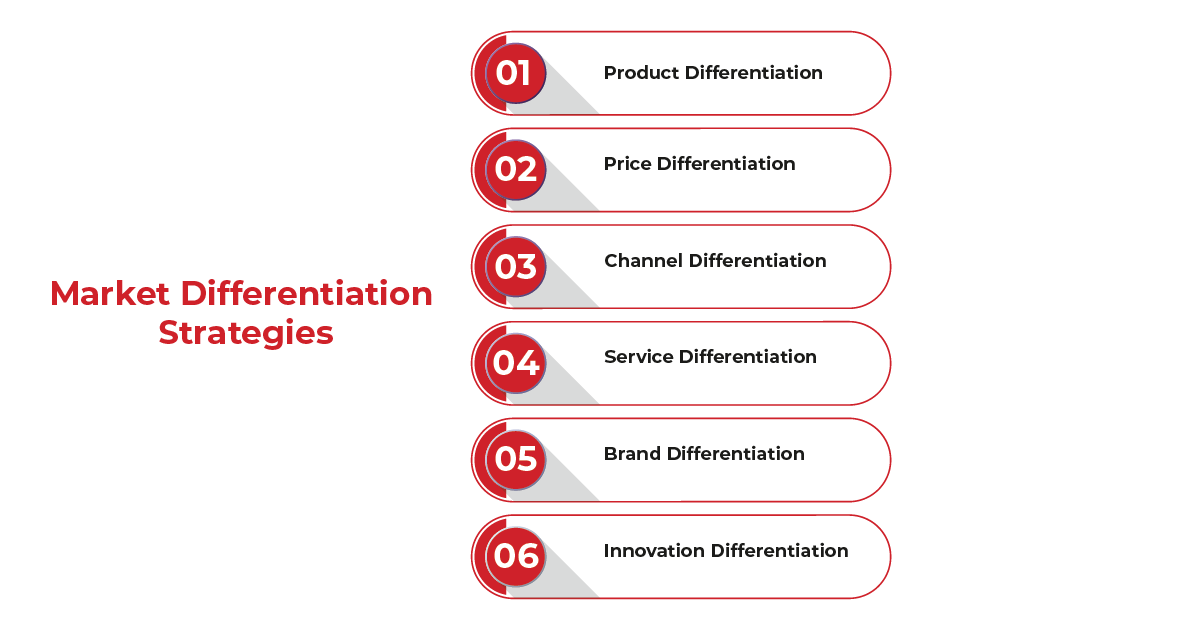
While every company talks about standing out, only a few know how to translate that into a practical, layered strategy.
This section breaks down the seven core types of market differentiation strategy—the same ones used by global leaders across industries. Each approach offers a different path to building a competitive advantage and shaping a market position that buyers remember.
1. Product Differentiation
Great products create their own demand. Apple focuses on ecosystem harmony and premium design. Dyson leads with patented cyclone technology that others can’t copy. Product differentiation is effective when your features offer genuine, defensible value.
2. Service Differentiation
Exceptional service becomes its own brand promise. Zappos built loyalty through care. FedEx won trust through dependable overnight delivery. Service differentiation transforms routine transactions into emotional connections that keep customers coming back.
This type of customer value differentiation creates emotional stickiness that lasts even when products look similar.
3. Quality Differentiation
Some brands win because their quality is unmistakable. Rolex represents craftsmanship. Mercedes-Benz symbolizes engineering excellence. Quality differentiation attracts buyers who choose durability, prestige, and performance over savings—and are willing to pay for it.
4. Price Differentiation
Low-cost leaders follow a disciplined model. Walmart, IKEA, and Southwest Airlines outperform by optimizing cost structures that others can’t match. Price differentiation can dominate markets, but only if operational efficiencies protect margins’s integrity.
5. Brand Differentiation
Strong brands build worlds other than product lists. Nike champions human achievement. Patagonia stands for environmental responsibility. Brand differentiation relies on storytelling and values alignment, shaping emotional ties that grow stronger over time.
6. Channel Differentiation
Sometimes, it’s the buying experience that sets you apart. Tesla sells directly to customers. Warby Parker made eyewear accessible online. Tupperware pioneered distribution through home gatherings.
This type of strategic differentiation often introduces convenience or novelty that competitors struggle to copy quickly.
7. Localization Differentiation
Winning globally requires showing up locally. McDonald’s adapts menus across cultures. Netflix invests in region-specific content. Brands that invest in localization differentiation communicate like insiders, earning trust through cultural fluency and relevance.
Your Technical Content Needs Experts
Discover our Technical Translation Services.
How Translation and Localization Build Real Market Differentiation
1. Cultural Relevance Differentiation
When brands speak with cultural fluency, they earn emotional access that competitors cannot replicate. Through cross-cultural differentiation, localized content aligns with local humor, values, norms, and expectations—creating market-specific differentiation that feels organic rather than translated.
2. Market Access Differentiation
Localization unlocks markets that competitors struggle to enter. From regulatory compliance to multilingual product launches, companies gain a wider, faster reach, giving them a strategic foothold in regions others cannot serve efficiently.
3. Experience Quality Differentiation
Localized UX, user flows, learning content, and product interfaces elevate the customer journey far beyond literal translation. The result is smoother adoption, less friction, and stronger user satisfaction, an essential pillar of differentiation marketing.
4. Trust and Credibility Differentiation
Brands that communicate accurately in local languages signal reliability and professionalism. High-quality translation reduces misunderstandings, reassures buyers, and builds long-term credibility, especially in regulated industries where trust determines purchase decisions.
5. Speed-to-Market Differentiation
A streamlined localization workflow increases launch velocity across regions. With faster turnaround, consistent processes, and scalable technology, brands outpace competitors and capture attention before markets saturate, creating a powerful competitive edge.
See How Global Brands Use Localization to Differentiate
Get inspired by real-world localization examples.
How to Build a Market Differentiation Strategy That Actually Works
A recent survey revealed that 64% of consumers have switched to a competitor after a poor customer experience, which shows how quickly buyers move when a brand fails to deliver something distinctive or meaningful.
A strong market differentiation strategy gives your team clarity, direction, and a competitive core to build around. Whether you’re scaling globally or strengthening your position in current markets, the process below creates a foundation for long-term strategic differentiation and stronger competitive positioning.
Step 1: Analyze Your Competitive Landscape
Begin with a clear picture of the market. Map competitors, review their messaging, study customer feedback, and understand how they position themselves. The goal is to uncover gaps—areas customers care about, but competitors don’t address well.
Step 2: Identify Your Unique Strengths
Look inward and pinpoint strengths that offer real, sustainable advantage. This could be product innovation, customer experience excellence, operational efficiency, brand heritage, technology, or specialized expertise. The strongest differentiators come from capabilities competitors can’t easily replicate.
Step 3: Understand What Your Customers Actually Value
Direct insight beats assumptions. Use surveys, interviews, analytics, or customer conversations to understand what your audience prioritizes—quality, convenience, price, reliability, design, service responsiveness. Differentiation is only effective when anchored to real customer expectations.
Step 4: Choose Your Differentiation Focus
Select one to three areas where you will build distinction. Netflix prioritized content + experience. Zappos doubled down on service. Tesla focused on technology + distribution. Focus helps customers understand exactly why they should choose you.
Step 5: Align Your Operations to Your Differentiation
Make your differentiation concrete. If you position yourself around quality, elevate your materials, craftsmanship, or QA processes. If you lead on speed, streamline workflows. If your edge is experience, refine every touchpoint. A strategy without operational alignment becomes a claim, not differentiation.
Step 6: Communicate Your Differentiation Clearly
Articulate your uniqueness with precision. Update your website, marketing, packaging, and sales messaging so customers instantly see what sets you apart. Be specific—vague language weakens credibility. Clear, evidence-backed communication strengthens trust.
Customers want brands that understand them—how they think, how they buy, how they speak, and what they value. Differentiation becomes powerful when it reaches people in a way that feels personal, familiar, and culturally respectful.
And that’s where global brands often fall short. They build strong differentiation at home, but it loses its shape the moment it crosses a border. Messaging flattens. Value propositions lose nuance. What felt sharp in one market becomes generic in another.
At AsiaLocalize, we help global teams make that shift. From culturally aligned marketing content to technical product documentation, from UX localization to regulatory translation—we make sure your brand feels distinct and trustworthy wherever it appears. Every market gets an experience that feels built for them, not simply translated for them.
Build a presence that travels well!
Explore our Business Translation Services.