


AsiaLocalize provides multilingual desktop publishing (DTP): our specialists convert translated design, publishing and office files into accurate, brand-consistent layouts, adapting typography, text direction, spacing and graphics for Asian, right-to-left and complex-script languages, then deliver editable, print-ready or digital files.
Order a free quote by filling the form below
Quick definition
Multilingual desktop publishing (DTP) is the process of formatting translated content so it matches the original design in every language. DTP specialists reflow text, adjust fonts, script direction, spacing, tables and graphics, and fix issues such as text expansion or broken line breaks, so brochures, manuals, reports and presentations are ready to print or publish.
Published: · Last reviewed:

Multilingual DTP requires language-specific production decisions. AsiaLocalize supports right-to-left layouts for Arabic, Hebrew, Farsi and Urdu; Chinese, Japanese and Korean typography; Indic-script layouts; and Southeast Asian scripts including Thai, Khmer, Lao and Burmese.
The production team accounts for script direction, punctuation, glyph coverage, line breaking, spacing and text expansion. Language-qualified reviewers are included where linguistic visual review is required.
The file you send decides how much rebuilding your layout needs. Native source files give the fastest, most accurate result; PDFs and scans can still be localized, but they need extra preparation.
| Native editable files | Editable PDF | Scanned or image-only file | |
|---|---|---|---|
| What it is | Original design files with fonts and linked images | PDF exported with selectable text | A picture of the page with no selectable text |
| Text extraction | Direct, using CAT tools | Text extracted; some formatting may be lost | OCR or manual retyping needed |
| Layout work | Translated text reflowed in the original layout | Layout edited or rebuilt in design software | Page rebuilt from scratch |
| Effort and cost | Lowest | Medium | Highest |
| Typical output | Editable files that mirror the source | Print-ready PDF; editable files on request | Rebuilt editable file or PDF |
We review source files, linked assets, fonts, page or asset volume, target languages and required outputs. Missing files and production risks are identified before layout work begins.
Editable text and embedded visual text are prepared for translation or multilingual formatting. Styles, templates and reusable assets are checked for consistency.
Our DTP specialists reflow translated text, apply the correct script direction and typography, and adjust tables, graphics, captions and page elements.
Where required, a language-qualified reviewer checks content in context for truncation, incorrect breaks, punctuation, misplaced text and other language-specific visual issues.
The final QA checks the agreed scope for missing or overflowing text, fonts and glyphs, styles, tables, graphics, links, pagination and cross-language consistency. Print projects can also include applicable resolution, bleed, crop and output-setting checks.
We deliver the agreed native or editable files together with the required production outputs. Client feedback and revisions follow the approved project scope.
Related services: Document Translation Services, Publishing Translation Services and Localization Engineering Services.
AsiaLocalize works with common design, publishing and business-document environments, including Adobe InDesign and IDML, Illustrator, Photoshop, FrameMaker and Acrobat/PDF; Microsoft Word, PowerPoint, Excel and Publisher; QuarkXPress; and AutoCAD.
Publishing projects can also include PDF, EPUB and MOBI deliverables when agreed in the project scope. If native source files are unavailable, send the available PDF or scan for assessment. Rebuilding a non-editable file may require additional preparation based on its condition and complexity.


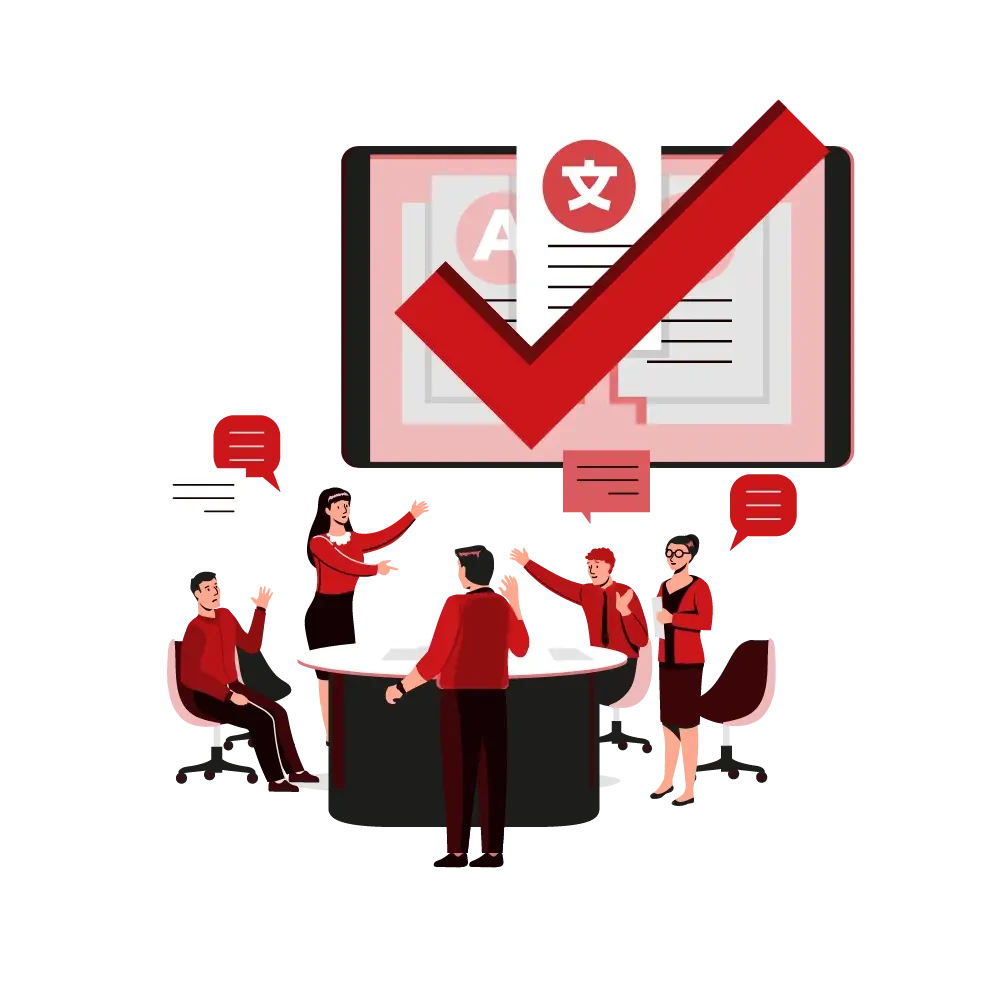
Our DTP specialists combine design skills with deep knowledge of Asian, right-to-left and Indic scripts. They preserve your original layout while managing text expansion, line breaks and font coverage, so translated materials look like originals.
Designers, translators and editors work as one team, so linguistic and visual issues are fixed before delivery.










Send your source files and target languages for a free assessment. We return layouts that match your original design, ready to print or publish in every language.

Phone: +603-2169-6313
Email: info@asialocalize.com

