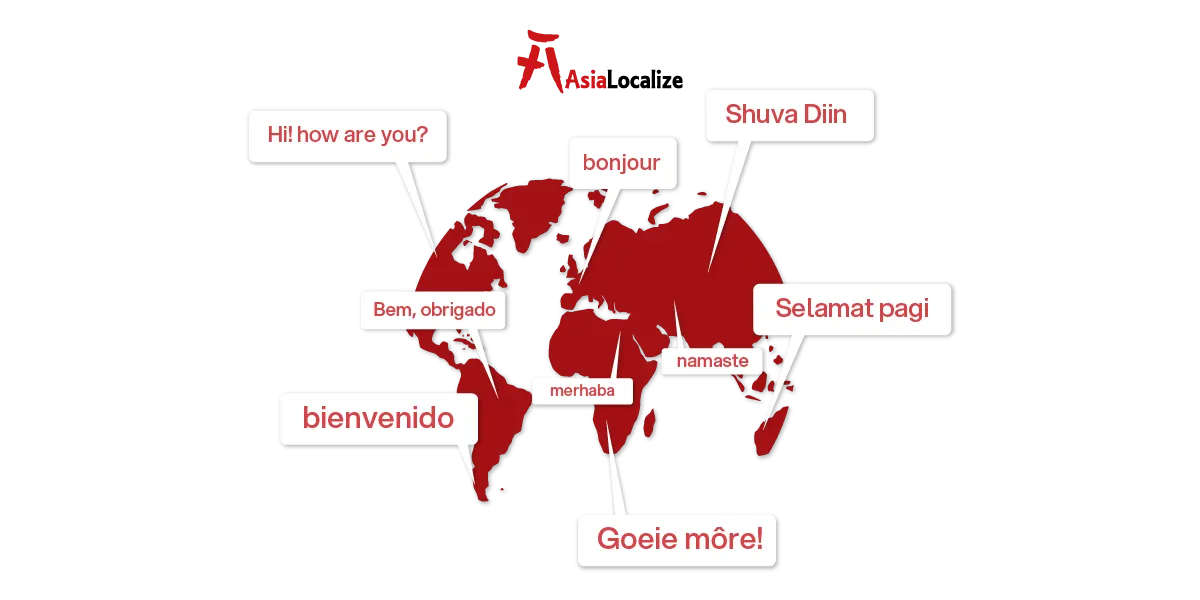
Language localization is the process of adapting content, products and digital experiences for the language, culture and practical conventions of a specific market. It goes beyond translating words: it adjusts tone, imagery, formats, user journeys and search intent so the experience feels created for local users.
A strong localization program helps people understand, trust and use your product without unnecessary friction. This guide explains the differences between translation, localization, internationalization and transcreation; shows practical examples; and provides an eight-step workflow for launching and improving localized content.
Language localization at a glance
- Localization is market-specific, not only language-specific. English for the United States and English for Singapore may need different spelling, currency, examples, legal wording and calls to action.
- Translation is one part of localization. A localized experience may also change layouts, images, dates, units, payment methods, metadata and support information.
- Internationalization makes localization easier. Flexible code, externalized strings and locale-aware formats prevent expensive rework.
- Quality requires context and testing. Linguistic review alone cannot catch truncated buttons, broken forms, incorrect currencies or right-to-left layout problems.
- Localization should be continuous. Teams need a repeatable workflow for new releases, content updates, performance measurement and feedback.
What does language localization mean?
Language localization adapts a source experience for a defined locale: a combination of language, region and sometimes script. For example, zh-Hans and zh-Hant distinguish Simplified and Traditional Chinese scripts, while pt-BR and pt-PT distinguish Brazilian and European Portuguese. The W3C guidance on language tags explains why precise locale identifiers matter.
The objective is functional and cultural equivalence. Users should be able to read the message, recognize the conventions, complete the task and feel that the brand understands their market. A complete localization service may therefore cover:
- Language, terminology, tone, idioms and level of formality
- Dates, time, numbers, currencies, addresses and units of measurement
- Images, colors, symbols, examples and cultural references
- Navigation, buttons, forms, error messages and onboarding flows
- Local keywords, metadata, structured data and internal links
- Legal notices, consent language, accessibility and market requirements
Translation vs. localization vs. internationalization vs. transcreation

| Approach | Main purpose | Typical use |
|---|---|---|
| Translation | Transfer meaning accurately between languages. | Contracts, manuals, reports and straightforward informational content. |
| Localization | Adapt the full experience for a locale. | Websites, apps, software, eCommerce, games and customer journeys. |
| Internationalization (i18n) | Design content and technology so they can support multiple locales. | Externalizing strings, Unicode, flexible layouts and locale-aware code. |
| Transcreation | Recreate the intended emotion and persuasive effect. | Campaigns, taglines, brand concepts and high-impact creative content. |
These approaches work together. A product team internationalizes the platform, translators transfer the core meaning, localization specialists adapt the experience, and transcreators reshape selected creative assets. The correct mix depends on the content’s purpose and risk.
Practical language localization examples
Localization becomes clearer when you look at the small decisions that affect trust and usability:
| Element | Direct transfer | Localized version |
|---|---|---|
| Date | 03/07/2026 | March 7 or 3 July, written unambiguously for the locale. |
| Price | $1,299.00 | Local currency, symbol position, separators, tax and payment options. |
| CTA | Buy now | A locally natural action such as Request a quote or Speak with an adviser. |
| Address form | State and ZIP code required | Fields, order and validation adapted to local address conventions. |
| Product visual | One global image with embedded English text | Market-relevant imagery with editable, translated text and accessible alt text. |
| Search page | Literal translation of an English keyword | Copy built around the phrase and intent local users actually search. |
When is translation enough?
Translation may be sufficient when the content is stable, factual, low-risk and independent of local behavior—for example, an internal reference document with no interface or marketing function. Localization becomes essential when people must act, buy, search, navigate or trust the content.
- Choose translation when accuracy is the primary goal and formats, visuals and workflows do not change.
- Choose localization for customer-facing websites, products, support content, apps and eCommerce journeys.
- Add transcreation when emotional impact, humor or brand creativity matters more than literal wording.
- Invest in internationalization when the same product or content system will support multiple locales over time.
The language localization process in 8 steps
1. Define markets, locales and goals
Start with business evidence rather than a list of popular languages. Define the target countries, audience segments, preferred locales, channels, conversion goals, legal constraints and success metrics. Research competitors and local search results to understand expectations before writing.
2. Prepare the source and internationalize the product
Use clear source language, remove unnecessary ambiguity and separate translatable text from code and images. Developers should support Unicode, plural rules, variable text length and locale-aware formats. The Unicode Common Locale Data Repository provides standardized locale data used across many digital products.
3. Inventory and prioritize content
Audit pages, UI strings, documents, video, graphics, support articles and metadata. Prioritize high-value user journeys and remove duplicates or outdated source content. A clear scope prevents teams from translating low-impact assets while leaving critical checkout or support steps incomplete.
4. Build linguistic assets and the workflow
Create a glossary, style guide, brand voice rules and market brief. A translation management system can connect the CMS or product repository, route work and preserve a translation memory. These assets improve consistency and let reviewers focus on meaning instead of repeatedly correcting known terms. See our detailed localization workflow guide.
5. Translate and adapt with the right level of human oversight
Match the method to risk. AI or machine translation with automated checks may support high-volume, low-risk content; trained linguists should review customer-facing copy; and legal, medical, safety or brand-critical material needs specialist review. Keep context—screenshots, character limits and audience information—attached to every string.
6. Review language and market fit
Native linguists check accuracy, fluency, terminology and tone. In-market stakeholders validate claims, product availability, cultural references and local business rules. Establish one accountable approver so subjective feedback does not create endless revision cycles.
7. Integrate and test the complete experience
Review localized content in its final environment. Linguistic QA finds mistranslations and inconsistency; functional QA checks links, forms, search and checkout; visual QA catches clipping, overlap and wrong images; and accessibility checks confirm labels, reading order and alt text. Pseudolocalization before translation exposes hard-coded text, expansion problems and unsupported characters early.
8. Launch, measure and improve continuously
Release by locale, monitor technical errors and collect user feedback. Feed approved corrections into the glossary and translation memory. Continuous localization connects new source content and product releases to the same controlled process instead of treating every update as a separate project.
Website localization and multilingual SEO
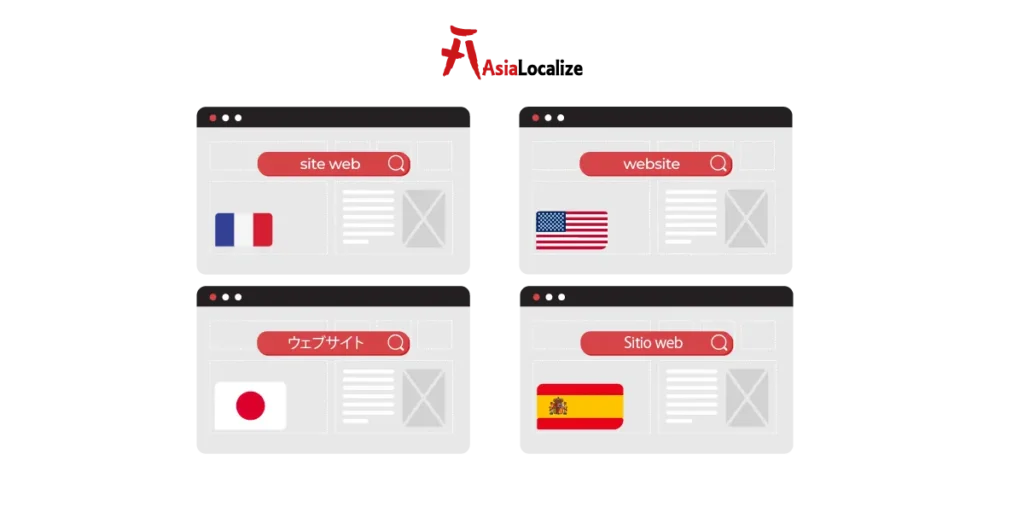
A localized website needs more than translated page copy. Each market version should have a stable URL, unique title and meta description, localized headings and internal links, and content that satisfies local search intent. Research keywords in the target language rather than translating the source keyword literally.
Use hreflang annotations to connect equivalent language or regional pages, keep canonical signals consistent and avoid automatic redirects that prevent users or crawlers from choosing a version. Google’s documentation on localized versions of pages explains the supported hreflang methods. AsiaLocalize’s website localization services combine linguistic, technical and multilingual SEO work across the complete journey.
AI in language localization: where it helps and where it does not
AI can accelerate first drafts, terminology extraction, quality checks, content classification and repeated low-risk updates. It cannot independently guarantee cultural fit, legal accuracy, brand voice or a working user experience. The practical approach is risk-tiered:
- Low risk: automation with sampling and feedback for high-volume, short-lived internal content.
- Medium risk: AI-assisted translation plus professional post-editing for support and product information.
- High risk: specialist human translation, independent review and documented QA for regulated, contractual or reputation-sensitive content.
Language localization for Asian markets

Asia is not one linguistic or commercial market. Country, language, script, platform and purchasing behavior must be planned separately. Important examples include:
- Chinese: choose Simplified or Traditional Chinese—and the appropriate regional terminology—based on the audience, not a generic Chinese label.
- Japanese: manage formality, compact interface layouts, full-width characters and the high importance of polished local presentation.
- Korean: adapt honorifics, spacing, terminology and locally dominant digital platforms.
- Southeast Asia: expect multilingual users, mixed scripts and different levels of comfort with English across countries and audience segments.
- Arabic-speaking Asian markets: test right-to-left layout, mirrored interface behavior, numerals, fonts and bidirectional content.
- Commerce: localize payment methods, delivery expectations, marketplaces, social channels, customer service and trust signals as well as language.
For software and apps, plan locale logic and release management early; our software localization process explains the technical workflow in more detail. Audio, video and graphics may also require subtitling, voice-over, dubbing and localized on-screen text through multimedia localization.
How to measure localization success
| Area | Useful metrics |
|---|---|
| Reach | Localized organic impressions, keyword visibility, traffic and content coverage by locale. |
| Engagement | Click-through rate, task completion, time on key journeys and search refinement. |
| Commercial impact | Conversion rate, revenue, qualified leads, average order value and retention by locale. |
| Quality | Errors by severity, customer complaints, review rework and escaped defects. |
| Operations | Turnaround time, cost per word or asset, translation-memory reuse and on-time releases. |
Compare metrics by market and against the pre-localization baseline. A single global average can hide a strong result in one locale and a broken journey in another.
Common localization mistakes
- Choosing languages without defining countries, scripts and audience segments
- Translating keywords, CTAs or idioms literally
- Sending strings without screenshots, limits or product context
- Embedding text in images or hard-coding it in software
- Skipping in-context, functional, visual or accessibility testing
- Using one reviewer for every market or accepting contradictory stakeholder feedback
- Launching once without a process for updates and performance measurement
Language localization checklist
- Define target market, locale, audience and success metric.
- Research local competitors, search intent, regulations and user behavior.
- Prepare source content and internationalize the product or template.
- Create a glossary, style guide, brief and approval path.
- Select the right automation and human review level for the risk.
- Test language, layout, functionality, accessibility and SEO in context.
- Launch with analytics segmented by locale and a continuous update workflow.
Frequently asked questions
What is an example of language localization?
An eCommerce site entering Japan may translate product descriptions into Japanese, display prices in yen, use local date and address formats, offer familiar payment methods, adapt product imagery and optimize pages for Japanese search terms. Together, those changes create a localized experience.
What is the difference between translation and localization?
Translation changes content from one language to another while preserving meaning. Localization adapts the broader experience—including tone, formats, images, functionality and search strategy—for a specific locale.
What is a locale?
A locale identifies the language and regional or script conventions a product should use, such as en-GB, fr-CA or zh-Hant. It guides language variants, date and number formats, currencies and other local behavior.
How much does language localization cost?
Cost depends on word volume, language pair, content type, technical complexity, review level, multimedia needs and the number of locales. Clean source content, reusable translation memory and a connected workflow reduce ongoing cost.
Can AI replace human localization?
AI can accelerate drafts and checks, but it cannot reliably own cultural judgment, regulated accuracy, brand accountability or in-context testing. Most organizations need a risk-based mix of automation and qualified human review.
How long does a localization project take?
Timing ranges from days for a small, prepared content set to months for a multilingual product launch. Scope, readiness, integrations, reviewer availability and testing drive the schedule more than word count alone.
Build an experience that feels local
Effective language localization aligns words, technology and market insight around the user’s task. The best programs start with the right locale strategy, reuse controlled linguistic assets, apply human judgment where risk is highest and measure results after launch.
AsiaLocalize supports multilingual websites, software, apps, marketing content and multimedia across Asian and global markets. Talk to a localization specialist to plan a scalable workflow for your next market.