While “Can’t Read, Won’t Buy” is a hard truth, it’s the reality every global business must face. Every word matters when you’re speaking to someone in another language and culture. According to a survey by CSA Research, 76% of online shoppers say they’re more likely to buy a product when information is in their native language, and 40% will refuse to do business otherwise.
And the return is real: businesses that localize well are 1.5× more likely to report revenue growth compared to those that don’t.
But not all translation is created equal. There are many specialties: legal translation, medical translation, technical translation, certified translation, interpreting, as well as localization and transcreation. Each serves very different goals, and getting them wrong can cost far more than having them done poorly or inconsistently.
In this guide, we’ll pull back the curtain on the major types of translation. You’ll learn when each is essential and how using the right one (or combination) becomes a competitive advantage.
Why Understanding Types of Translation Matters
Choosing the wrong kind of translation can ripple out into real risks for your business. When you use a generic translation for something that demands legal precision (like contracts or compliance), or apply marketing-style transcreation to technical or medical content, what seems like a small misstep can turn into brand damage, legal exposure, or lost revenue.
Here are some concrete reasons that show how costly misjudging translation type can be:
- Lost sales from translation mistakes: In Latin America alone, translation errors on e-commerce websites are responsible for up to US$46 billion in lost online sales. Some of those errors are simple grammar or terminology issues; others distort meaning in more serious ways.
- Missed business opportunities: About 64% of companies report losing international deals because of language gaps. When translation (or interpreting) isn’t precise or appropriate for the industry, misunderstanding creeps in, and trust or clarity breaks down.
- Productivity drain and costs to fix mistakes: Poor communication costs large companies (with 100,000+ employees) an average of US$62.4 million per year in wasted time, rework, and inefficiency. Smaller firms still lose hundreds of thousands annually just clarifying faulty or ambiguous messages.
Core Written Translation Services

Not all translation is created equal. Written translation takes many forms, each serving a specific purpose in global business. Understanding the distinctions helps companies choose the right path, whether they’re safeguarding compliance, speaking to regulators, or simply making sure customers can trust what they read.
1. Document Translation
Document translation is the everyday workhorse of global communication. It ensures that essential business documents can move seamlessly across borders without losing accuracy or intent.
Common use cases include:
- Contracts and agreements
- Product manuals and user guides
- Technical reports and specifications
- Financial statements and audits
- HR policies and employee handbooks
- Global compliance documents
2. Certified Translation
Certified translation steps in when proof of authenticity is required. Think immigration applications, court submissions, birth or marriage certificates, and government tenders. Unlike standard document translation, certified work comes with a signed declaration from the translator (or a sworn linguist, depending on jurisdiction) attesting to its accuracy.
Typically required for:
- Immigration paperwork (e.g., visa applications)
- Birth, marriage, and death certificates
- Academic transcripts and diplomas
- Court submissions and legal filings
- Government tenders and regulatory applications
3. Professional Human Translation
Professional human translation goes beyond word-for-word rendering. It delivers context, cultural sensitivity, and consistency that automated tools can’t replicate, making it the safest choice for content that carries brand, trust, or compliance weight.
Most valuable for:
- Marketing campaigns and slogans
- Websites and digital content
- Technical documentation with industry-specific terminology
- Pharmaceutical or medical information (e.g., dosage instructions)
- Software interfaces and user experiences
Industry-Specific Translation Types
Some industries carry higher stakes than others. In law, medicine, engineering, or finance, even a small translation slip can lead to costly disputes, safety risks, or regulatory breaches.
1. Legal Translation
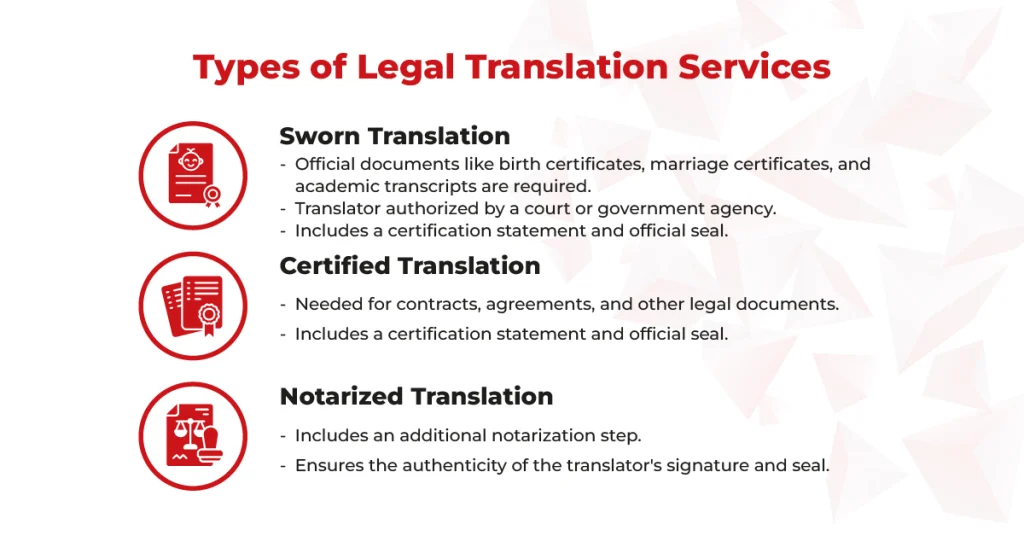
Legal translation demands precision and discretion. A single misplaced term can change the meaning of a contract or undermine a court case. Confidentiality is equally critical, given the sensitivity of the documents involved.
Commonly translated legal documents include:
- Contracts and agreements
- Court rulings and judgments
- Patents and intellectual property filings
- Regulatory compliance documents
- Witness statements and legal correspondence
2. Medical Translation
As the saying goes, accuracy in Medical Translation Services saves lives and ensures compliance with healthcare regulations. Medical content carries one of the highest risks; errors here can affect patient safety. So, translators must be fluent not only in the target language but also in the technical and regulatory vocabulary of healthcare.
Key medical documents include:
- Patient records and discharge summaries
- Clinical trial documentation
- Drug packaging and dosage instructions
- Informed consent forms
- Medical device manuals
3. Technical Translation
When products and systems cross borders, technical translation services ensure instructions are clear and consistent. This type of work requires deep knowledge of industry terminology to avoid confusion that could compromise safety or usability.
Typical technical materials include:
- Engineering specifications
- User manuals and operating guides
- Safety instructions and datasheets
- Software documentation and help files
- Electronics and machinery guides
4. Financial Translation
Numbers may be universal, but financial language is not. Annual reports, investment summaries, and regulatory filings need to be translated with both linguistic accuracy and a strong grasp of financial systems. Missteps here risk compliance issues and investor trust.
Frequently translated financial documents include:
- Balance sheets and income statements
- Annual reports and shareholder updates
- Prospectuses and investment briefs
- Audit reports and tax documents
- Insurance policies and claims
Creative & Media Translation Types
The following forms of translation go beyond transferring meaning; they reimagine content so it engages, persuades, and inspires across cultures:
1. Literary Translation
Literary translation brings stories to life for new audiences without losing the author’s voice. It requires sensitivity to tone, rhythm, and cultural references that shape how readers connect to the text.
Examples include:
- Novels and short stories
- Poetry collections
- Plays and scripts
- Essays and creative nonfiction
2. Marketing Translation
A slogan that works in one country can fall flat, or even offend, in another. This type of translation makes sure campaigns speak to the values, humor, and emotions of the local audience.
Examples include:
- Advertising slogans and taglines
- Digital and print campaigns
- Social media content
- Product packaging and branding
3. Audiovisual Translation
Audiovisual translation allows media to travel globally, from films and documentaries to training videos. It blends technical timing with creative phrasing, so subtitles, dubbing, and voiceovers feel natural to the viewer.
Examples include:
- Subtitles for film and TV
- Voiceover scripts
- Dubbing for ads and series
- E-learning and training videos
4. Website Localization

Website localization adapts the entire user experience for international audiences. It considers currency, formats, navigation, and even design elements so users feel the site was built for them, not translated after the fact.
Examples include:
- Landing pages and product descriptions
- E-commerce catalogs
- User interface (UI) elements
- Help centers and FAQs
Choosing the Right Translation Service
The right choice depends on four factors: your industry, the compliance rules you operate under, the audience you want to reach, and the resources you’re ready to invest. Ignoring any of these can lead to unnecessary costs, delays, or a loss of trust.
Working with seasoned professionals streamlines this process. Instead of guessing which service fits, you gain clarity on what is essential for your context. Our role at AsiaLocalize is to map your needs against the correct type of translation, whether certified, legal, technical, or creative, so that your message holds its weight everywhere it lands.
| See how our professional translation services adapt to your business, not the other way around. |