Most translation challenges don’t show up in drafts. They surface after launch, when your product is live, your traffic is real, and every friction point starts costing you. Translation challenges often appear after launch, when tone, terminology, cultural context, layout, or machine translation errors start affecting user trust. This guide explains where translation breaks and how to prevent costly rework with better QA, MTPE, CAT tools, and localization workflows.
Key Takeaways
- Most translation challenges happen when meaning, tone, culture, or context is lost between languages.
- Common translation problems include idioms, sarcasm, unclear source text, inconsistent terminology, and layout issues after publishing.
- Machine translation is useful for speed, but it still needs human review for nuance, terminology, and high-risk content.
- Translation quality assurance, CAT tools, translation memory, and terminology management help reduce rework at scale.
- The best workflow depends on content risk, audience, market, and publishing format.
A slightly off CTA, inconsistent terminology across pages, or a tone that feels “translated” instead of natural can quietly erode trust, slow conversions, and push users toward competitors who simply feel easier to understand.
According to a 2020 CSA Research survey of 8,709 consumers, 76% of online shoppers prefer to buy products with information in their native language, and 40% never buy from websites in other languages. That gap between “technically translated” and “locally understood” is where most global growth strategies stall.
Translation gets complex when meaning, tone, and consistency have to hold up at scale across multiple markets, platforms, and continuous changes. Even experienced teams encounter this when speed, volume, and context begin to pull in different directions.
In this guide, we’ll break down where these challenges actually come from, how they impact performance, and—more importantly—how to solve them without slowing down your expansion.
Common Translation Problems That Cause Rework
Many translation problems do not come from language alone. They happen when teams translate without enough context, terminology control, quality review, or publishing checks. The result may look complete, but users experience confusing wording, inconsistent product names, broken layouts, or content that feels disconnected from the local market.
Where Translation Breaks: 5 Patterns Teams Miss Until It’s Too Late
The five buckets below serve as a practical map, enabling your team to identify issues early, resolve them more quickly, and prevent costly rework later.
Meaning Traps: When Words Translate but Intent Doesn’t
Idioms and figurative language rarely survive word-for-word translation. They carry cultural meaning that simply doesn’t map across languages. What reads naturally in one market can land as confusing—or worse, nonsensical—in another.
Take a literal translation like “end of the beans.” It mirrors structure. A native reader pauses, tries to decode it, and loses the message entirely.
This is where teams need to shift from word-level accuracy to meaning-first translation. The goal is to deliver the same intent.
Before translating any line, pressure-test it:
- Is this meant literally, or is it a local expression?
- Would a native speaker ever say this naturally?
If the answer leans toward “no,” the line needs adaptation.
Tone Traps: When the Message Sounds Right but Feels Wrong
Tone travels differently from meaning. A sentence can be technically correct and still feel off—too stiff, too casual, or unintentionally harsh.
Sarcasm is one of the biggest risks here. It depends heavily on context, timing, and shared cultural cues. Strip those away, and what was playful can come across as rude or confusing.
Tone and register mismatches create a deeper issue: they weaken brand voice. A fintech product that sounds playful in one market and overly formal in another starts to feel inconsistent—and that inconsistency chips away at trust.
A few quick checks make a big difference:
- Is this audience expecting formal or conversational language?
- Does the humor carry value, or can the message stand without it?
Culture Traps: When Content Doesn’t Belong in the Market
Some content simply doesn’t travel. Cultural references, local humor, slang, even seasonal campaigns, they’re all rooted in context.
A joke tied to a local TV show, a holiday reference, or a phrase popular in one region can fall flat elsewhere. In some cases, it creates distance rather than connection.
That’s why, instead of translating the reference, you reshape it so it resonates locally; what many teams call transcreation.
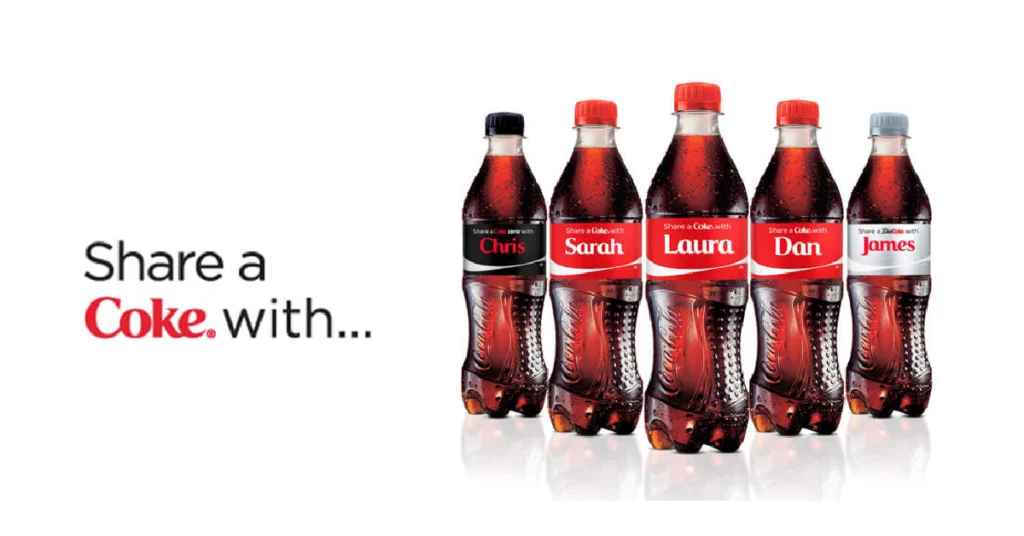
A classic example: Coca-Cola’s “Share a Coke” campaign. In some markets, it used first names. In others, it shifted to relationship-based labels like “Mom,” “Best Friend,” or “Brother” to better reflect local culture.
Input Traps: When the Source Text Sets You Up to Fail
Some translation issues start in the source.
Vague sentences. Missing subjects. UI strings with zero context. These create ambiguity before the work even begins.
Then come the gaps in requirements:
No audience definition. No tone guidance. No screenshots. No explanation of where the text will appear.
At that point, translators fill in the blanks. And guesswork always leads to rework.
To avoid that, anchor every piece of content with context:
- Where will this appear—landing page, button, legal text, email?
- What action should the user take after reading it?
Consistency Traps: When Everything Drifts Over Time
Consistency is where many localization efforts quietly break down, especially as content scales.
Different translators use different terms. Product features get renamed across pages. Campaign messaging shifts slightly with every update. Over time, the experience fragments.
When users see the same feature described in three different ways, confidence drops. They hesitate. They question whether they’re in the right place.
Strong systems prevent that:
- Terminology management keeps product names and key terms stable.
- Glossaries and style guides align tone and wording across teams.
- Translation memory ensures repeated content stays consistent.
And just as important—these systems need to hold up across updates: new features, refreshed landing pages, ongoing campaigns.
Discover a translation process designed to reduce rework and keep your content consistent across markets.
A Practical Playbook for Scalable Translation
The playbook below reflects what experienced localization teams actually do differently. It turns common translation challenges into a system you can control.
Step 1: Define What “High-Risk” Really Means
Not all content carries the same weight. Some text can tolerate minor phrasing differences. Other content leaves no room for interpretation.
High-risk content typically includes:
- Legal agreements and contract clauses
- Medical instructions and IFUs (Instructions for Use)
- Safety documentation like SDS (Safety Data Sheets)
- Financial disclosures or claims-heavy marketing
In these cases, domain-specific terminology becomes critical. A single mistranslated term can shift meaning, create compliance issues, or expose the business to risk.
This is where subject matter expertise moves from “nice to have” to essential. Linguistic fluency alone doesn’t cover regulatory nuance or industry-specific usage.
The same applies to healthcare and life sciences content. Medical instructions, IFUs, patient materials, and clinical documentation need medical translation services supported by subject-matter expertise, careful review, and consistent terminology.
As a baseline, many teams rely on recognized standards like ISO 17100 (translation services) and ISO 18587 (MT post-editing). Not as labels, but as signals that the process includes qualified linguists, revision steps, and accountability.
If the content carries risk, the workflow needs expertise built in.
Step 2: Match the Workflow to Machine Translation Limitations
Machine translation has a clear strength: speed. It processes large volumes quickly and reduces initial turnaround time.
At the same time, its limitations remain consistent:
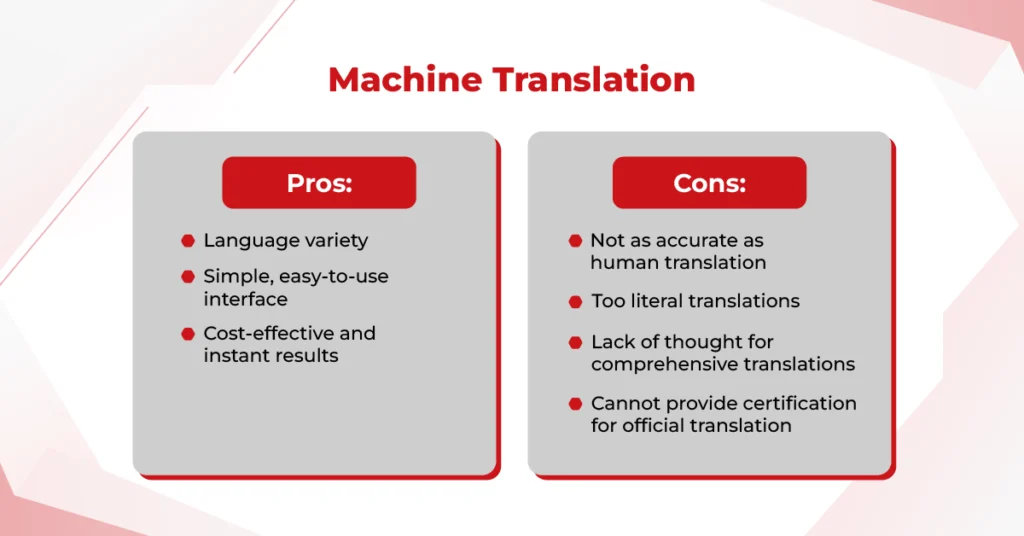
- Idioms lose meaning
- Sarcasm breaks
- Context gets flattened
- Tone becomes inconsistent
Put simply, machine translation works fast, but it doesn’t handle nuance well. That’s why workflow choice matters more than the tool itself.
For high-volume, lower-risk content, machine translation post-editing (MTPE) offers a practical balance. The machine handles the draft, while a human linguist corrects meaning, tone, and terminology.
Turn raw machine output into publish-ready content with expert MTPE services.
Step 3: Use CAT Tools and Translation Tools as Systems
CAT tools and translation tools often get treated as productivity hacks. In reality, they function best as consistency engines.
When used properly, they support:
- Translation memory (TM): keeps repeated content aligned
- Termbases: enforce approved terminology
- QA checks: flag inconsistencies, missing variables, or formatting issues
This becomes especially important in technical translation, where precision matters across hundreds of strings, documents, or UI elements.
CAT tools become even more valuable when teams handle technical documents, product specifications, manuals, and operational content across multiple languages. For technical translation and localization, translation memory and glossary management help keep complex terminology consistent across every update.
At the same time, tools only perform as well as the inputs behind them. Without a clear glossary or style guide, even the best system produces inconsistent output.
Step 4: Build Quality Gates That Catch Issues Early
Quality comes from layered checks throughout the workflow.
Two steps make the biggest difference:
Bilingual revision and proofreading
A second linguist reviews both source and target text, comparing meaning, accuracy, and tone. This step catches issues that a single pass often misses.
Focused checks ensure technical and formatting accuracy, including:
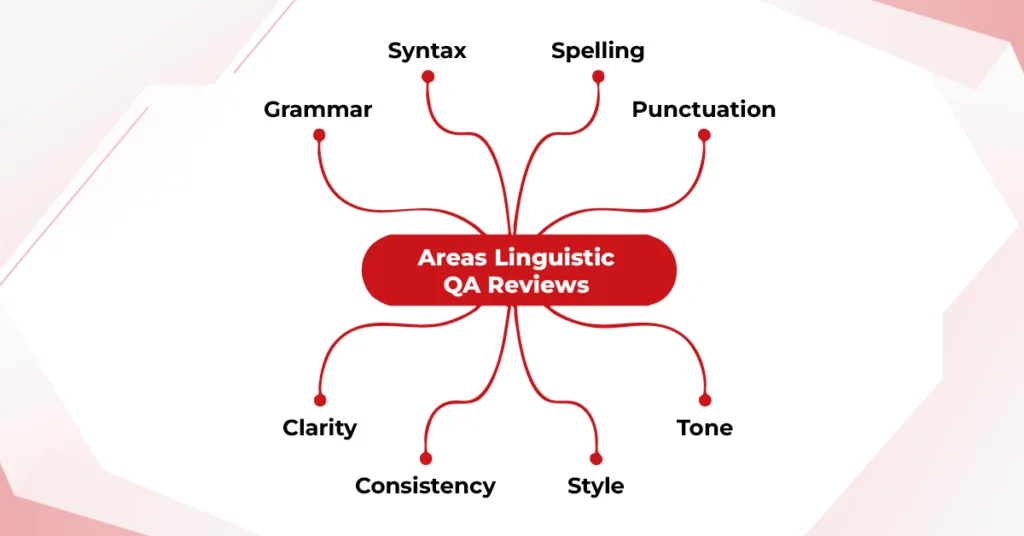
- Incorrect currency symbols
- Broken placeholders or variables
- Inconsistent product or feature names
- Date and number formatting errors
- Missing or duplicated content
These are small details, but they have a direct impact on usability and trust.
Step 5: Treat Publishing as Part of Localization
Even when translation is accurate, the final experience can break during publishing.
Formatting, layout, and DTP (desktop publishing) issues often surface at this stage:
- Text expansion causes UI overflow.
- Line breaks fail in languages like Thai or Khmer.
- RTL layouts shift incorrectly in Arabic.
- PDFs lose structure or readability.
For many users, your website or app forms the first interaction with your brand. A broken layout signals friction immediately before the message even lands.
That’s why localization needs to extend into the publishing layer.
Strong localization relies on choosing the right solution for each scenario, knowing when content needs subject matter expertise, when speed matters more, when nuance can’t be compromised, and when systems need to scale without breaking consistency.
That’s where the difference shows.
At AsiaLocalize, we look at your content the way your users will experience it by risk level, purpose, and market context, then build the workflow around that.
- High-risk or regulated content? We assign domain experts who understand the terminology.
- High-volume content with tight timelines? We design efficient MTPE workflows with human oversight where it actually matters.
- Ongoing product or website updates? We set up translation memory, terminology management, and QA layers that keep everything consistent as you scale.
Make your website feel local in every market with tailored website localization services.
FAQs About Translation Challenges
What are the most common translation challenges?
The most common translation challenges include idioms, cultural references, tone mismatches, unclear source text, inconsistent terminology, machine translation errors, and formatting issues after publishing.
What causes translation problems in business content?
Translation problems often happen when translators do not have enough context, approved terminology, audience guidance, screenshots, or quality review steps. The issue is usually not language alone; it is the lack of a clear localization workflow.
How can companies prevent translation rework?
Companies can reduce translation rework by preparing clear source content, using glossaries and style guides, applying translation memory, assigning subject-matter linguists, and running linguistic QA before publishing.
When should businesses use machine translation post-editing?
Machine translation post-editing is useful for high-volume, lower-risk content such as product descriptions, support articles, FAQs, and internal documentation. High-risk legal, medical, or financial content usually requires specialist human review.
Why is terminology management important in translation?
Terminology management keeps product names, technical terms, service names, and industry-specific wording consistent across languages. This improves clarity, trust, and quality as multilingual content scales.