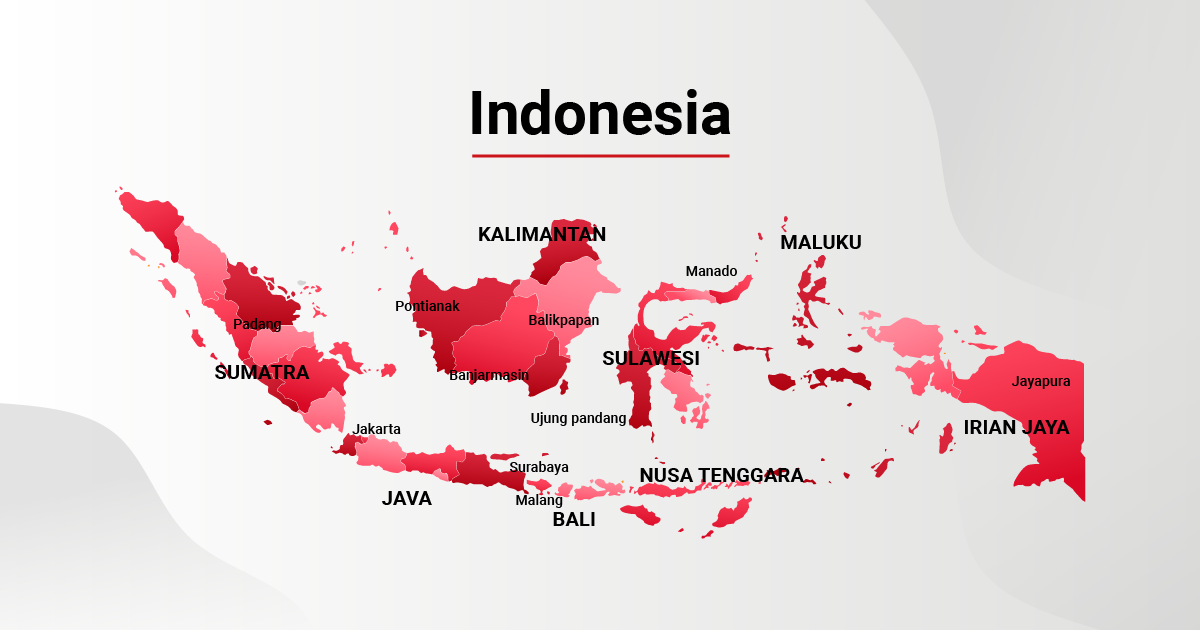
Languages spoken in Indonesia include Bahasa Indonesia, the national and official language, and hundreds of regional languages used across Java, Sumatra, Sulawesi, Kalimantan, Papua, Bali, and other islands.
For businesses entering Indonesia, this language mix matters. National campaigns can usually use Bahasa Indonesia, while regional outreach, customer support, tourism content, and community-based campaigns may need more localized language choices.
With 718 regional languages, Indonesia is renowned for its linguistic and cultural diversity—no wonder it’s the second-largest country with the most linguistic diversity after Papua New Guinea.
However, with such diversity comes many challenges for businesses looking for ways to cultivate the untapped potential of such a lucrative market.
Planning to enter Indonesia requires more than just a decision; it necessitates full awareness of the linguistic and cultural hurdles you will stumble into!
In this post, we’ll equip you with the knowledge you need about the languages spoken in Indonesia to make a 180-degree turn in your business journey toward the Indonesian market.
Quick Answer: What Language Is Spoken in Indonesia?
The main language spoken in Indonesia is Bahasa Indonesia, also called Indonesian. It is the national and official language used in government, education, media, business, and everyday communication across the country.
Indonesia also has 718 regional languages, according to language mapping by Indonesia’s Language Agency (Badan Bahasa), carried out from 1991 to 2019. Major regional languages include Javanese, Sundanese, Madurese, Minangkabau, Buginese, Balinese, Batak, and others. For most business websites and national campaigns, Bahasa Indonesia should be the default language. For local campaigns, regional language and cultural adaptation may also be needed.
| Main Language | Role in Indonesia | Business Use |
|---|---|---|
| Bahasa Indonesia | National and official language | Best default for websites, apps, documents, campaigns, and customer support |
| Javanese | Major regional language, especially in Central and East Java | Useful for regional campaigns and community-focused communication |
| Sundanese | Major regional language in West Java | Useful for West Java targeting and local engagement |
| Madurese | Regional language used in Madura and parts of East Java | Useful for localized outreach in specific communities |
| Minangkabau | Regional language linked to West Sumatra and diaspora communities | Useful for regional and cultural campaigns |
| Buginese | Regional language used in South Sulawesi | Useful for local communication in Sulawesi markets |
| English | Foreign/business language | Helpful for international B2B, tourism, and education, but not a replacement for Indonesian localization |
Bahasa Indonesia: The National Language
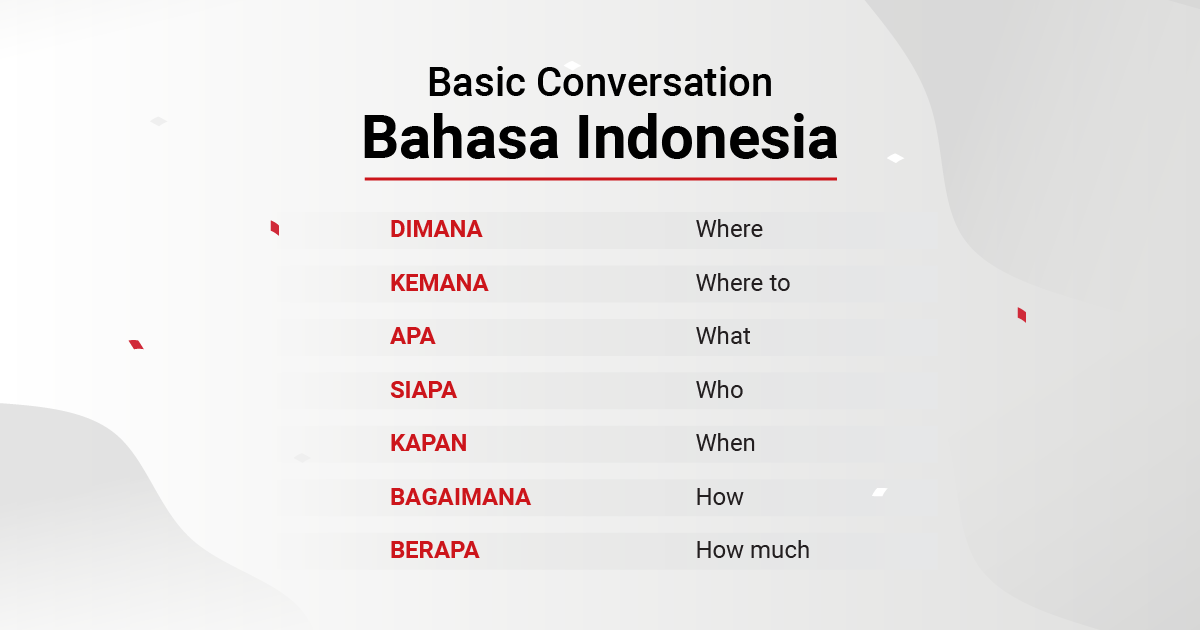
Bahasa Indonesia is the official language of Indonesia, used nationwide in government, education, and the media. It stems from Malay, which belongs to the Austronesian language family.
For centuries, Malay has served as the region’s lingua franca and as one of the official languages of several other countries, such as Malaysia, Singapore, and Brunei Darussalam, which formed many varieties of Malay.
Besides Malay, Bahasa Indonesian is influenced by other local languages like Javanese, Minangkabau, and Sundanese and some foreign languages such as English, Arabic, Dutch, Sanskrit, and Portuguese.
Bahasa Indonesian language is used in education, business, government, and the Indonesian media.
The influence of Bahasa Indonesia extends far beyond the borders of Indonesia. Surprisingly, it is spoken in the Philippines, the US, Singapore, the Netherlands, Saudi Arabia, and several other countries.
Regional Languages of Indonesia
With 718 regional languages spoken across Indonesia, languages are spoken in specific areas across the country by varying numbers of speakers up to thousands.
As Indonesia’s most widely used home language, Javanese is a major market in itself; professional Javanese translation helps brands reach beyond Bahasa Indonesia.
Indonesia is home to 43 regional lingua francas, which serve as the primary means of communication in their respective regions. These can be broadly categorized into Malayic and non-Malayic languages, each with its own unique characteristics and usage.
Major Regional Languages:
The Javanese language
In Indonesia’s 2010 census, 31.8% of people aged five and over (68 million) used Javanese, also known as Jawa, as their everyday language at home. It’s the most widely spoken native language in the region.
Javanese is primarily spoken on the island of Java, which is the most populous island in Indonesia. It’s predominantly used in the central and eastern parts of Java, particularly in provinces such as Central Java, East Java, and West Java.
Javanese is also spoken locally in some Malaysian and Singaporean regions.
Sundanese
Sundanese is a Malayo-Polynesian language that is widely spoken in Western Java, Lampung, Banten, and Jakarta.
Sundanese is the everyday home language of 32.4 million Indonesians aged five and over (15.1%, 2010 census).
It has its own writing system derived from old Sundanese and influenced by the Pallava script from South India.
Madurese
Madurese is spoken on Madura Island, in eastern Java, and on the Kangean and Sapudi islands; in the 2010 census, 7.7 million Indonesians aged five and over (3.6%) used it at home every day.
Minangkabau
The Minangkabau language, a variant of Malay, is the everyday home language of 4.2 million Indonesians aged five and over (2010 census), mainly in West Sumatra, western Riau, South Aceh Regency, Bengkulu, and Jambi.
It serves as a lingua franca along the coast of North Sumatra.
Buginese
Buginese, known also as Bugis, is spoken widely in southern Sulawesi.
In the 2010 census, 3.5 million Indonesians aged five and over used Buginese as their everyday home language.
The Influence of Foreign Languages
Historical influences, including the era of the Dutch East India Company, have shaped Indonesia’s linguistic landscape.
This period of colonization, which lasted for a significant portion of the 17th to the 20th centuries, introduced Dutch as a prominent language in education, governance, and commerce.
While Dutch is no longer widely spoken among the general population, its legacy can still be found in certain legal and administrative contexts.
English
English is not an official language in Indonesia, so content in Bahasa Indonesia is essential for reaching most audiences.
English has become a critical language for trade and investment in Indonesia. In addition, the Indonesian Ministry of Education and Culture has recognized the importance of English in business and has incorporated it into the national education curriculum.
Many universities and business schools emphasize English proficiency, offering programs taught entirely in English to prepare students for the global job market.
Other Foreign Languages
In Indonesia, foreign languages such as Mandarin, Arabic, Japanese, Korean, French, and German are taught in schools and higher education institutions to varying extents.
Read More About: Languages Spoken in Taiwan
Localizing for the Indonesian Market: What Businesses Should Know
For businesses entering Indonesia, translation is only one part of the work. Bahasa Indonesia may be the national language, but local expectations, buying behavior, tone, visuals, and digital habits still vary across regions and industries.
Indonesia is a mobile-first, e-commerce-heavy market, so mobile app localization and e-commerce localization often lead the way.
That is why Indonesian translation services should focus on more than word-for-word accuracy. Business content needs the right terminology, local phrasing, and cultural clarity, especially for websites, apps, product pages, marketing campaigns, legal content, e-commerce, and customer support.
Website localization services can also help adapt menus, forms, payment flows, calls to action, SEO keywords, and user journeys for Indonesian audiences. This is especially important for companies using English-first websites or regional APAC campaigns that need to feel local in Indonesia.
For companies expanding across Southeast Asia, Indonesia should also be part of a wider APAC localization strategy. A message that works in Singapore, Malaysia, Japan, or Thailand may need different wording, visuals, and user experience choices before it fits the Indonesian market.
If Malaysia sits in the same regional plan, our overview of the languages spoken in Malaysia sets out how its multilingual mix differs from Indonesia’s.
AsiaLocalize is Your Trusted Language Service Provider for Accurate Indonesian Translations
Wondering how to take your next steps on your way to Indonesia? Our Indonesian translation services convey your business message faithfully and accurately for the local market.
Our team is comprised of native Indonesian experts who will build a localization strategy and action plan to start on the right foot in the Indonesian market.
We also have the most advanced technology tools to empower our translators to speed up the process while maintaining the highest quality standards.
Planning to enter the Indonesian market? Get a Free Quote for Indonesian Translation & Localization →
FAQs About Languages Spoken in Indonesia and Indonesian Translation Services
What language is spoken in Indonesia?
Bahasa Indonesia, also called Indonesian, is the national and official language of Indonesia. It is used in government, education, media, business, and communication across the country.
How many languages are spoken in Indonesia?
Indonesia has 718 regional languages according to Indonesia’s Language Agency, in addition to Bahasa Indonesia as the national language.
Is Bahasa Indonesia the same as Indonesian?
Yes. Bahasa Indonesia is the Indonesian name for the Indonesian language. In English, it is commonly called Indonesian.
What are the major regional languages in Indonesia?
Major regional languages include Javanese, Sundanese, Madurese, Minangkabau, Buginese, Balinese, Batak, and others used across different islands and provinces.
Do businesses need Indonesian translation services for Indonesia?
Yes. Businesses usually need Indonesian translation services for websites, apps, documents, marketing campaigns, legal content, e-commerce, and customer support aimed at Indonesian audiences.
Why does website localization matter in Indonesia?
Website localization helps adapt content, navigation, forms, calls to action, visuals, SEO keywords, and user experience for Indonesian users, not just translate the words.
Indonesia’s regional-language count is set out alongside the other 10 Asian markets we track in our Business Languages of Asia data reference, where every published figure is attributed to its named primary source.